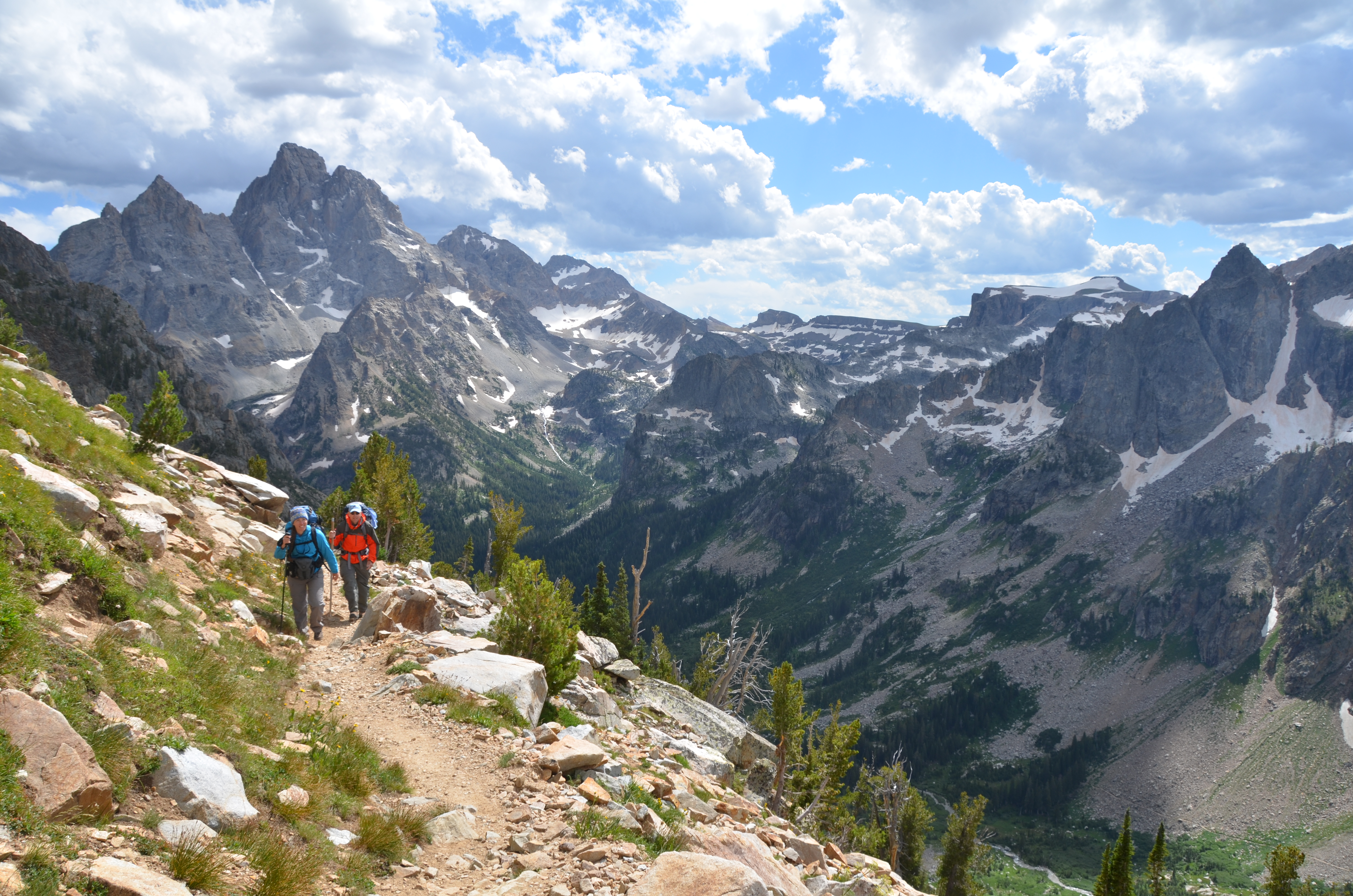
That abrupt, sky-scraping wall defines Grand Teton National Park. A straightforward hike to a beautiful lake with the Grand Teton reflected in its surface.
The silence hits you first, broken only by wind through sagebrush. Then you look up. The Teton Range doesn't rise from the valley floor—it erupts. Seven thousand vertical feet of granite, with no foothills to soften the blow. That abrupt, sky-scraping wall defines Grand Teton National Park. For over 11,000 years, people have lived in Jackson Hole, looking up at those same peaks. Your visit today is shaped by that same geography: where to find a campsite, how to plan a hike, when to spot an elk. This guide offers the kind of practical, field-tested advice we share at the visitor center desk—entrance fees, parking realities, trails that deliver, and common first-timer mistakes.
Advertisement
Photo: NPS via NPS.gov (Public Domain)
The Lay of the Land: Navigating Jackson Hole & The Tetons
Understanding the basic geography prevents spending your entire trip in the car. The park runs roughly north-south, with the town of Jackson to the south. US 89/191/287 runs north-south through the park, connecting Jackson to Yellowstone. The Teton Range lies west of this highway, Jackson Lake to the north. Everything else—visitor centers, trailheads, viewpoints—spreads between the road and the mountains.
Getting Here and Getting Around
As of 2026, the entrance fee for a private vehicle is $35, valid for seven days. Yes, that's per vehicle, not per person. If you're entering on foot or bike, it's $20 per person. Non-U.S. residents pay an additional $100 fee unless they have an America the Beautiful Pass. The park is open 24 hours a day, but services and road access change with the seasons.
Driving from Salt Lake City takes about 5-6 hours. From Denver, plan for 8-10. Grand Teton is the only national park with a commercial airport inside its borders - Jackson Hole Airport (JAC). It's a convenient option, but flights are seasonal and can be pricey.
The parking situation here is straightforward but critical. The lots at popular trailheads like Jenny Lake and String Lake fill by 8:30 AM on a summer morning. Rangers will tell you to have a backup plan. If the main lot is full, the overflow fills minutes later. Cell service drops out at most trailheads and throughout the valley, so you can't rely on your phone to find an alternative. Have a paper map.
The Seasonal Reality
Most visitors underestimate the weather. The park has long, cold winters. Snow and frost are possible in any month, including June and September. July and August bring warm days, cool nights, and predictable afternoon thunderstorms that roll in around 2 PM. You'll want to be off exposed ridges by then. September through November offers sunny days, cold nights, and the chance of early snowstorms. Winter, from December to April, means frigid nights, sunny days between storms, and a blanket of snow transforming the valley. For most visitors aiming for hiking and lakes, the reliable window is late June through mid-September. For a deeper dive on timing your trip, see our guide on the best time to visit.
Photo: NPS via NPS.gov (Public Domain)
Where to Stay: Campgrounds, Lodges, and Logistics
You have two choices: sleep inside the park or commute from Jackson. Staying inside means waking with the mountains outside your door—and planning far ahead.
The Campground Hierarchy
The park manages six major campgrounds with over 900 combined sites. All are first-come, first-served, except Colter Bay RV Park, which takes reservations. This creates a predictable summer morning ritual: a line of cars forms before dawn at the entrance.ance station, waiting for the 8 AM opening to race for a site.
Jenny Lake Campground (61 sites, $56/night) is the most coveted. It's small, quiet, and a short walk from the lake shore. It's also the first to fill, often by 7:15 AM. Signal Mountain Campground (81 sites, $55/night) has some sites right above Jackson Lake. Gros Ventre Campground (279 sites, $57/night) is the park's largest and closest to Jackson. It's your best bet if you roll in after 10 AM. Colter Bay Campground (324 sites, $59/night) is a massive, forested operation near the village with a marina. Lizard Creek Campground (60 sites, $49/night) is the most remote, 11 miles south of Yellowstone.
The common mistake is assuming you'll find a site at 4 PM on a Tuesday in July. You won't. Have a backup plan, which often means lodging and accommodations in Jackson or the surrounding area.
Beyond the Tent
If camping isn't your style, options inside the park range from historic lodges to rustic cabins. These book up a year in advance for summer. The town of Jackson, about 12 miles south of the Moose Entrance, has a full range of hotels, motels, and rental homes. It's a viable base, but you'll trade a 30-minute commute each morning for more dining and evening options.
Photo: NPS via NPS.gov (Public Domain)
Hiking the Tetons: From Lakeside Strolls to Alpine Grinds
This is why you came. The hiking trails here split cleanly into two categories: the valley floor loops around pristine lakes, and the grueling climbs into the high canyons beneath the peaks. Your fitness level and ambition will dictate your choice.
The Classic Lake Loops (Easy to Moderate)
These trails offer the biggest reward for the least effort. They're also the most crowded. Go early.
Jenny Lake Loop (7.5 miles round trip, easy-moderate). The full loop is worth it. The west side, away from the road, feels remote. Most people take the shuttle boat across the lake (fee applies) to cut off the first 2 miles and head straight for Hidden Falls and Inspiration Point. The trail narrows here, and you'll be in a conga line by 10 AM.
String Lake Loop (3.7 miles round trip, easy). This is the local's favorite for a quick, walk. The water is shallow and surprisingly warm by late July. You'll share the path with families and paddleboarders. The parking lot is a zoo by 9 AM.
Taggart Lake Trail (3.8 miles round trip, easy). A straightforward hike to a beautiful lake with the Grand Teton reflected in its surface. The trailhead is one of the first you hit coming from Jackson, so it gets busy.
Phelps Lake Overlook (2 miles round trip, easy). A short climb through forest to a rocky perch directly above the lake. From this overlook you can see the entire lake basin and the mouth of Death Canyon. It's a good alternative if the String Lake lot is full.
The Canyon Climbs (Strenuous to Very Strenuous)
These are full-day commitments. You need to start at first light, carry the Ten Essentials, and be prepared for rapid weather changes. The elevation gain is worth it, but your calves will have strong opinions on the way down.
Cascade Canyon (Up to 13 miles round trip, strenuous). The iconic hike. Start at Jenny Lake, pass Hidden Falls, and climb into the heart of the range. The trail eventually levels out in a U-shaped glacial canyon. This is prime moose habitat - give them a wide berth. Most day hikers turn around at the fork for Lake Solitude (which adds significant distance and climb).
Paintbrush Canyon - Cascade Canyon Loop (20 miles, very strenuous). This is the premier long day hike for experienced, fit parties. It involves crossing the 10,700-foot Paintbrush Divide, often holding snowfields into August. Rangers will tell you it's a 10-14 hour endeavor. Don't start after 7 AM.
Death Canyon to Static Peak Divide (16 miles round trip, very strenuous). A relentless climb that rewards you with one of the park's best views into the Alaska Basin and across Jackson Hole. It's a sun-exposed grind. Bring at least three liters of water per person.
Photo: NPS via NPS.gov (Public Domain)
Wildlife, Waters, and Scenic Drives
The Tetons aren't just mountains. The valley floor is a rich mosaic of rivers, wetlands, and sagebrush flats that support an astonishing amount of wildlife.
Where and When for Wildlife
The best wildlife viewing happens at dawn and dusk. The midday heat sends animals into the trees. Early morning is your best bet for seeing the park's famous megafauna.
Oxbow Bend, just north of Moran Junction, is legendary at sunrise. You'll see a line of tripods set up as photographers wait for moose in the willows, otters in the river, and the perfect mirror reflection of Mount Moran on still water. Moose-Wilson Road (check for seasonal closures) is a slow, winding corridor through dense forest and marsh. It's where you're most likely to spot a moose, often right next to the road. Drive slowly. The Mormon Row historic district, at dawn, is a spectacular place to photograph barns with the Tetons behind them, often with bison grazing in the foreground.
Remember: always stay at least 100 yards from bears and wolves, and 25 yards from all other wildlife, including bison and elk. They are not tame.
Scenic Drives and Pullouts
You can see a tremendous amount from your car, especially if mobility is an issue. Signal Mountain Summit Road is a five-mile drive up to a 360-degree panorama of the entire valley and the snake-like coils of the Snake River. The main park highway has a series of signed turnouts. Don't skip them.
Cathedral Group Turnout: The classic postcard view of the Grand Teton, Mount Owen, and Teewinot Mountain.
Snake River Overlook: Made famous by Ansel Adams. The river curves through the sagebrush with the full range behind it.
Schwabacher Landing: A short dirt road leads to a river access point where calm waters create perfect reflections. It's crowded at sunrise.
For a more structured experience, consider the park's official tours and guided experiences, which range from boat trips on Jackson Lake to wildlife safaris with naturalists.
Practical Takeaways
Arrive at Trailheads Early. "Early" means 7:30 AM at the absolute latest for Jenny Lake, String Lake, or Taggart Lake. Parking is the single biggest constraint on your day.
Pack for All Seasons. Even on a July hike, carry a warm layer, a rain shell, and a hat. Afternoon thunderstorms are a daily occurrence. Cotton kills.
Secure Camping by Dawn. If you're trying for a first-come, first-served campsite, be in line at the entrance station before it opens at 8 AM. Have a backup campground in mind.
Carry a Paper Map. Cell service is nonexistent in most of the park. Download offline maps or, better yet, pick up the park's official map at a visitor center.
Respect Wildlife Aggressively. Give animals space. Use bear spray where appropriate (know how to use it before you need it), and store all food and scented items in bear-proof lockers or your vehicle.
Check for Construction. As of 2026, parkwide construction is planned. Check the NPS website for current road and facility closures before you go. Colter Bay is often a good hub during disruptions.
Hydrate Relentlessly. The air is dry and the sun is intense at altitude. Drink water before you're thirsty. The gift shops sell water for $4 a bottle. Bring your own.
Final Thoughts
Grand Teton National Park delivers its beauty directly, without preamble. That lack of transition - from flat valley to sheer peak - is what stays with you. It also demands respect. The weather shifts, the distances are deceptive, and the animals are truly wild. The visitors who enjoy it most are the ones who plan for the logistics but remain open to the moments the park gives you: the sudden silence after a tour bus pulls away from an overlook, the slap of a beaver's tail on a still pond at dusk, the cool smell of pine forest on the shaded side of a trail. Your job is to get the practicalities right - the early start, the full water bottle, the reserved campsite - so you have the mental space to receive everything else. Then just look up. The mountains have been there for a long time. They're not going anywhere.
Recommended Gear
What experienced visitors bring to Grand Teton National Park: Complete Guide (2026)
Links may earn us a commission at no extra cost to you. We only recommend gear we believe in.