Book your ferry from St. Thomas at least a week in advance. That's the first piece of advice you'll get at the Cruz Bay Visitor Center. This guide is built on that kind of practical, field-tested knowledge. Two-thirds of St. John is national park, which means your visit is less about checking off landmarks and more about navigating a landscape where history, jungle, and turquoise water are woven together. You'll find plantation ruins shaded by mango trees, snorkel trails through elkhorn coral, and beaches accessible only by foot. The park is always open, but your planning needs to be precise. This guide covers the logistics, the overlooked trails, and the realities of a park where the "hiking" might end with a swim.
Advertisement
Photo: NPS via NPS.gov (Public Domain)
Getting There & The Logistics of an Island Park
There are no airports on St. John. Your journey starts at the Cyril E. King Airport (STT) on St. Thomas. From there, you have a choice that defines your trip. Most visitors take a taxi to the Redhook ferry terminal and board the people ferry to Cruz Bay. The ride takes about 20 minutes. If you plan to explore the island's steep, winding north shore road thoroughly, you'll need a rental car. That requires taking the car barge from Redhook, a process that adds time and requires advance reservations for both the barge and the vehicle. Rental cars on St. John are limited and expensive.
Once you step off the ferry in Cruz Bay, the park visitor center is a two-minute walk to your left. Stop here. The staff can confirm current trail conditions - rain can make paths slick and overgrown - and they have the only official park maps you'll find. As of 2026, the visitor center is open 8:15 AM to 4:00 PM Monday through Thursday, and until 1:30 PM on Friday. It's closed weekends and major holidays. Cell service is reliable in Cruz Bay but drops out consistently as you drive east toward Coral Bay and the Lameshur area.
The park charges no entrance fee. Your costs are transportation, lodging and accommodations, and any gear rentals. Taxis are plentiful but operate on fixed point-to-point rates, not meters. If you're not driving, you can use safari buses - open-air trucks with bench seats - that run along the north shore road, but you'll need to flag them down and know your fare.
Photo: NPS via NPS.gov (Public Domain)
Beyond the Beach: Hiking Through History
The common mistake is to see only the sand. The park's trail network tells a deeper story, one of a landscape shaped first by the Indigenous Taino people, then by the brutal economy of Danish sugar plantations. The hiking here is humid and often steep, with rewards that are historical as much as scenic.
The Must-Do Historical Hike: Reef Bay Trail
Rangers will tell you the Reef Bay Trail is the park's signature hike for a reason. It's a strenuous 2.2-mile (one-way) descent from Centerline Road down to the sea, passing the ruins of four separate sugar estates. You walk under some of the tallest trees on the island, through forest that feels centuries old. The trail ends at petroglyphs carved by the Taino into the rocks above a pool, and the stone ruins of the Reef Bay Sugar Factory. Most people arrange a guided hike with the park concessioner that includes a boat pickup at the bottom; otherwise, you face a steep, hot climb back up. It's a full half-day commitment.
Accessible Ruins & Shorter Loops
For a more manageable taste, the Cinnamon Bay Nature Loop is a flat, accessible trail that winds through the ruins of the Cinnamon Bay Sugar Plantation. You can smell the bay rum trees and see the stone foundations of the factory, all within a 30-minute walk. The Annaberg Sugar Plantation on the north shore offers a self-guided tour through the most impressive standing ruins, including a windmill with its original mechanism. It's less a hike and more an open-air museum, with wayside signs explaining the enslaved labor that built it.
The Overlook Hike with a Payoff
For views without a full history lesson, the Caneel Hill Trail is a heart-pounding one-mile climb that starts right in Cruz Bay. Your calves will protest on the switchbacks, but the summit provides a 360-degree panorama of the island's north shore bays. It's the best way to get your bearings early in a trip. For more detailed route planning, see our dedicated guide to the park's hiking trails.
Photo: NPS via NPS.gov (Public Domain)
Snorkeling & The Underwater Park
The water is the main event. Virgin Islands National Park protects miles of coral reefs and seagrass beds, and your mask and snorkel are your ticket in. Water conditions are generally calmest in the summer months, but winter trade winds can stir up surf and reduce visibility on north shore beaches.
The Famous Spot: Trunk Bay
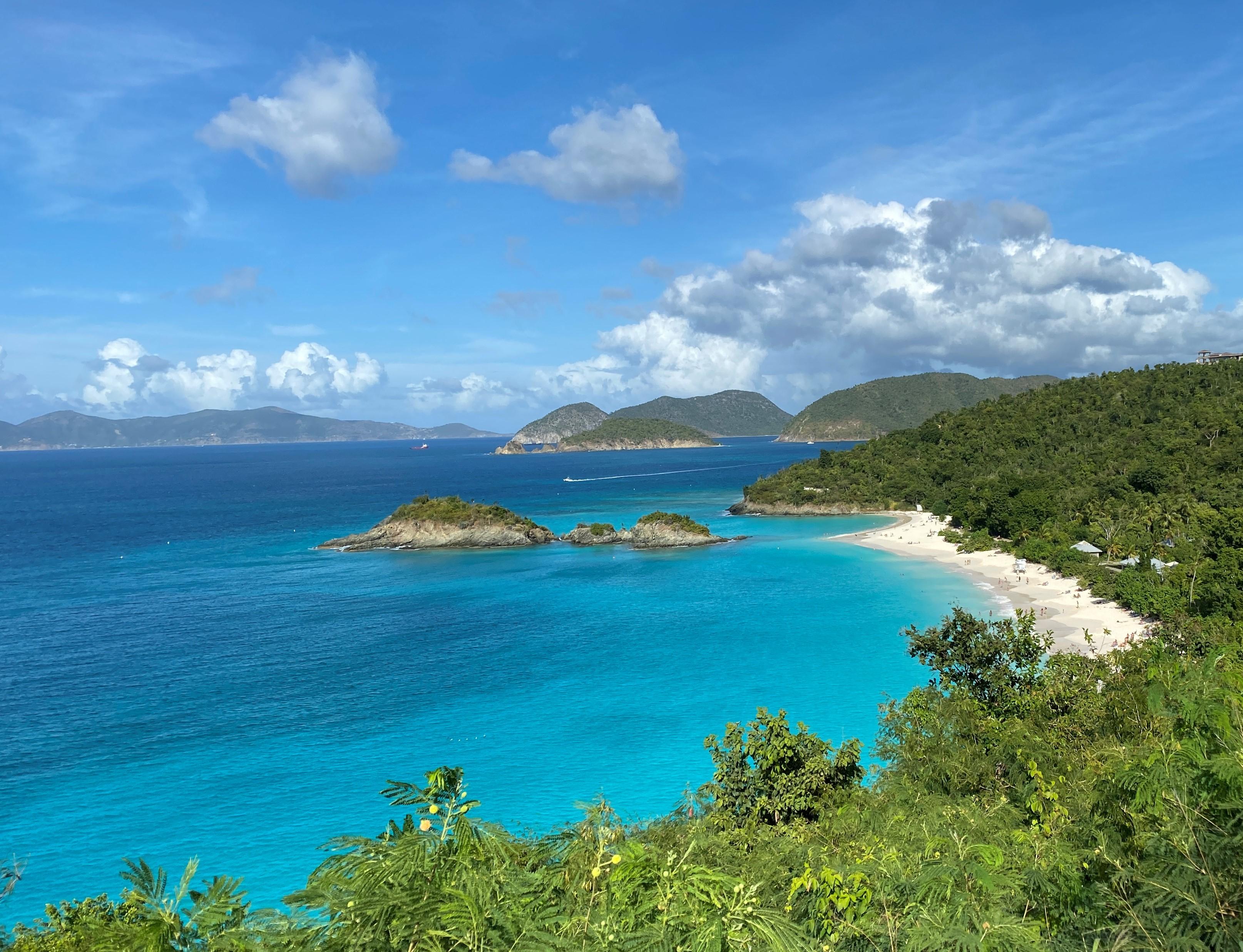
Trunk Bay's underwater snorkel trail is unique in the National Park System. A series of submerged signs guide you along a 225-yard course, identifying coral formations and common fish species. It's ideal for beginners. The downside is its fame; the small beach can feel crowded, especially when cruise ship excursions arrive. Get there before 9:30 AM or after 3:00 PM to find parking.
For Turtle Sightings: Maho & Francis Bays
Maho Bay, on the north shore, is arguably the most reliable place in the park to see sea turtles. They graze on the vast seagrass beds that begin just a few yards from shore. Float quietly and you might see several. Francis Bay, just east, is quieter and also excellent for turtles, with a rocky point on the west end that offers good coral snorkeling. Both have shade and are popular for picnics.
The Snorkeler's Choice: Watermelon Cay
Not listed on every map, but known to experienced visitors, is the snorkeling around Watermelon Cay (accessed from Leinster Bay, near the Annaberg plantation). It's a 10-15 minute swim from shore to a coral-covered cay teeming with fish, including large schools of blue tang and the occasional spotted eagle ray. The current can be strong here, so it's not for absolute beginners.
South Shore Gems
The south shore beaches, like Salt Pond Bay, offer a different character. They're often less crowded, with rougher water but interesting coral formations closer to shore. The short Ram Head Trail from Salt Pond leads to a dramatic, arid bluff with views of the Caribbean Sea. For a complete overview of marine life, check our guide to wildlife viewing in the islands.
Photo: NPS via NPS.gov (Public Domain)
Where to Stay & Strategic Planning
Your choice of base camp dictates your daily rhythm. Cruz Bay is the bustling hub with restaurants, shops, and ferry access. Coral Bay, on the east end, is sleepier and closer to trails like Reef Bay and Lameshur.
The Only In-Park Option: Cinnamon Bay Campground
The Cinnamon Bay Beach and Campground is the park's sole front-country campground. As of 2026, it offers 121 sites ranging from bare tent spots to prepared eco-tents and cottages. Amenities include restrooms, showers, and a watersports rental shop. Sites start at $50 per night. It fills months in advance for the winter season. Waking up to that long, white-sand beach just steps from your tent is an experience that justifies the planning. For a full breakdown of camping options, including what to bring, see our dedicated resource.
Off-Park Lodging & Considerations
Villas and guesthouses are scattered across the island's hillsides. Renting a jeep is almost mandatory if you stay outside of Cruz Bay. The roads are steep, potholed, and dark at night. If you're relying on taxis, staying in Cruz Bay or at a north shore resort simplifies logistics but increases cost.
Timing Your Visit
The best time to visit balances weather and crowds. Winter (December-April) brings stronger trade winds, less rain, and the highest number of visitors. Summer (May-November) is hotter, more humid, with a higher chance of brief afternoon showers, but the water is calmer and the island is quieter. Hurricane season officially runs June through November; always check forecasts frequently during this period. The park's guided tours and guided experiences, like the Reef Bay hike or birdwatching walks, operate on seasonal schedules, so verify offerings when you plan.
Practical Takeaways
Reserve Transport First. Secure your rental jeep (if needed) and ferry/barge tickets before booking anything else. Inventory is limited.
Pack for Two Environments. Bring sturdy, broken-in hiking shoes for muddy, rocky trails and water shoes for rocky entries into the sea. A rash guard is better than sunscreen for all-day snorkeling.
Carry Cash. Many taxi drivers, safari buses, and small beachside concessions do not accept credit cards. Small bills are best.
Hydrate Strategically. The heat and humidity are deceptively intense. Carry more water than you think you need on any hike. There are no drinking fountains on trails.
Respect Reef & Ruin. Stand on sandy bottoms, not coral. Don't touch or feed turtles. At historic sites, look but don't climb on fragile stone walls. Take only pictures.
Plan Around the Sun. Start hikes early to avoid the midday heat. Afternoon is for snorkeling when the sun is high and water visibility is best.
Final Thoughts
Virgin Islands National Park asks you to be a participant, not just a spectator. It's the park where your hike through a jungle ends at a sugar mill, where your beach towel is laid a few yards from a 300-year-old ruin, and where the most colorful sights require you to put your face in the water. The logistical hurdles - the ferries, the jeep rentals, the humidity - are filters. They ensure that those who make the effort are rewarded with a place that feels removed from the ordinary. Your job is to move slowly, look closely at both the forest and the reef, and understand that the beauty of the island is inextricably linked to its difficult past. That's the real journey here.
Recommended Gear
What experienced visitors bring to Virgin Islands National Park: Ferry Tips & Snorkel Trails (2026)
Links may earn us a commission at no extra cost to you. We only recommend gear we believe in.