What makes Lake St. Clair worth the drive this season? The answer depends on what you're chasing and when you check the gauge. This is a Great Lakes waterbody, classified as such by the Michigan DNR, sitting between Lake Huron and Lake Erie with the St. Clair River feeding it from the north. It's shallow, it's productive, and it fishes differently than the big lakes do. If you're planning around walleye or muskie, the window matters. If you're after smallmouth, the summer weed lines are where you'll spend your time.
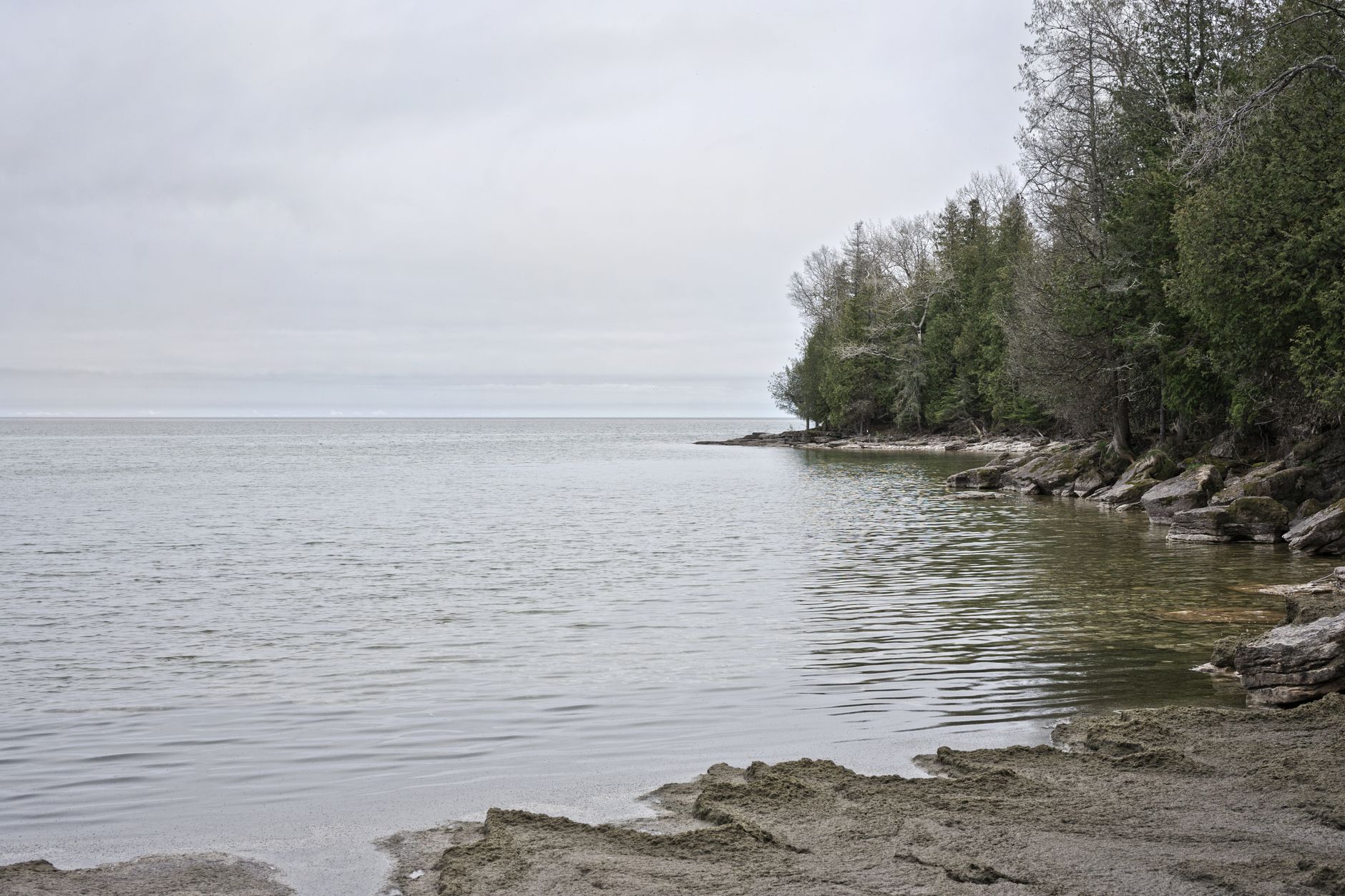
Photo by Robert Schrader on Pexels
Lake St. Clair Fishing Guide: Access, Conditions & Seasons (2026)
8 min read
Waterbody Guide
Fishing Lake St. Clair in 2026: launch access, season windows, live water conditions, and what anglers check before a day on the big water.
Your plans
Flow reliability
Seasonal consistency of median discharge from the curated USGS gauge for this place.
Spring
92%
year-to-year consistency
Summer
93%
year-to-year consistency
Fall
93%
year-to-year consistency
Winter
90%
year-to-year consistency
Median monthly discharge (cfs)
| Jan | Feb | Mar | Apr | May | Jun | Jul | Aug | Sep | Oct | Nov | Dec |
|---|---|---|---|---|---|---|---|---|---|---|---|
| 197000 | 193000 | 207500 | 209000 | 212500 | 212000 | 213000 | 215000 | 215000 | 214000 | 213000 | 208000 |
In the last 10 falls, roughly 5 of every 8 September–November weeks sat inside this band (198000–225000 cfs); typical flow in those weeks 212000 cfs.
Computed from 10 years of USGS daily records, station 04159130 (3,651 daily values). Last computed Oct 19, 2026.
Hydrological description only — not advice about wading, floating, or whether conditions are safe for recreation. Always check current USGS readings and local guidance before you go.
The waterbody itself spans roughly 430 square miles but averages only about 11 feet deep, which is the single most important fact about how it fishes. Wind moves that shallow water fast, and the bite follows. Check the gauge before you leave, confirm conditions, and plan your access before you load the boat.
Conditions and Gauge
The closest reliable gauge is USGS 04159130 on the St. Clair River at Port Huron, MI. That's upstream of the lake itself, but it's the best free data you'll get for how much water is moving through the system. You can pull it at https://waterdata.usgs.gov/monitoring-location/04159130/. What you're looking for is stability. A steady reading over several days beats a rising or falling one for most species.
Wind is the real variable on Lake St. Clair. Because the lake is shallow, a sustained 15-20 mph wind out of the southwest stacks water against the northeast shore and turns the west side into a washing machine. Most anglers underestimate how quickly conditions deteriorate here. The lake builds a short, steep chop that beats up small boats faster than the big lakes do. If the forecast calls for 20 mph, plan for the lee shore or stay home.
Water temperature drives everything. By late June, surface temps typically push into the low 70s and the weed beds respond. By August, you're looking at 75-80 degrees across most of the lake, and the fish go deep or get tight to the shade lines. Fall turnover happens fast here because there's no deep basin to hold cold water. The lake flips quickly and the fishing can shut down hard for a week while it settles.
The Michigan DNR maintains regulations at https://www.michigan.gov/dnr/things-to-do/fishing/laws-and-regs, and their stocking records at https://www.michigan.gov/dnr/managing-resources/fisheries/stocking. The FishStock database at https://www.dnr.state.mi.us/fishstock/ lets you look up what's been planted and where. Read the stocking notes, then verify locally.
Access

Access here is not a given. The shoreline is heavily developed, and a lot of the lakefront is private. You need to know where the public launches are before you go, not after you're driving around with a boat in tow.
The good news is that the DNR maintains a network of launches around the lake. The bad news is that several of them are shallow and marginal at low water. A 20-foot fiberglass boat with a deep V needs to pick the launch carefully. Some of the ramps on the Canadian side are excellent, but you'll need a passport and to clear customs. Bring a backup access, because the lot at the popular ramps fills by 7 AM on summer weekends.
The St. Clair River itself has additional access points, and some anglers run up-river to fish the current breaks rather than the lake. That's a different fishery, and the river access is generally better maintained than the lake launches. If you're targeting muskie, the river mouths and the channels connecting to the lake are where the fish move through.
The reality is that most of the lake's best fishing is within a mile of a launch. The weed beds that hold the baitfish and the predators that follow them are scattered but accessible. You don't need to run 10 miles to find fish here, which is one of the reasons the lake gets as much fishing pressure as it does.
Seasons and Regulations

Confirm the season and size limit on the MDNR regs page before you go. The regulations for Lake St. Clair are not identical to the inland lakes, and the Great Lakes classification matters.
As of 2026, the standard Michigan seasons apply for most species, but you should verify the specifics. Walleye season opens in late April and runs through the winter on the Great Lakes system, but the size limits differ from the inland lakes. Muskellunge has its own window and a minimum size limit that catches people off guard every year. Northern pike is generally open year-round on this system, but again, check the regs.
The lake is a border water, which means Ontario regulations apply if you're on the Canadian side. That's a complication most anglers don't think about until they're fishing. The boundary line runs down the middle of the lake, and if you drift across it with fish in the boat, you're in a different jurisdiction. The regs are similar but not identical, and the enforcement is real.
The DNR's stocking portal at https://www.michigan.gov/dnr/managing-resources/fisheries/stocking lists what's been planted in the system. Lake St. Clair doesn't get the same volume of stocking as the inland lakes because it's a connected Great Lakes water, but the salmon and trout presence in the iNaturalist data suggests some of those fish are moving through from the river systems.
Species Presence

The iNaturalist observations for Lake St. Clair document ten species with enough sightings to matter. Yellow Perch leads with 223 observations, which tracks with the lake's reputation as one of the best perch fisheries in the Great Lakes. Smallmouth Bass follows at 104 observations, and the lake is genuinely famous for the smallmouth fishery among those who know it. Largemouth Bass is close behind at 92, which is unusual for a Great Lakes waterbody but makes sense given the extensive weed beds.
Walleye shows 63 observations, and the lake's walleye fishery has been strong for years. Muskellunge at 42 observations confirms the lake's status as a legitimate muskie destination. Northern Pike at 25 observations rounds out the primary predator list.
The salmon and trout presence is modest but real. Atlantic Salmon has 5 observations, Chinook Salmon has 2, Rainbow Trout (steelhead) has 1, and Coho salmon has 1. These are fish moving through the system, likely following the baitfish migration between Lake Huron and Lake Erie. They're not the primary fishery here, but they show up. If you're after steelhead, check the state fishing guide for the river systems where they concentrate. The lake will give you an occasional encounter, but it's not where you'd plan a trip around them.
The chinook salmon and steelhead pages have more detail on those specific species if that's what you're chasing. Neither is the main event on Lake St. Clair, but both move through.
Tactics That Match Conditions
Walleye and Perch
The perch bite is the bread-and-butter fishery here. In 2026, expect the pattern to hold: find the weed edges in 15-20 feet of water, drop a crawler harness or a small jig tipped with a minnow, and work the edges. The perch schools are mobile, so if you're not marking fish in 15 minutes, move. The lake bottom is mostly flat, so structure is subtle. The weed lines are the structure.
Walleye fishing follows the same general areas but with bigger presentations. Bottom bouncers with crawler harnesses work well in the summer. Trolling the edges of the shipping channel is another option, especially in low light. The walleye here are a mixed bag of resident fish and migrants from Lake Huron, and the size distribution reflects that.
Smallmouth Bass
The smallmouth fishery on Lake St. Clair is the reason many anglers make the trip. The lake holds a strong population of fish in the 3-5 pound range, with bigger ones available. The pattern is consistent: find the rock piles and the hard bottom areas adjacent to the weed beds, and work them with tubes or drop-shot rigs. The smallmouth here are aggressive and the bite can be exceptional in June and early July.
The key is the wind. Smallmouth on this lake position on the windward side of structure, where the current and waves push baitfish. If the wind is out of the west, fish the west side of the humps and bars. It's a simple rule that works more often than not.
Muskellunge
Muskie fishing on Lake St. Clair is a specialist's game. The fish are here, and the 42 iNaturalist observations confirm they're catchable, but they're not easy. The best window is fall, when the fish are feeding heavily ahead of winter. Big swimbaits and bucktails worked along the weed edges produce the best results.
If you're new to muskie fishing on this lake, hire a guide for a day. The learning curve is steep and the lake is bigger than it looks. A guide will put you on the pattern, and then you can work it yourself on subsequent trips.
Salmon and Trout
The occasional salmon and steelhead that show up here are usually following the smelt or alewife schools. If you're targeting them, troll spoons or stickbaits along the deeper edges of the lake, where it drops from the flat to the shipping channel. It's not a reliable fishery, but it's a bonus if you're already set up for walleye.
If flows are up in the St. Clair River, the salmon and steelhead will be more active in the river itself, not the lake. Check the gauge, and if the water is pushing hard, consider fishing the river instead.
Practical Takeaways
- Check the USGS gauge at Port Huron (04159130) before you leave. Stable levels beat rising or falling water.
- Wind is the primary condition variable. A 15-20 mph forecast means plan the lee shore or stay home.
- Confirm the season and size limits on the MDNR regs page. Lake St. Clair is a Great Lakes waterbody with different rules than inland lakes.
- Know your launch before you go. Several public accesses are shallow and the popular ones fill early.
- The perch and smallmouth fisheries are the most reliable. Walleye is strong but weather-dependent. Muskie is a specialist's game.
- Bring a backup access. If the lot is full or the ramp is too shallow for your boat, you need a plan B.
- If you're fishing the Canadian side, carry your passport and know the Ontario regs. The border runs through the lake.
- Water temps in the 70s mean the weed bite is on. Temps in the 80s mean go deep or go early.
Final Thoughts
Skip the drive if the wind is howling or if you need a bite. Lake St. Clair is not a lake that gives up fish easily when conditions turn. But on a stable weather window in June or October, this is one of the most productive shallow-water fisheries in the Great Lakes. The perch are plentiful, the smallmouth are strong, and the occasional muskie or walleye makes the trip worth it. Check the gauge, confirm the regs, and pick your access before you load the boat.
Sources
- Official source: USGS waterdata.usgs.gov/monitoring-location/04159130
- Official source: Michigan DNR michigan.gov/dnr/things-to-do/fishing/laws-and-regs
- Official source: Michigan DNR michigan.gov/dnr/managing-resources/fisheries/stocking
- Official source: Michigan DNR dnr.state.mi.us/fishstock
Photo Gallery
More to Explore
Waterbody Guide
Grand River Fishing: Grand Rapids Gauge & November Push
Grand River at Grand Rapids: start with the gauge, not the calendar — fall median discharge near 3,570 cfs inside a wide 2,310–5,827.5 cfs band.
Waterbody Guide
Kalamazoo River Fishing: New Richmond Fall Flow Band
Kalamazoo River fishing: character shifts from headwaters to the Lake Michigan mouth, with fall median discharge near 1,770 cfs and water around 52°F (11.2°C).
Waterbody Guide
St. Joseph River Fishing: Niles Gauge & Berrien Reaches
St. Joseph River: lower water below Niles takes on Big Lake runs while Berrien reaches fish warmer, with fall median discharge near 3,520 cfs at Niles.
Waterbody Guide
Rifle River Fishing: Sterling Gauge to Saginaw Bay
Rifle River toward Omer and Saginaw Bay: access limits the day more than desire, with fall median flow near 239.3 cfs and water around 47°F (8.5°C).
Waterbody Guide
Sturgeon River Fishing: Wolverine Gauge Autumn Band
Sturgeon River near Wolverine: September–November fall median discharge near 214.5 cfs, inside a reliable 197–259 cfs band for northern Lower Peninsula trips.
Waterbody Guide
Boardman River Fishing: Beitner Road Fall Consistency
Boardman River near Traverse City: fall median discharge near 259.5 cfs at Beitner Road, inside a reliable 234–307 cfs band for late-season trips.
Sign in to join the conversation.
Sources & Attribution
Fishing regulations and waters information should be verified with the relevant state wildlife agency before you fish.
Images: Photo by Robert Schrader on Pexels; Photo by chandra diantara on Pexels; Photo by Abduljaleel tijjani Muhammad on Pexels; Photo by Meruyert Gonullu on Pexels. Stock photos from Pexels / Unsplash license; links above point to each photo where available.
Map data © OpenStreetMap contributors.
Information may change. Always verify seasons, licenses, and local regulations with the official source before you fish.
Did this guide help? Share it with a friend.