Campsites at Guadalupe Peak Wilderness Campground (2026 Guide)
HomeCampsite GuideCampsites at Guadalupe Peak Wilderness Campground (2026 Guide)
Your plans
Advertisement
Camping on the Guadalupe Peak Trail: What to Know Before You Book
Most hikers who set out for Guadalupe Peak assume they will summit and descend in a single day. That is entirely doable - the trail runs 8.4 miles round trip with 3,000 feet of elevation gain. But the small group of campers who instead split the climb across two days get something the day-hikers miss: solitude on the trail after 4 PM and a front-row seat to the sunset light hitting El Capitan. The guadalupe peak wilderness campground sits 3.1 miles up the Guadalupe Peak Trail, at roughly the 2,200-foot-elevation-gained mark, and it is the only designated backcountry camping option on the route to the summit. If you are planning an overnight climb in 2026, here is exactly what that involves.
For a broader overview of the park and its hiking options, the complete visitor guide covers everything from trailhead logistics to seasonal weather patterns. This article focuses specifically on the campground itself - the permit system, the site layout, and the conditions you will want to prepare for.
The Permit System: Not Optional, Not Complicated
Every person spending the night at the guadalupe peak wilderness campground must hold a Wilderness Use Permit. This is not a walk-up and hope situation - you need to reserve in advance. The fee structure breaks into two parts as of 2026:
A $6 reservation fee per permit, regardless of group size.
A $6 per-person-per-night recreation fee that scales with your group. One person for one night pays $6. Three people for one night pay $18. One person for two nights pays $12. Three people for two nights pay $36.
Add those two numbers together. A solo camper staying one night pays $12 total. A group of four staying one night pays $30. The fees are not expensive compared to front-country campgrounds, but the reservation requirement means you cannot decide on a whim halfway up the trail. Plan ahead.
Rangers at the visitor center will tell you that the most common mistake first-time applicants make is underestimating how far in advance permits book out, especially in March through May and again in October and November. Check availability on the park's recreation.gov page before you firm up your hiking dates.
Photo: NPS via NPS.gov (Public Domain)
The Campsite Itself: Five Pads on an Exposed Knoll
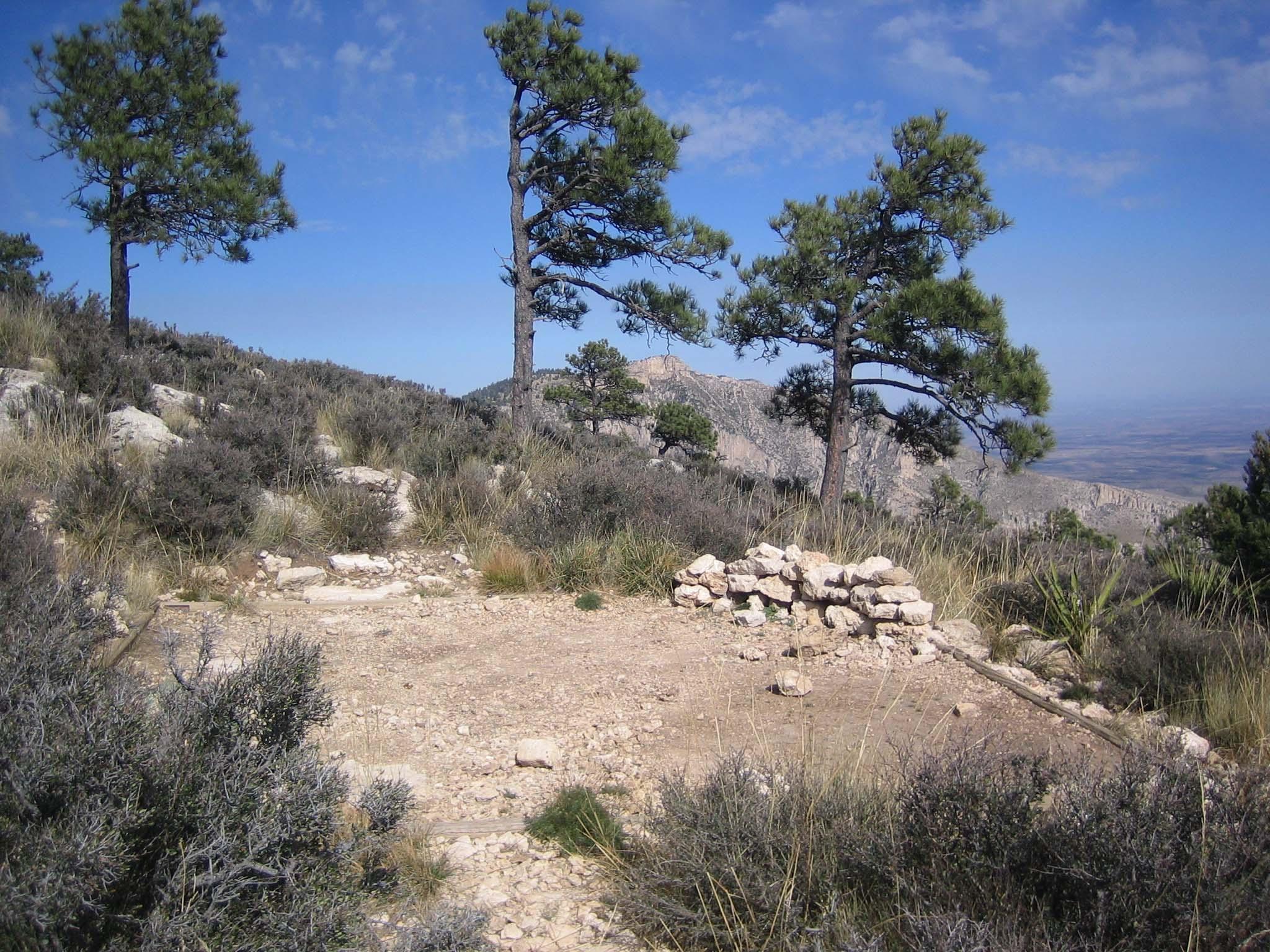
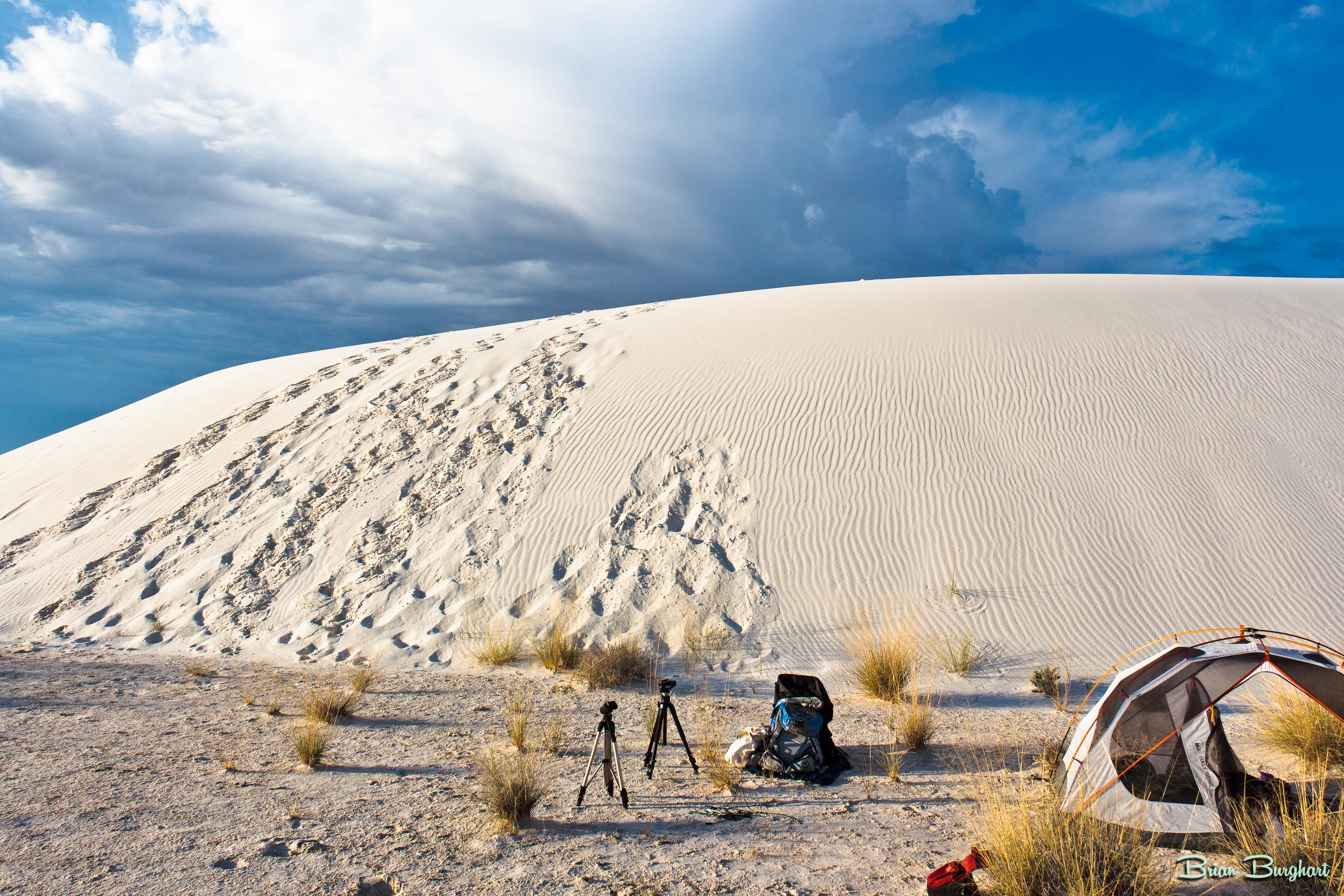
The guadalupe peak wilderness campground is not the kind of place you picture when you hear "campground." There are no picnic tables, no fire rings, no water spigots, and no vault toilets. What you get is a small knoll with five designated tent pads, each one a leveled gravel rectangle just big enough for a single tent. That is it.
The trail gains 2,200 feet between the Pine Springs Trailhead and the campground. For context, that is roughly the same elevation gain as climbing a 200-story building, spread across 3.1 miles of switchbacks. Most hikers take 2.5 to 3.5 hours to reach the site with a full overnight pack. The surface underfoot is mostly exposed limestone and gravel, so your legs feel every mile.
The tent pads are arranged to give each site a degree of separation from the next - you will hear your neighbors but likely will not see them once everyone is tucked in. That said, site selection matters. The campground sits on a small knoll with minimal wind protection, and high winds are common. The pads on the leeward side (sheltered from the prevailing west wind) make a noticeable difference in how much your tent fabric flaps through the night. If you arrive first, claim one of those.
The altitude at the campground is roughly 7,300 feet. That is not high enough to cause altitude sickness in most people, but it is high enough that the air feels thinner on the climb in. Pack extra water for this stretch - there is no water source at the campground, and the Pine Springs Trailhead is the last place to fill up.
What the Park Website Does Not Emphasize Enough
The official information lists the basics correctly, but three things deserve more attention than they get.
First, the wind. The research data describes the campground as "only minimally protected from high winds," and that is the accurate version. This is not a sheltered canyon bottom. The knoll catches whatever weather moves across the Guadalupe Mountains. Sustained winds of 20-30 mph are ordinary, and gusts above 40 mph happen regularly in spring. Your tent needs to be a four-season model or a sturdy three-season with extra guylines. Practice staking it out before you arrive - fighting a flapping tent in 30 mph wind at dusk after a 3-mile climb is not enjoyable.
Second, the sun exposure. There is almost no shade on the knoll. If you arrive in the middle of the afternoon in June or July, the temperature on those tent pads under direct sun can push past 95 degrees. Early morning is your best bet for setting up without overheating. Most experienced visitors time their hike to arrive at the campground between 2 PM and 3 PM, set up quickly, then rest through the hottest part of the afternoon before the evening cool settles in.
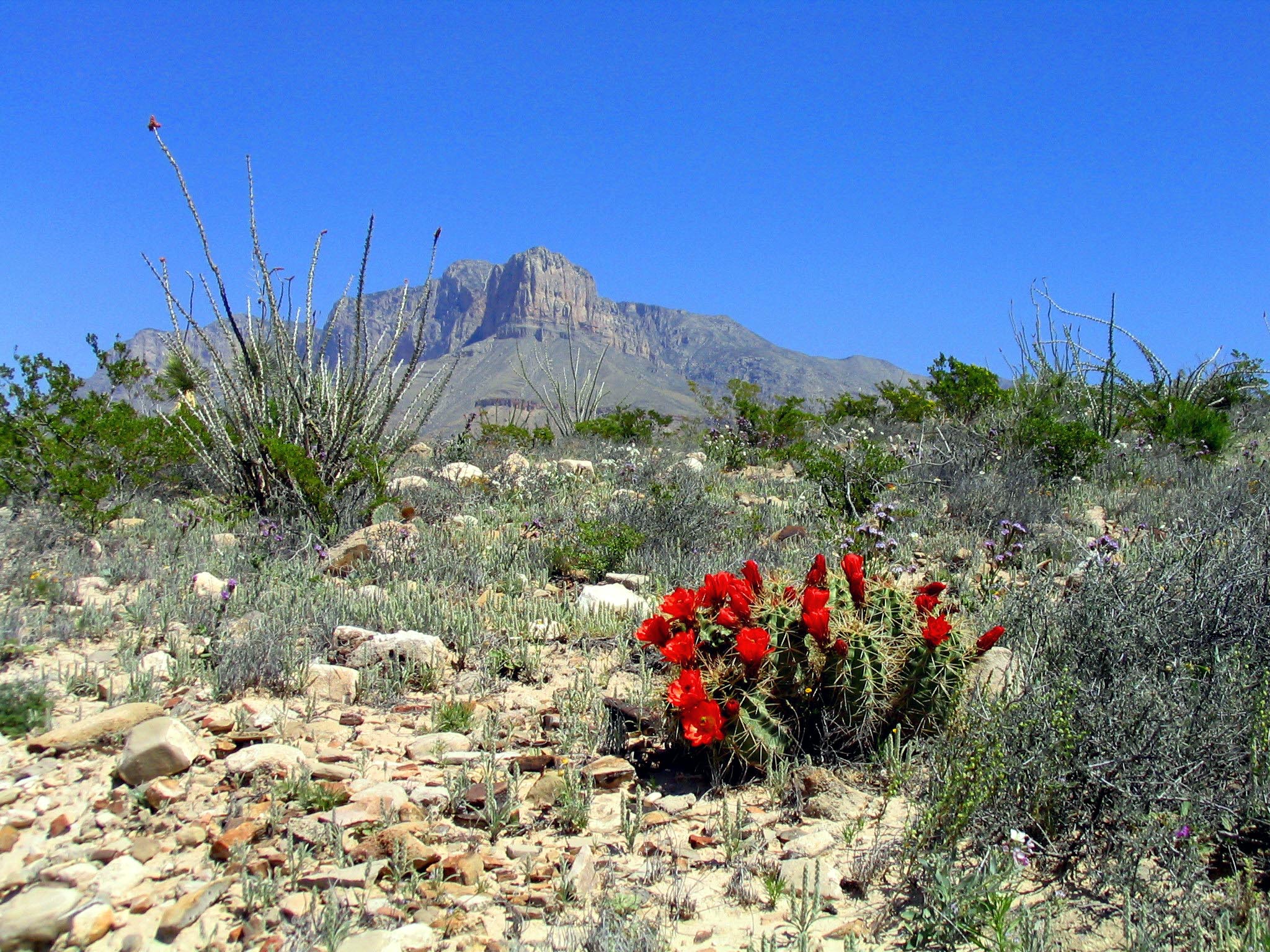
Third, the dark-sky quality. This is not emphasized in the official materials, but the Guadalupe Mountains have some of the darkest skies in Texas. Once the sun goes down and the wind drops (it often does around sundown), the Milky Way is visible as a distinct band of light stretching from horizon to horizon. The lack of ambient light means you will see stars at magnitudes you cannot make out from most campgrounds. Bring a red-light headlamp and plan to spend at least an hour just looking up.
Photo: NPS via NPS.gov (Public Domain)
Current Alerts That Affect Your Trip
As of early 2026, three active notices apply to the broader park area and may influence your plans.
Park Store To Go Cashless (effective August 14, 2025): The park store now accepts only credit cards, debit cards, and mobile payments. If you were planning to buy last-minute supplies with cash, you will need another method.
Williams Ranch Road Closed: The road is impassable and closed to public access due to unsafe conditions. This does not affect the Guadalupe Peak Trail or the campground, but if you had planned a side trip to the ranch, adjust your itinerary.
Devil's Hall Rated Strenuous: The hike to Devil's Hall involves rock scrambling in a wash, and the surface is loose gravel and unstable rock. Conditions become dangerous when wet. This is a separate trail from the Guadalupe Peak route, but worth noting if you are combining multiple days of hiking.
None of these alerts directly close the guadalupe peak wilderness campground, but the Williams Ranch Road closure and the Devil's Hall warning may affect multi-day trip planning.
Practical Takeaways
Reserve your permit in advance through recreation.gov. The $6 reservation fee plus $6 per person per night applies. Groups of four for one night pay $30 total.
Arrive at the trailhead by 10 AM to give yourself enough daylight to hike the 3.1 miles, set up camp, and still have time to relax before dark.
Carry at least 3 liters of water per person for the hike in, plus 2 more liters for the overnight. There is no water at the campground.
Use a tent rated for wind. A sturdy three-season with extra guylines can work, but a four-season is better. Stake everything, including guylines you might normally skip.
Pack layers. Nighttime temperatures at 7,300 feet in the Guadalupe Mountains can drop 30-40 degrees below daytime highs. In April, expect daytime 70s and overnight 30s.
Leave no trace applies fully. Pack out everything, including food scraps and toilet paper. No campfires are permitted.
The 1-mile hike from the campground to the summit is steep but manageable with a light day pack. Plan to start that section by 7 AM to avoid afternoon heat and thunderstorms.
For a full rundown of camping options across the park, including front-country and backcountry sites, the all campgrounds page covers each option with site-specific details.
Photo: NPS via NPS.gov (Public Domain)
Final Thoughts
The Guadalupe Peak Wilderness Campground serves one purpose: it lets you sleep on the trail instead of starting from the bottom. That single choice changes the entire experience of climbing the highest point in Texas. You hike in at a comfortable pace, set up camp mid-afternoon, watch the light change across the desert below, summit fresh the next morning, and descend with enough energy to actually enjoy the views instead of just surviving the climb.
The wind is real. The exposed site is not for everyone. But for hikers who understand what they are signing up for - a primitive, exposed backcountry camp with five pads and no services - it is the best way to do the peak. Check the weather, reserve your permit, and bring tent stakes that can handle a fight.