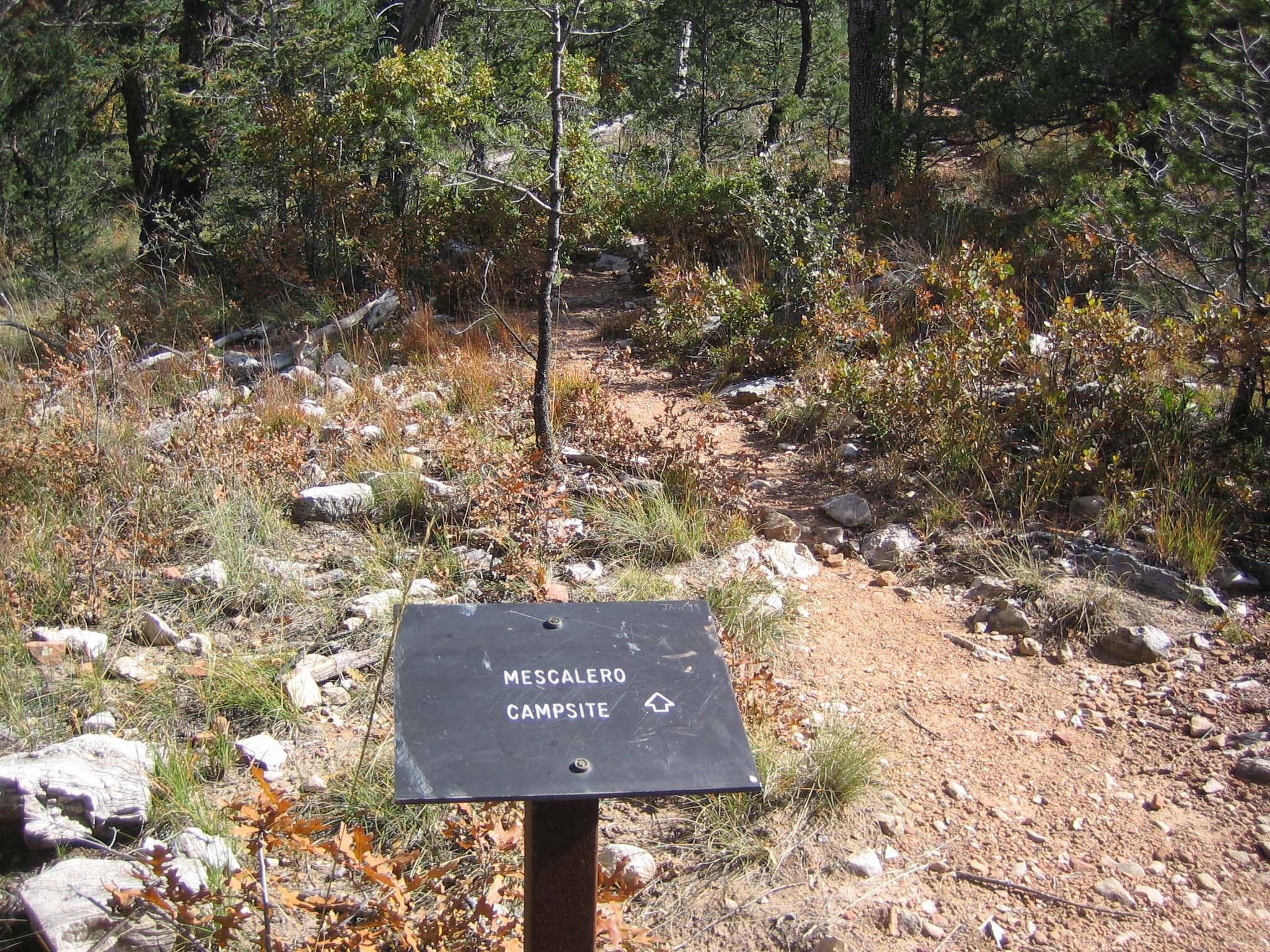
Why would you hike 4.7 miles with a full pack only to camp on a slope overlooking a dry drainage? Because that slope sits at the intersection of some of the best trail networks in Guadalupe Mountains National Park, and the drainage means you won't be sharing the ridge with wind gusts that flatten tents. The Mescalero Wilderness Campground fills a specific niche for backpackers who want a strategic base camp rather than a scenic destination campsite. Located on the Tejas Trail, it's 6.2 miles from the Pine Springs Trailhead or 4.7 miles from Dog Canyon, placing it roughly in the middle of the park's primary north-south corridor.
NPS via NPS.gov (Public Domain)
Campsites at Mescalero Wilderness Campground (2026 Guide)
7 min read
Campsite Guide
If you're parking at Pine Springs, arriving before 8 AM is your best bet for a spot in the upper lot near the trailhead.
Your plans
For more, see complete visitor guide, Campsites at Dog Canyon Campground (2026 Guide), Campsites at Mckittrick Ridge Wilderness Campground (2026 Guide), Campsites at Shumard Canyon Wilderness Campground (2026 Guide), and Campsites at Wilderness Ridge Wilderness Campground (2026 Guide).
This is not the kind of campground you book for the views. You book it because it works. And for the right kind of trip, it works extremely well.
What Makes This Campground Different
Location and Layout
Mescalero sits in ponderosa pine and brush on a slope that tilts toward a small drainage. The tent pads are cut into the hillside, and they're the standard wilderness-issue level platforms - sufficient for a single tent, not generous. The slope means you'll want to orient your sleeping bag carefully. Most people learn this the hard way around 3 AM.
The campground is intentionally unobtrusive. You won't see it from the trail until you're right on top of it. The sites are spaced far enough apart that you won't hear your neighbors' conversations, though you will hear their tent zippers. The tree cover is mixed ponderosa and oak brush, which provides afternoon shade but doesn't block the view of the sky at night.
The Permit System
Every person staying here needs a Wilderness Use Permit. The fee structure as of 2026 breaks down as: a $6 reservation fee per permit, plus $6 per person per night. For a solo hiker doing one night, that's $12 total. A group of three for one night pays $24. You can reserve through recreation.gov, and you should - walk-up permits are available but not guaranteed, and this campground sees consistent use from early spring through late fall.
Rangers will tell you the most common mistake people make is underestimating how long it takes to get here. The Tejas Trail is not flat. The 6.2 miles from Pine Springs Trailhead gains roughly 1,800 feet of elevation, and the last mile before the campground switchbacks through loose stone that makes the final approach slower than you expect.

Trail Access and Route Planning
Using Mescalero as a Base Camp
The campground's position on the Tejas Trail makes it a practical hub. From here you can access:
- The Tejas Trail continues north to Dog Canyon (4.7 miles) or south back to Pine Springs (6.2 miles)
- Side trips to Bush Mountain and the high ridge country are within day-hike distance
- Connections to McKittrick Canyon are possible on longer loops, but require an early start
Most visitors underestimate the value of a base camp setup here. The standard approach runs like this: hike in from one trailhead with a full camp, drop your heavy gear at site, then spend the afternoon doing a ridge hike with just a day pack. The next morning you pack out the opposite direction you came in, completing a through-hike rather than an out-and-back.
This works well for people who prefer to travel light once the big gear is stashed. The Tejas Trail narrows here in sections where you'll be walking through head-high brush, and a day pack makes those stretches significantly easier than a full overnight load.
The Hiking Reality
The Tejas Thru Hike connecting Pine Springs to Dog Canyon runs 7-9 hours for most hikers carrying full overnight packs. If you're splitting that trip with an overnight at Mescalero, you're looking at a 3-4 hour hike to camp on day one and a comparable hike out on day two. That's a manageable pace that leaves room for side exploration.
Cell service drops out well before you reach the campground. The parking situation at both trailheads can be tight on weekends - Pine Springs fills earlier than Dog Canyon. If you're parking at Pine Springs, arriving before 8 AM is your best bet for a spot in the upper lot near the trailhead.

What to Expect When You Arrive
The Campsite Experience
The tent pads are graded but not groomed. You'll want a full ground cloth - the slope means runoff channels during rain, and water will find the low edge of your tent. Ponderosa pine drops needles constantly, so expect a layer of duff on everything by morning.
The brush around the sites provides natural windbreaks, but it also means you need to check for ticks after any off-trail movement. Deer and elk move through the drainage below camp. Most visitors hear them before they see them. Listen for wild turkeys off in the distance - they're active in the early morning and late evening, and their calls carry surprisingly far through the pines.
Water Management
There is no reliable water at Mescalero. The small drainage below camp may hold water after significant rain, but you should not count on it. Pack in everything you need. For a two-night stay, that means at least a gallon per person per day for drinking and cooking. The nearest reliable water sources are at the trailheads, which is one reason hikers often do this as a one-night through-trip rather than a multi-day stay.
Quiet Hours and Wildlife
As a wilderness campground, there are no enforced quiet hours - the concept is built into the permit system. Groups are limited to protect the sensitive desert ecosystem. Day-use hiking groups may not exceed the park's group size limits, and the same applies here. If you're with a larger party, you'll need to split across multiple sites.
Keep an eye out for javelina in the brush. They move through this area regularly, and while they're not aggressive, they will investigate unattended packs if food smells linger. The park service recommends bear-resistant containers for all food storage, even though black bears are uncommon at this elevation. The real thieves are the smaller mammals - mice, ground squirrels, and jays will all work through a stuff sack if given the chance.

Seasonal Considerations
Spring and Fall (Optimal Windows)
March through May and September through November are the sweet spot. Daytime temperatures run 60-75°F at this elevation, with nighttime lows dropping to 35-45°F. The wind picks up in April, and exposed sections of the Tejas Trail can feel significantly colder than the campsite. Pack a shell layer even if the morning starts calm.
Summer
June through August brings afternoon thunderstorms that build fast. You want to be off the ridge and in camp by early afternoon. The ponderosa canopy at Mescalero provides decent cover, but lightning risk exists anywhere on the slope. The tent pads sit under trees, which is comforting during rain but means you'll hear the thunder roll directly overhead. Start your day hikes early - before 6 AM - and plan to be back at camp by 1 PM.
Winter
December through February is cold. Nighttime lows regularly hit the teens, and the short days mean you're spending 14 hours in the dark. Less popular for obvious reasons, but the solitude is unmatched. The trail can hold ice patches in shaded sections through late morning. Microspikes are worth the weight.

Practical Takeaways
- Reserve your permit in advance through recreation.gov. The $6 reservation fee plus $6 per person per night is non-negotiable - show up with confirmation.
- Pack all your water. No reliable sources on the trail between trailheads and camp. Minimum one gallon per person per day.
- Approach from Dog Canyon if you want the shorter hike. 4.7 miles versus 6.2 from Pine Springs. Both have similar elevation profiles.
- Use this as a through-hike base camp. Hike in from one trailhead, stay one night, hike out the other. The 7-9 hour Tejas Thru Hike becomes a comfortable two-day trip this way.
- Bring a full ground cloth and stake out your tent carefully. The slope is real, and you'll slide downhill without proper guying.
- Store food in bear-resistant containers. The small mammals here are persistent, and jays will shred a nylon stuff sack for a granola bar wrapper.
- Pack microspikes if visiting November through March. Shaded trail sections hold ice longer than you expect.
Final Thoughts
Mescalero Wilderness Campground isn't the most dramatic place to spend a night in Guadalupe Mountains. It doesn't have the summit views of Guadalupe Peak Campground or the canyon setting of McKittrick Ridge. What it offers is logistics - a solid, functional midpoint on the Tejas Trail that turns a long day hike into a comfortable two-day loop. The pine duff under your sleeping pad, the sound of turkeys calling from the drainage at dawn, the knowledge that every ridge within sight is accessible with a day pack from here - that's the value proposition. It's a working camp, not a destination, and for hikers who understand the difference, it's exactly right.
For more information, see our complete Guadalupe Mountains National Park Guide.
Sources
- Official source: National Park Service nps.gov/gumo/planyourvisit/mo_wcg.htm
- Official source: NPS — Guadalupe Mountains National Park nps.gov/gumo/index.htm
Photo Gallery
More to Explore
Park Guide
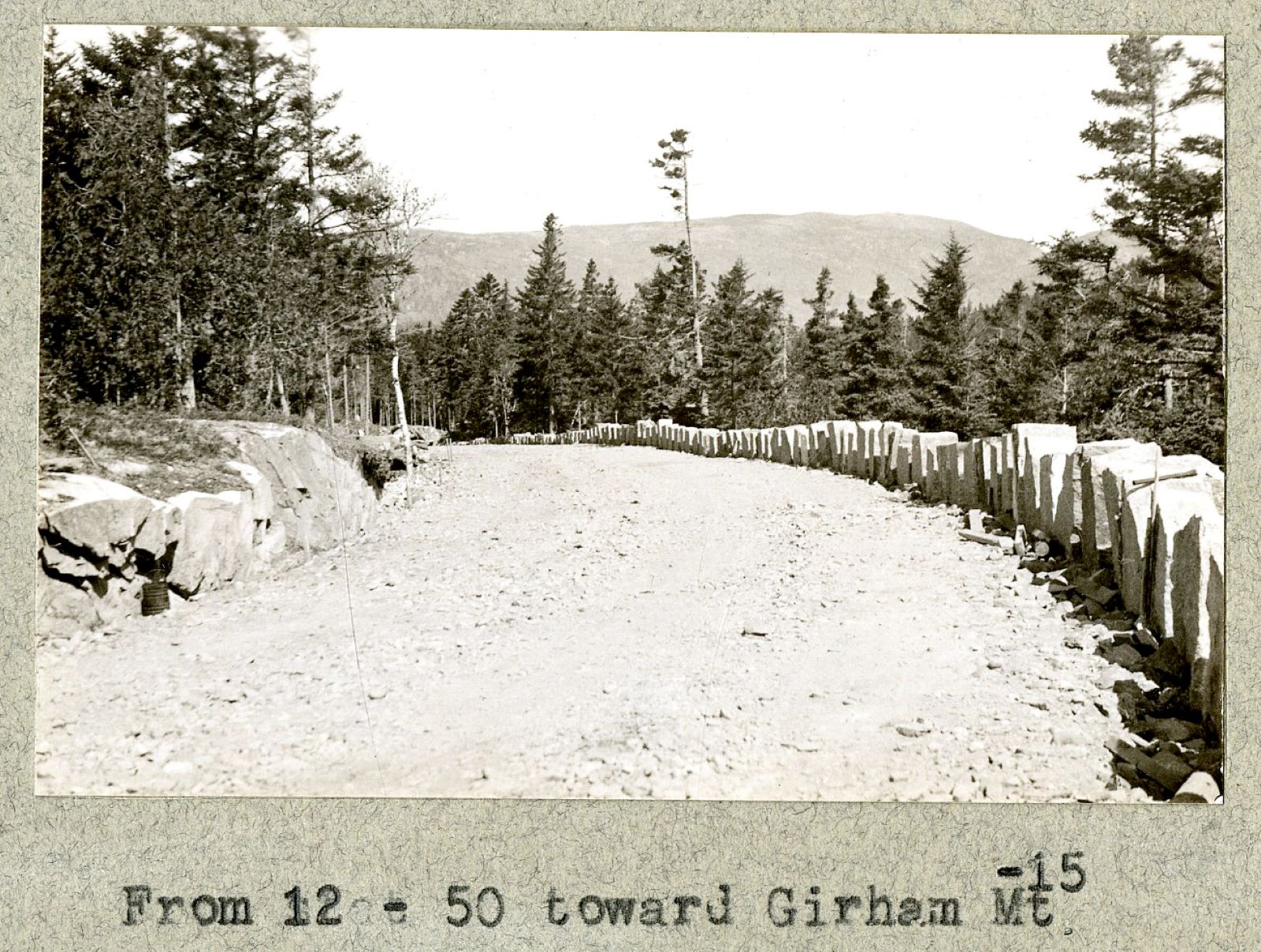
Acadia National Park: Carriage Roads, Cadillac Mountain & 2026 Guide
Discover carriage roads, Cadillac Mountain, and rugged Maine coast. Complete 2026 guide to Acadia National Park — trails, fees, lodging, permits, and what rangers recommend.
Hiking Guide
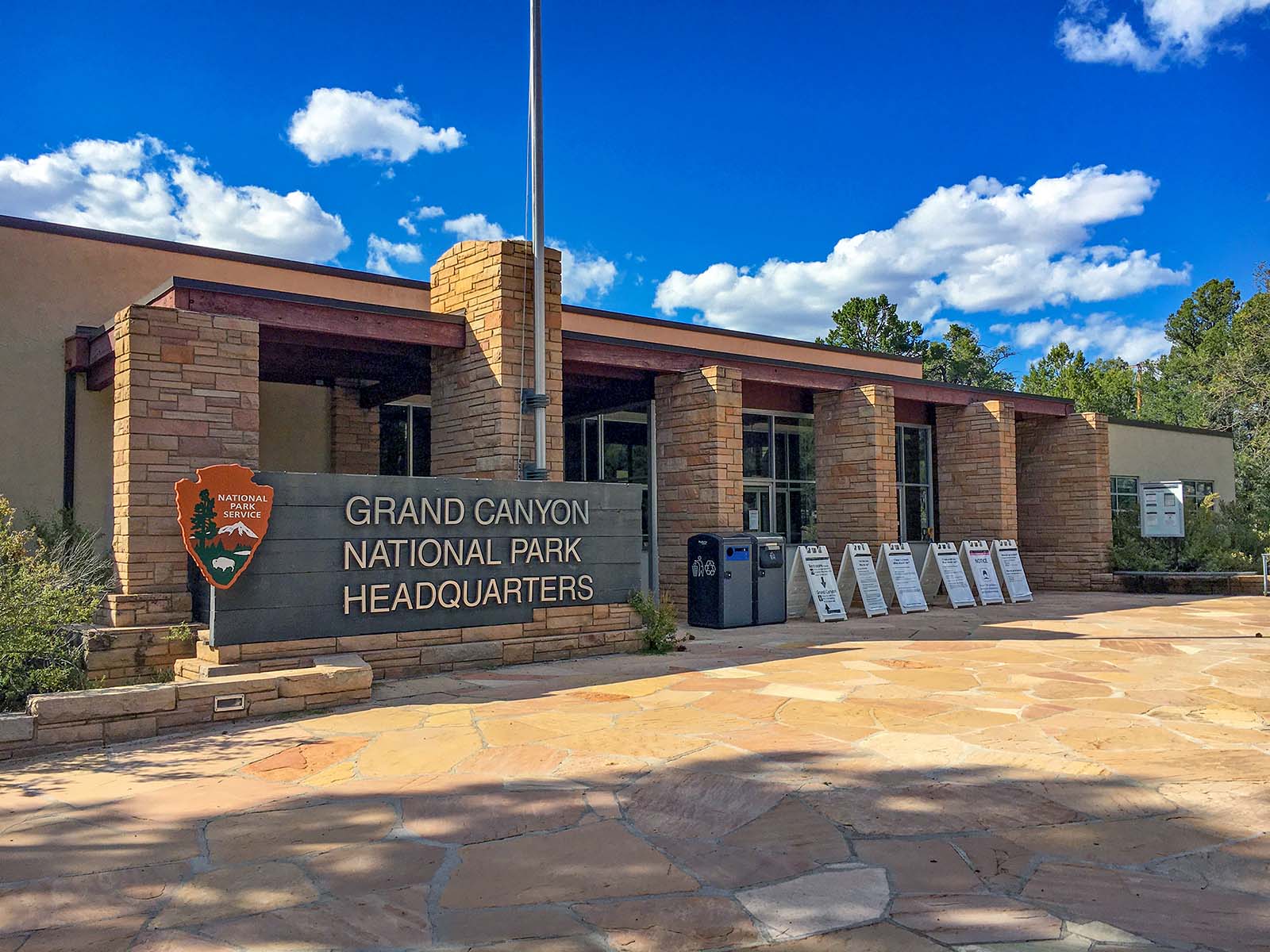
Grand Canyon Hiking Trails: Day Hikes, Water Sources & Rim to Rim
Compare Grand Canyon hiking trails: Bright Angel, South Kaibab, Hermit, Grandview, and rim to rim, with distances, elevation, water stops, and trailhead access for each.
Best Of
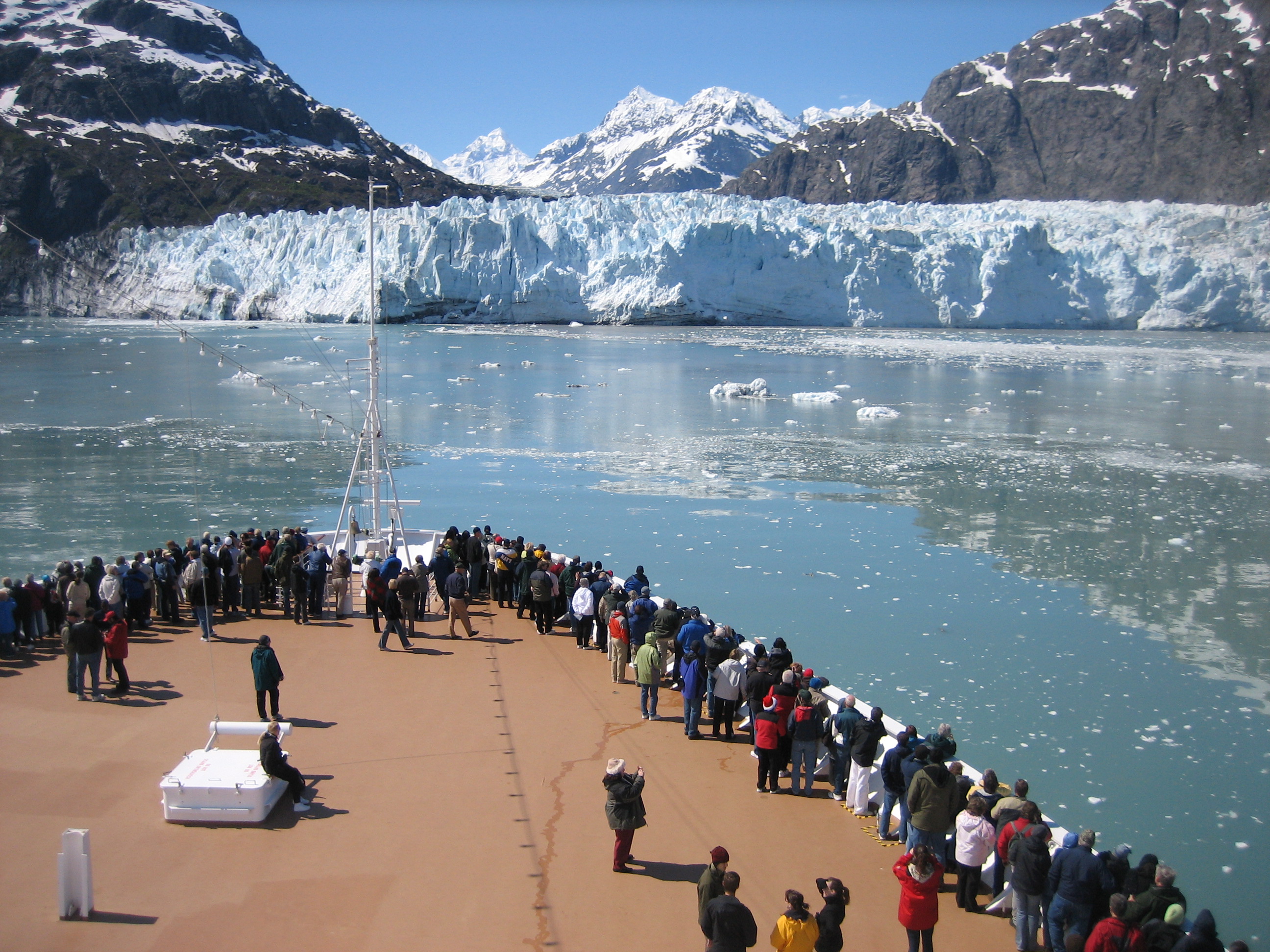
Best of Glacier Bay National Park
The best of Glacier Bay is reached by boat: ranger-led day tours up the bay to the tidewater glaciers. What's worth it, how to book, and when to go (2026).
Campsite Guide
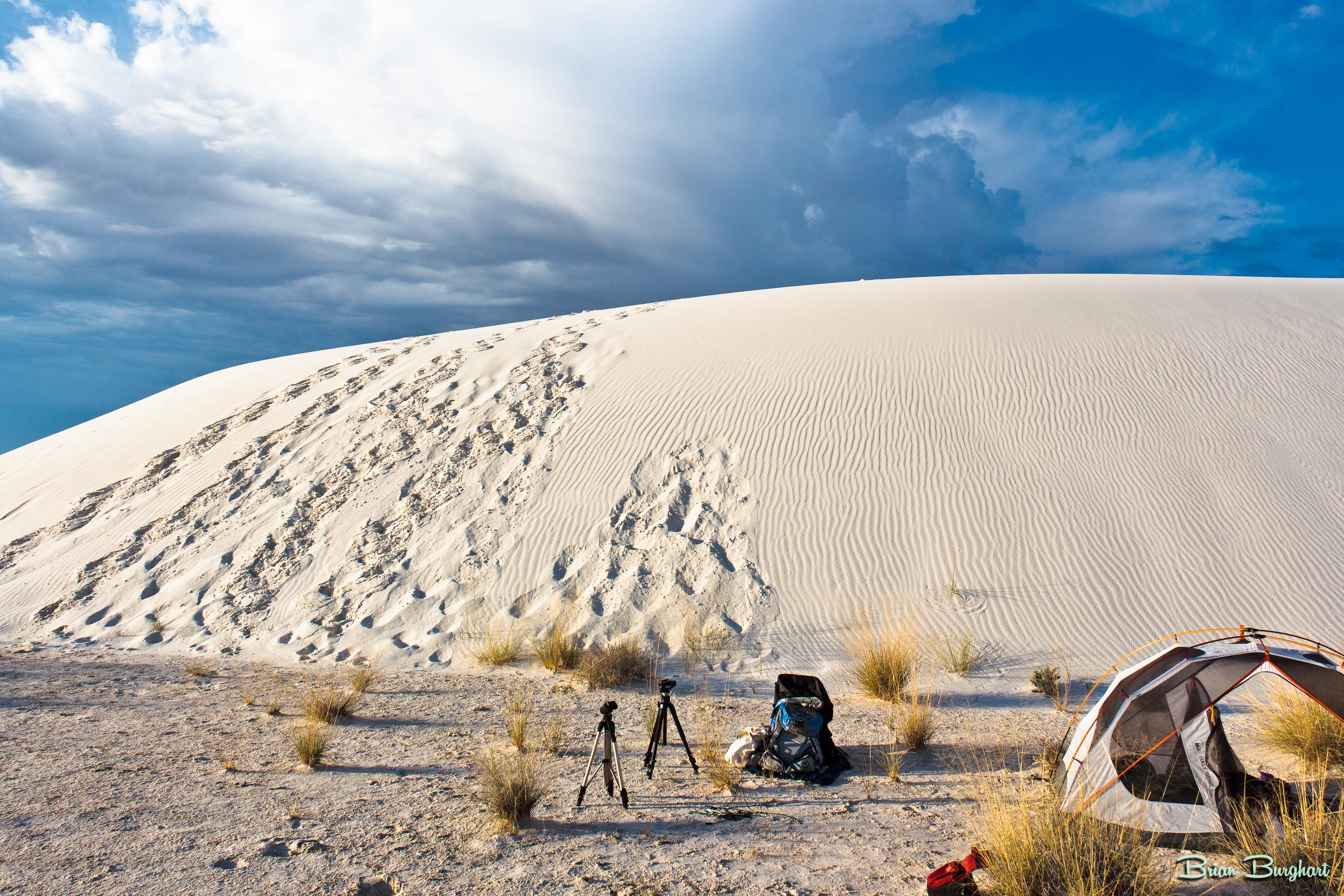
White Sands Backcountry Camping: Closed for 2026 — What to Know
As of 2026, backcountry camping at White Sands National Park is closed for site rehabilitation. What that means, and where to camp nearby instead.
Weather Guide
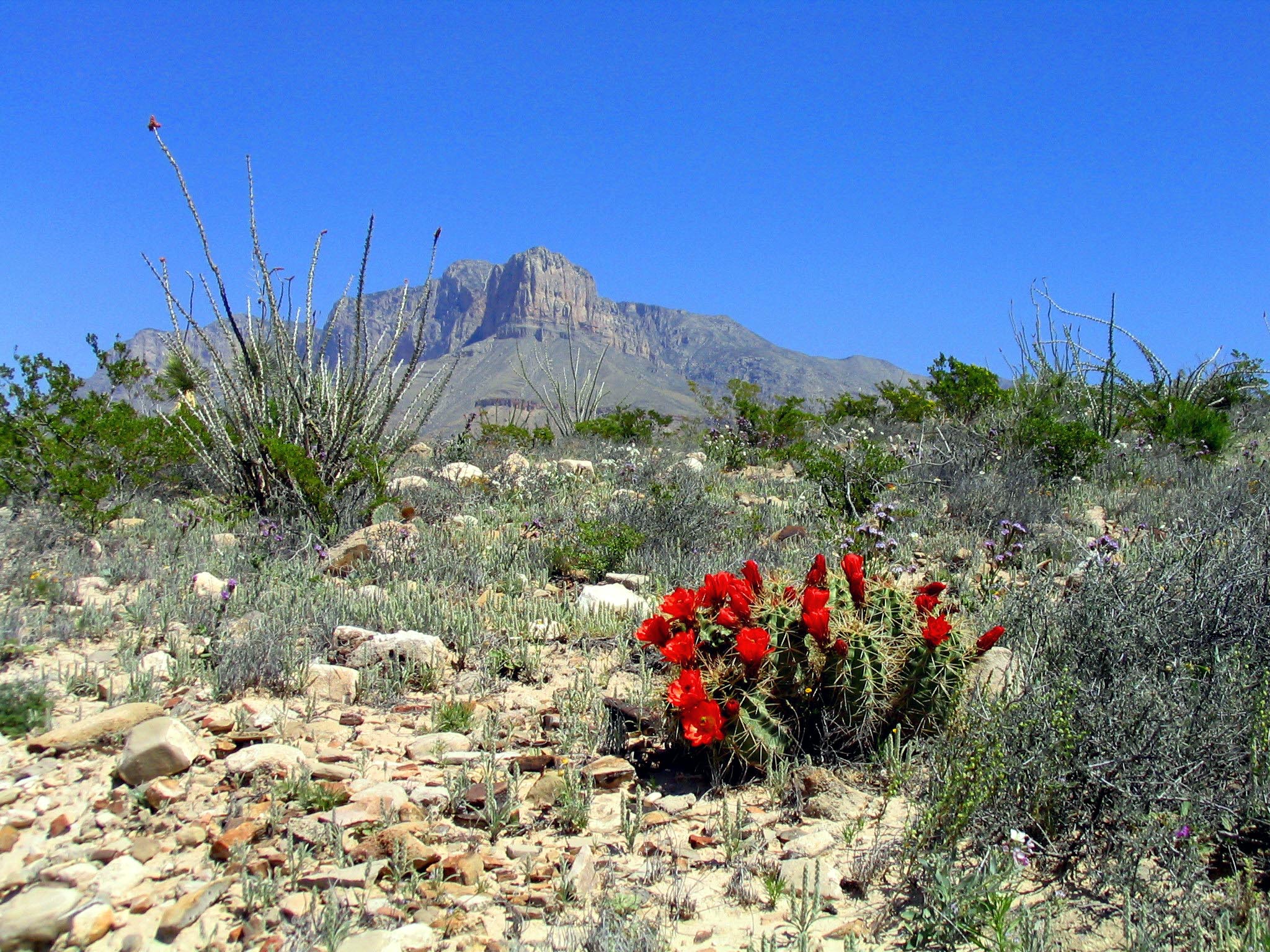
Guadalupe Mountains National Park Weather: Weather
Guadalupe Mountains National Park: weather guide guide updated 2026. Practical visitor information, reservations, and seasonal tips worth bookmarking before
Best Of
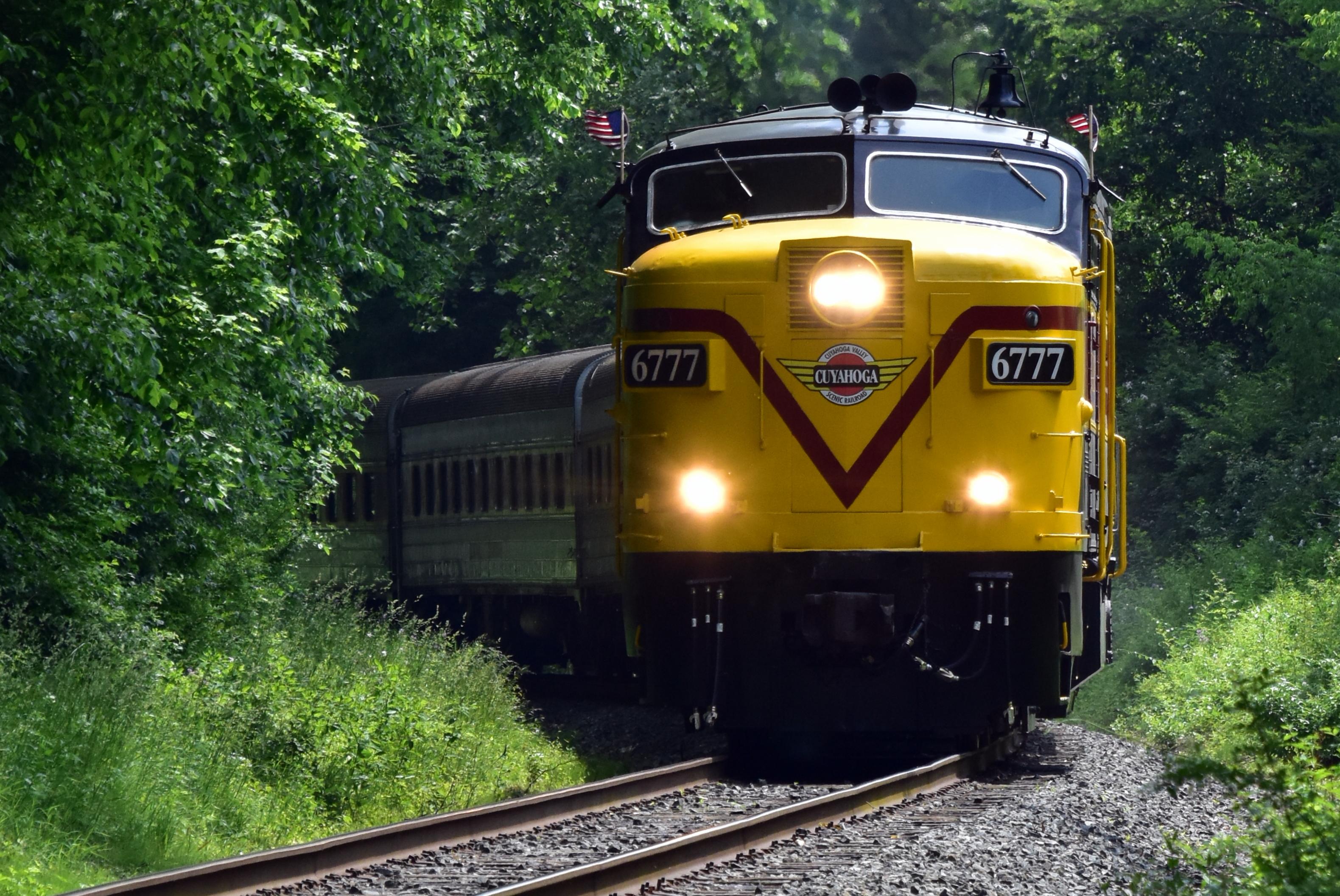
Best of Cuyahoga Valley National Park: Best Things to Do
Seeing a Cleveland Orchestra concert with the woods as your backdrop is a uniquely Cuyahoga Valley experience.
Sign in to join the conversation.
Sources & Attribution
Location data courtesy of the National Park Service (U.S. Department of the Interior). NPS data is public domain. Official NPS page.
Images: NPS; NPS; NPS; NPS; NPS.
Map data © OpenStreetMap contributors.
Park operations alerts: NPS.gov · Weather and weather hazards: National Weather Service · Live conditions.
Information may change. Always verify fees, hours, and conditions directly with the official source before visiting.
Did this guide help? Share it with a friend.