You can count the campgrounds inside Canyonlands National Park on one hand, and Willow Flat is the only one in the Island in the Sky district. With 12 first-come, first-served sites and no reservations accepted, it demands a different kind of planning than most national park camping. Here's what you need to know before you roll in expecting a site - because lots of people do, and lots of people get turned away.
NPS via NPS.gov (Public Domain)
Campsites at Island in the Sky (willow Flat) Campground (2026 Guide)
5 min read
Campsite Guide
With 12 first-come, first-served sites and no reservations accepted, it demands a different kind of planning than most national park camping.
Your plans
For more, see complete visitor guide, all campgrounds, hiking trails, lodging and accommodations, and Campsites at the Needles Campground (2026 Guide) (2026 guide).
Rangers will tell you that the Island in the Sky (Willow Flat) Campground operates on a simple rule: you show up, you pay, you claim your spot. No online booking. No waiting list. The campground is open year-round, and the nightly fee is $15 per site as of 2026 - that covers up to 10 people and two vehicles per site. For a broader look at what this district offers, see the complete visitor guide. And if you're weighing options across the park, check out the all campgrounds overview.
What You Get - and What You Don't
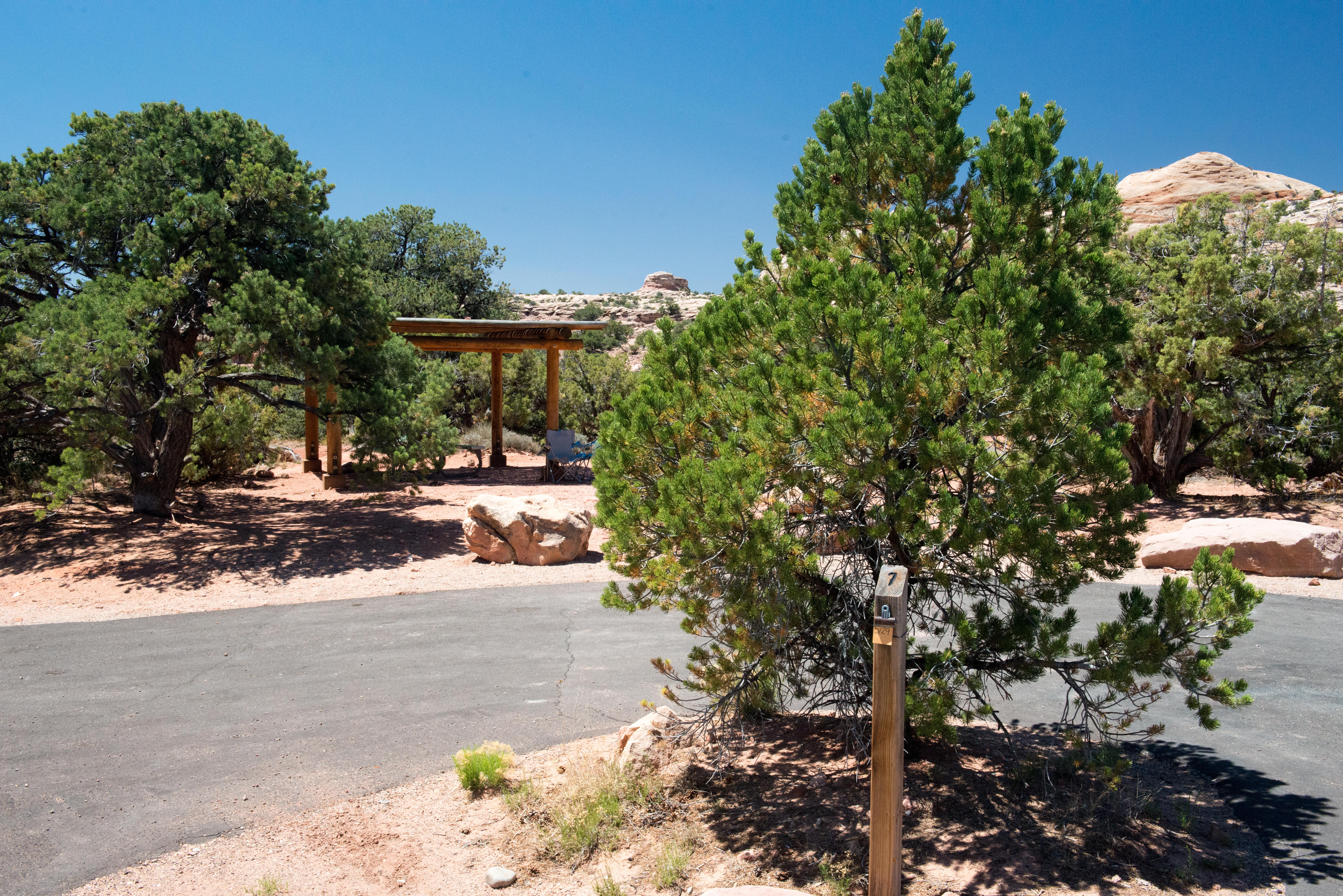
Each site comes with a picnic table and a fire ring. There are vault toilets in the campground, and they're maintained regularly - not luxury, but clean enough for a three-night stay. What you won't find is water. No spigots, no hookups, no tap. You need to bring every drop you plan to drink, cook with, or wash dishes in. Drinking water is available at the visitor center spring through fall, about a 10-minute drive from the campground, but that's not a substitute for packing your own supply.
The campground sits on a flat expanse of red dirt and slickrock, with sparse juniper and pinyon pine offering partial shade. Sites are spaced far enough apart that you're not on top of your neighbor, but close enough that quiet hours (10 p.m. to 6 a.m.) are enforced with reasonable strictness. The elevation is roughly 6,000 feet, which means summer nights cool off to the 50s and 60s - welcome after days that frequently hit the upper 90s.
Cell service drops out at the entrance station and rarely returns inside the park. Plan your directions, download your maps, and arrange meeting times with your group before you leave Moab or the highway.
Timing Your Arrival
First-come, first-served at 12 sites means you need to arrive early - really early - from March through October. Most visitors underestimate how quickly this campground fills. By 9 a.m. on a spring weekend, all 12 sites are usually spoken for. During peak fall and spring weeks, you might need to arrive by 7 a.m. or earlier. The parking situation here is straightforward: you pull into an open site, fill out the envelope at the self-registration board, and drop your payment. If no sites are open, you cannot park anywhere else overnight.
The common mistake is assuming you can arrive mid-afternoon after a day hike and find an opening. That works in winter (December through February), when use drops significantly and the 12 sites rarely fill. But in any other season, plan to arrive before the visitor center opens at 8 or 9 a.m., claim your site, then go explore.
The Overlook You Walk To
The campground's location is its strongest asset. Green River Overlook is less than a quarter-mile walk from the last campsite. From this overlook you can see the Green River snaking through the canyon 1,000 feet below, with the La Sal Mountains rising on the far horizon. Early morning is your best bet for photography - the low sun lights up the canyon walls in orange and red before the heat haze sets in. The trail narrows here as it approaches the rim, but it's an easy walk suitable for most abilities.
Rangers will tell you that many visitors drive to the main overlooks near the visitor center and miss this one entirely. That's your gain - it's quieter, closer to the campground, and offers a different perspective on the same canyon system. Pack extra water for this stretch even though it's short; the sun is unrelenting on the exposed rim.
Alerts and Conditions for 2026
Two current NPS alerts affect trip planning for this area, and they deserve attention before you leave home.
First, Hite Ramp on the Green River is closed. If you're planning a multi-day river trip through Cataract Canyon, your takeout options are limited. The primitive dirt take-out at North Wash is undergoing construction this spring, with potential delays up to five hours. The park service advises using a foot trail past Highway 95 for passenger and gear drop-off (steep incline), continuing on to Bullfrog, or adjusting your takeout plan entirely. This doesn't directly impact campground users who aren't running the river, but it's worth knowing if your trip includes a boat.
Second, expect longer wait times at the entrance station in 2026 - sometimes 30 minutes or more during peak hours. If overlook or trailhead parking is full, plan to return later. Do not park on vegetation or along roadways; rangers ticket aggressively, and your vehicle blocks emergency access. The park explicitly asks visitors to avoid parking on vegetation and roadways to preserve the fragile desert crust. This is not negotiable.
What the Park Website Doesn't Mention
The official page will tell you about the 12 sites, the fee, and the lack of reservations. What it won't tell you is that the campground has no shade structure, no dump station, and no recycling. Pack everything out - including food scraps and foil. Rodents and ravens are persistent here, so store food in a hard-sided cooler or bear-resistant container (not required, but strongly recommended). There are no bear boxes at the sites.
It also won't mention that the campground can get dusty in the afternoons when the wind picks up. A small tarp or windbreak can make a big difference if you're cooking. And if you're tent camping, bring stakes that can handle hard-packed dirt and shallow bedrock - the standard aluminum pegs often bend.
Practical Takeaways
- Arrive before 9 a.m. (March-October) to claim a site; earlier is better in spring and fall.
- Bring all your water - at least 1 gallon per person per day for drinking and cooking.
- Carry cash or check for the $15 fee; credit cards are accepted at the entrance station but not at the campground registration.
- Reserve a site at nearby BLM campgrounds or book a room in Moab as a backup if you don't want to risk the first-come gamble.
- Download offline maps before you lose cell signal (which happens about 5 miles inside the park boundary).
- The water at the visitor center is only available spring through fall; confirm with rangers if you're visiting in winter.
Final Thoughts
Willow Flat isn't fancy. It's a dry, exposed, 12-site campground with no frills. But it sits inside one of the most dramatic landscapes in the Colorado Plateau, within walking distance of an overlook that rivals anything in the park. If you understand the first-come system and come prepared, you'll have a basecamp that puts you miles ahead of the day-trippers. Just don't expect a site at 4 p.m. in April - that's a lesson best learned before you pull up.
For more information, see our complete Canyonlands National Park Guide.
Sources
- Official source: National Park Service nps.gov/cany/planyourvisit/camp-isky.htm
- Official source: NPS — Canyonlands National Park nps.gov/cany/index.htm
Photo Gallery
More to Explore
Park Guide
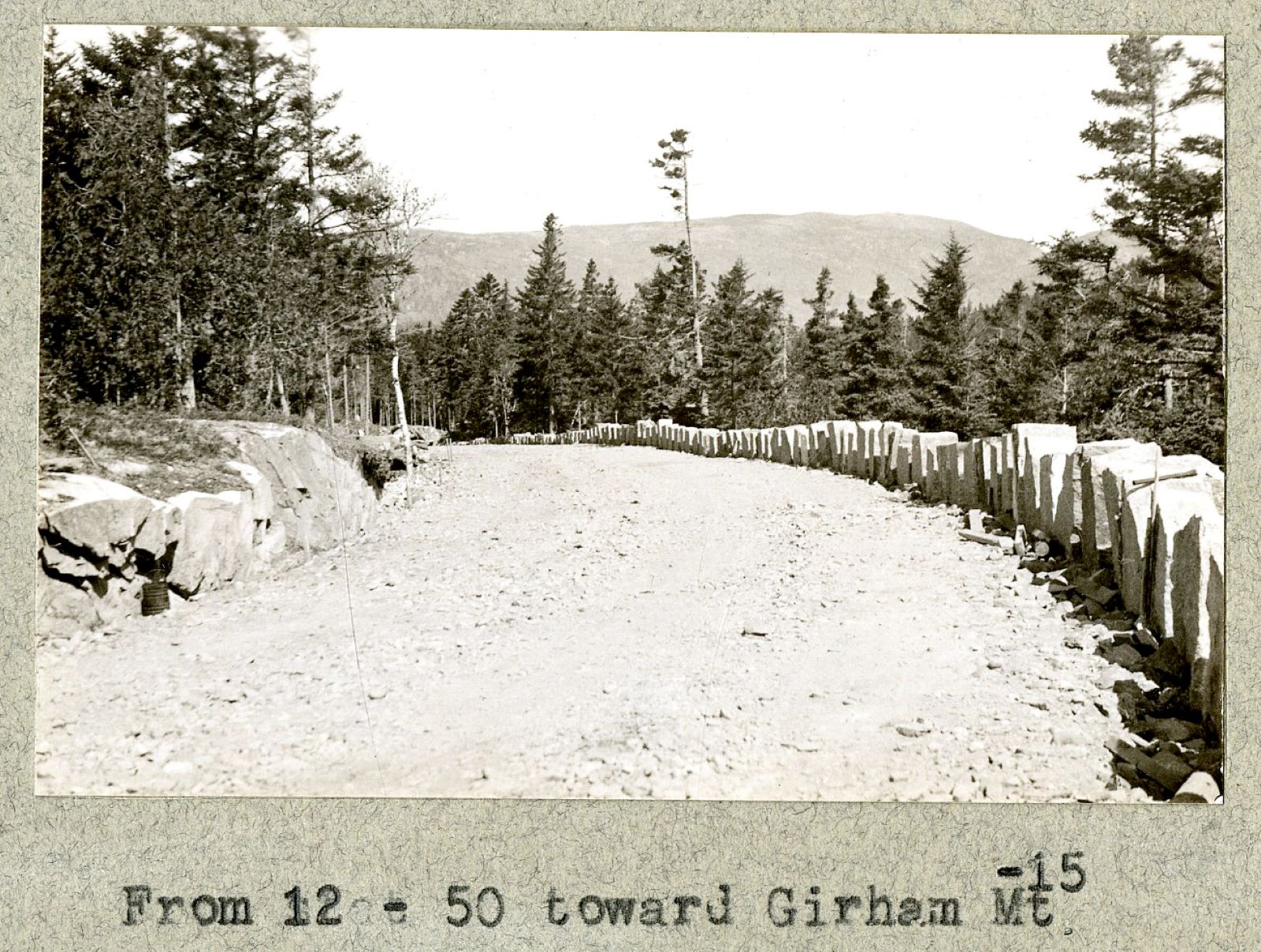
Acadia National Park: Carriage Roads, Cadillac Mountain & 2026 Guide
Discover carriage roads, Cadillac Mountain, and rugged Maine coast. Complete 2026 guide to Acadia National Park — trails, fees, lodging, permits, and what rangers recommend.
Hiking Guide
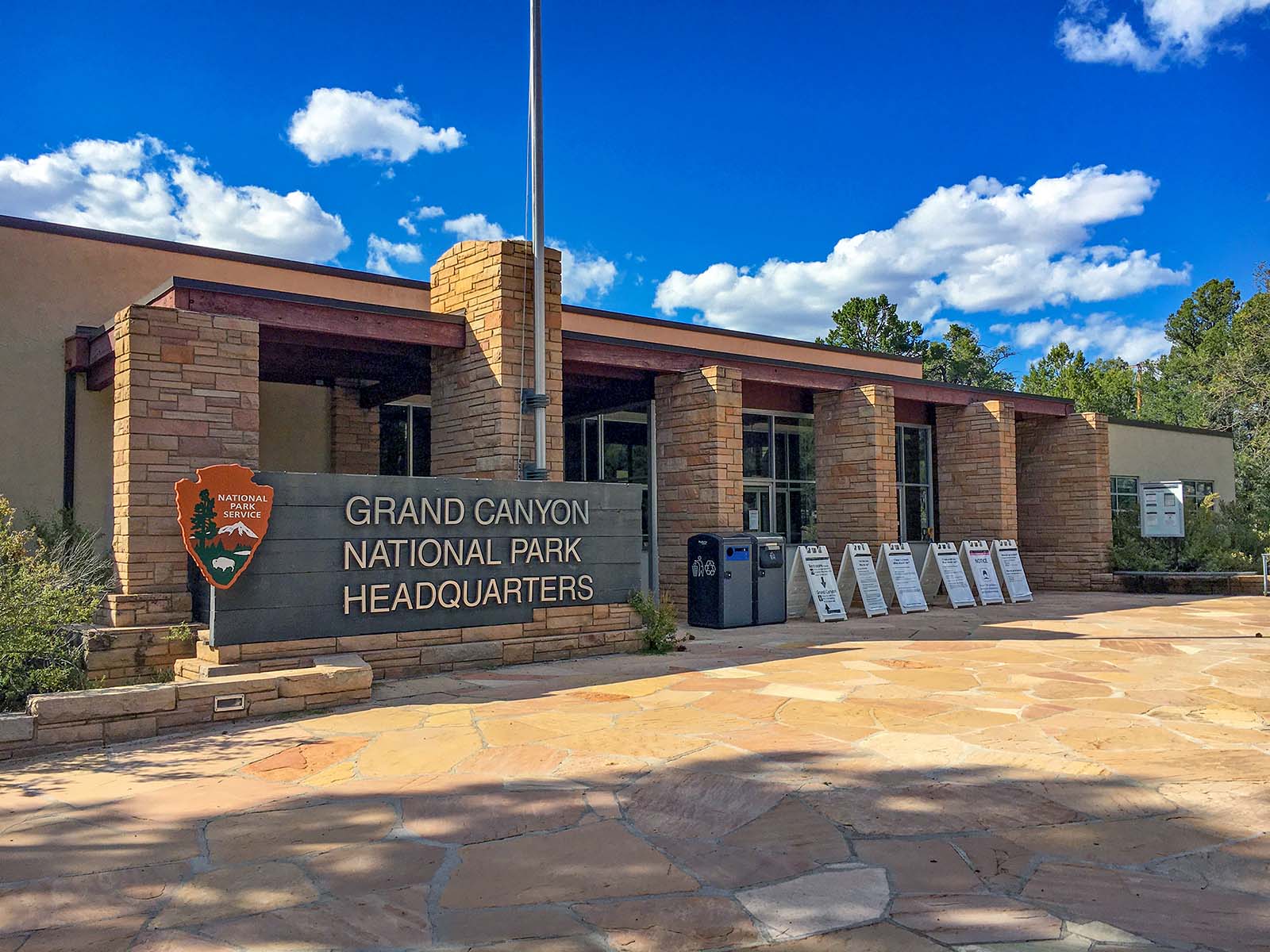
Grand Canyon Hiking Trails: Day Hikes, Water Sources & Rim to Rim
Compare Grand Canyon hiking trails: Bright Angel, South Kaibab, Hermit, Grandview, and rim to rim, with distances, elevation, water stops, and trailhead access for each.
Best Of
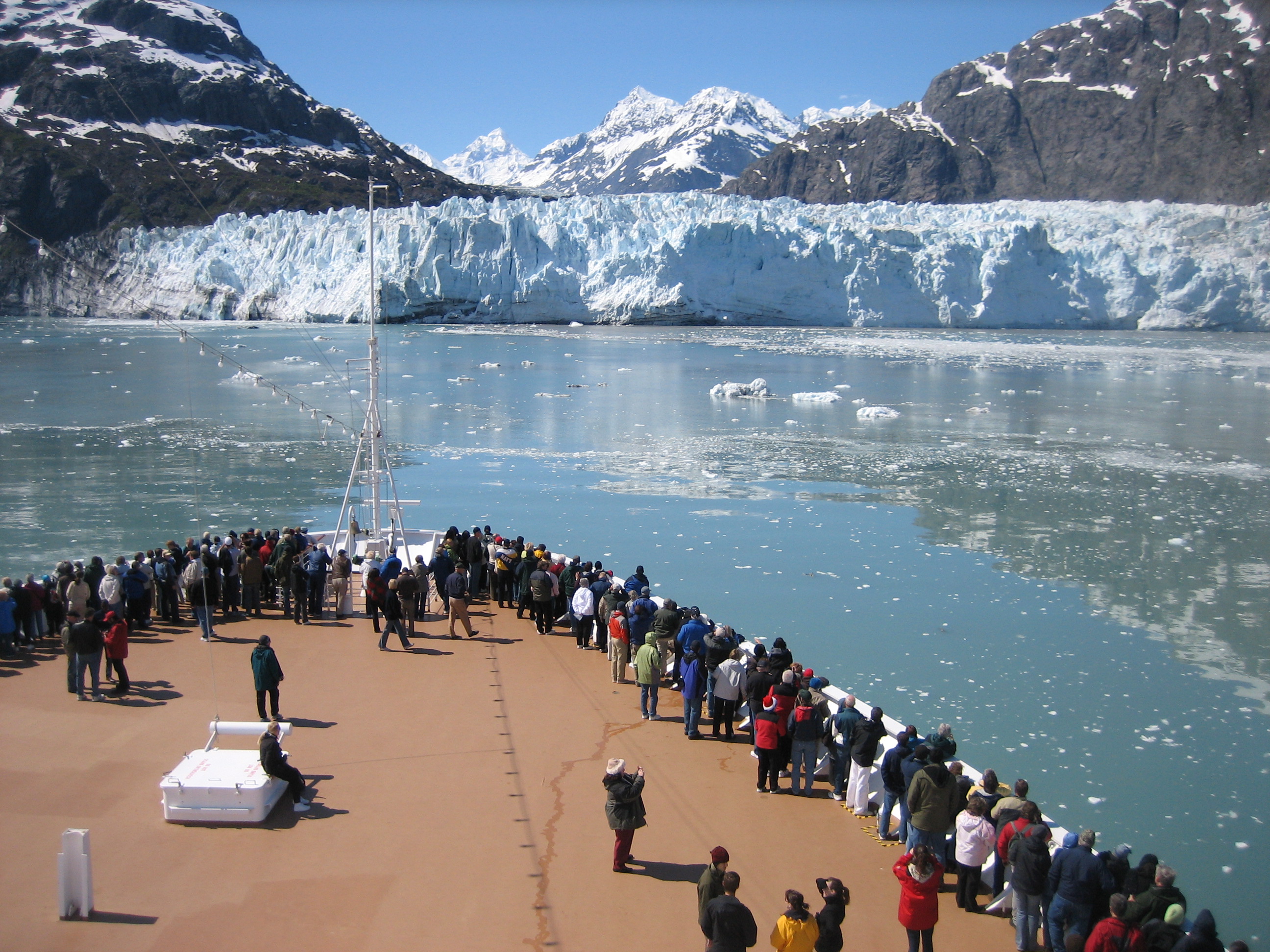
Best of Glacier Bay National Park
The best of Glacier Bay is reached by boat: ranger-led day tours up the bay to the tidewater glaciers. What's worth it, how to book, and when to go (2026).
Campsite Guide
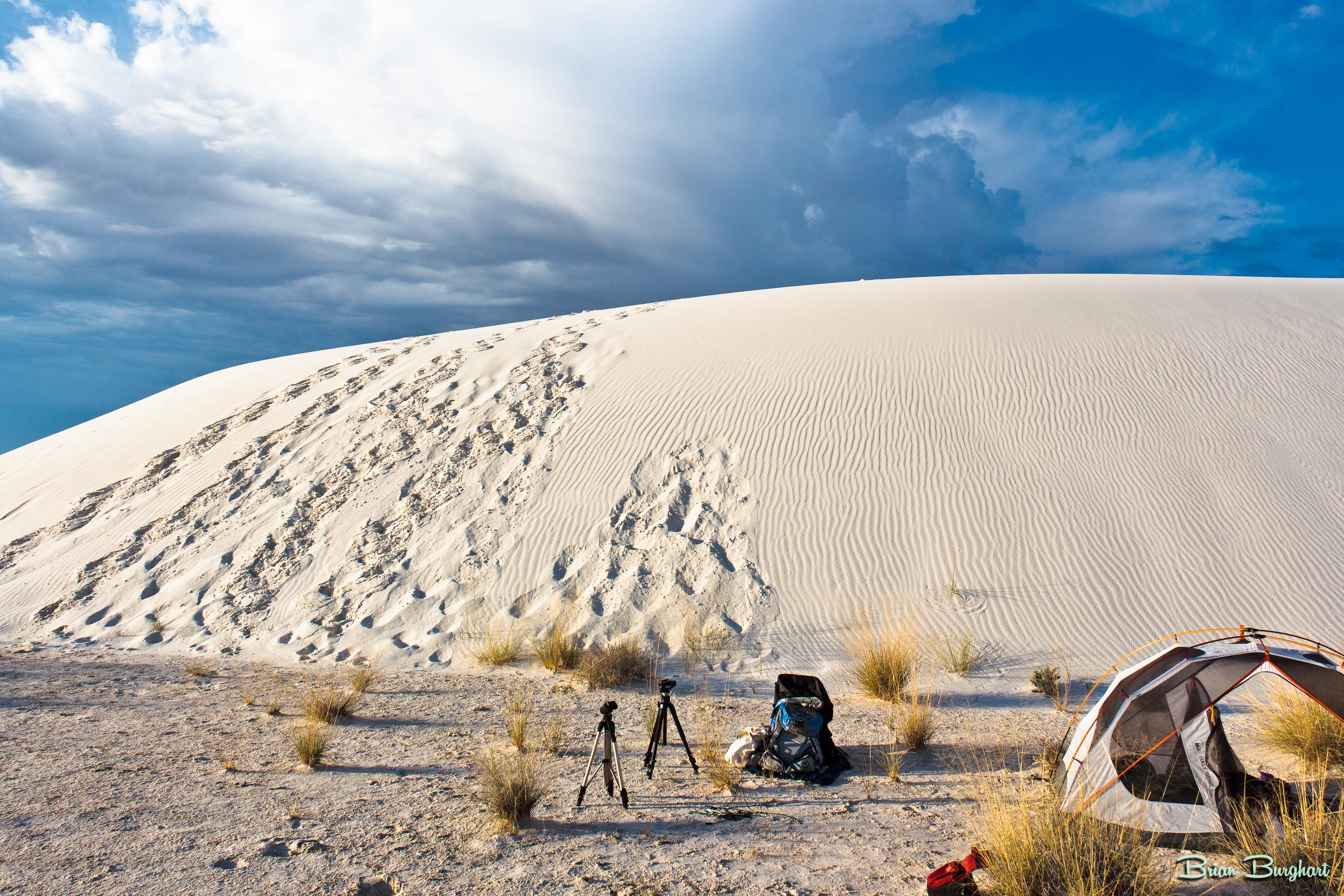
White Sands Backcountry Camping: Closed for 2026 — What to Know
As of 2026, backcountry camping at White Sands National Park is closed for site rehabilitation. What that means, and where to camp nearby instead.
Weather Guide
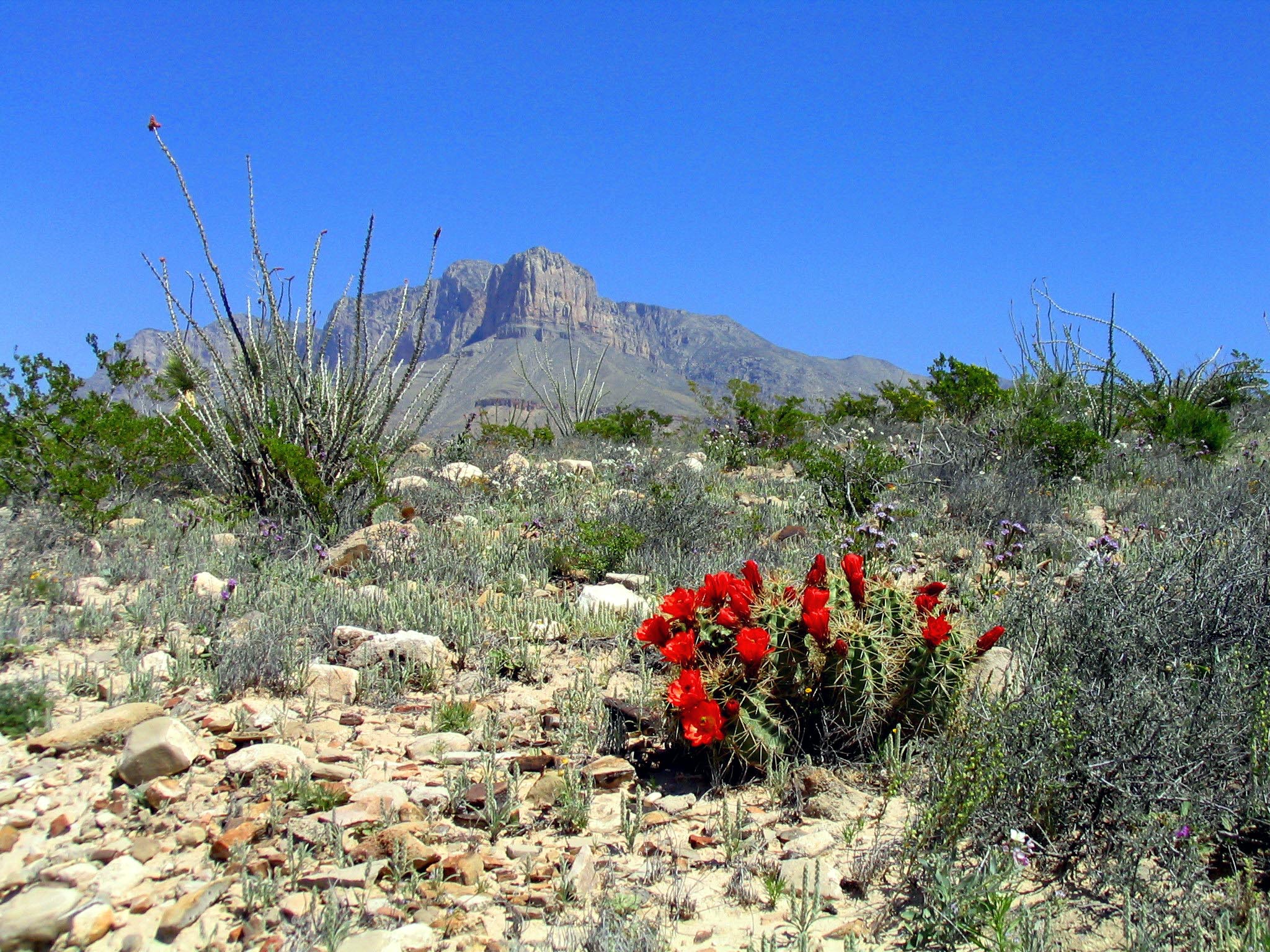
Guadalupe Mountains National Park Weather: Weather
Guadalupe Mountains National Park: weather guide guide updated 2026. Practical visitor information, reservations, and seasonal tips worth bookmarking before
Best Of
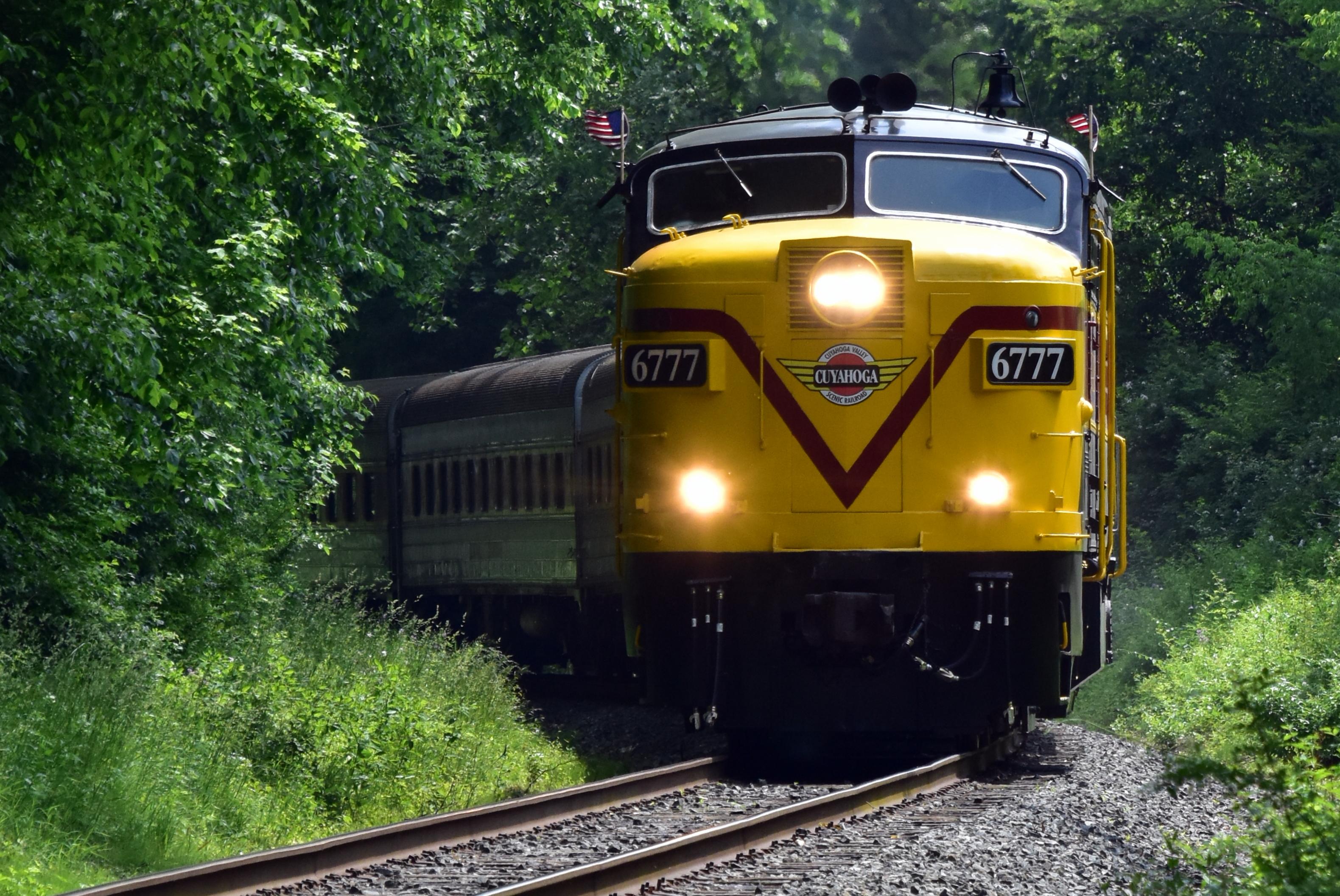
Best of Cuyahoga Valley National Park: Best Things to Do
Seeing a Cleveland Orchestra concert with the woods as your backdrop is a uniquely Cuyahoga Valley experience.
Sign in to join the conversation.
Sources & Attribution
Location data courtesy of the National Park Service (U.S. Department of the Interior). NPS data is public domain. Official NPS page.
Images: NPS; NPS; NPS; NPS; NPS.
Map data © OpenStreetMap contributors.
Park operations alerts: NPS.gov · Weather and weather hazards: National Weather Service · Live conditions.
Information may change. Always verify fees, hours, and conditions directly with the official source before visiting.
Did this guide help? Share it with a friend.