Arches National Park sits on the Colorado Plateau at roughly 4,000 to 5,600 feet in elevation, and that matters more than most first-time visitors expect. The term "high desert" gets thrown around a lot in the Southwest, but here it translates into a specific set of conditions: temperature swings of 40 degrees or more within a single day, intense UV exposure even when the air feels cool, and a complete absence of humidity for months at a time. What surprises people most is not the heat of July - it's how cold April mornings can feel after a sunny afternoon, or how quickly a clear sky can turn into a lightning-producing thunderstorm in late summer.
Advertisement
The park's weather is the single biggest variable in determining your experience. Arrive in June expecting comfortable hiking conditions and you'll confront 100°F afternoons with zero shade. Show up in January and the daytime highs might hit 50°F, but the trail surfaces - often exposed sandstone - radiate cold and the wind across the fins can drop the wind chill well below freezing. The best season to visit Arches National Park depends entirely on what you want to do and your tolerance for extremes, but two windows consistently work for most people: April-May and mid-September through October.
For a deeper overview of the park's layout and logistics, check the complete visitor guide.
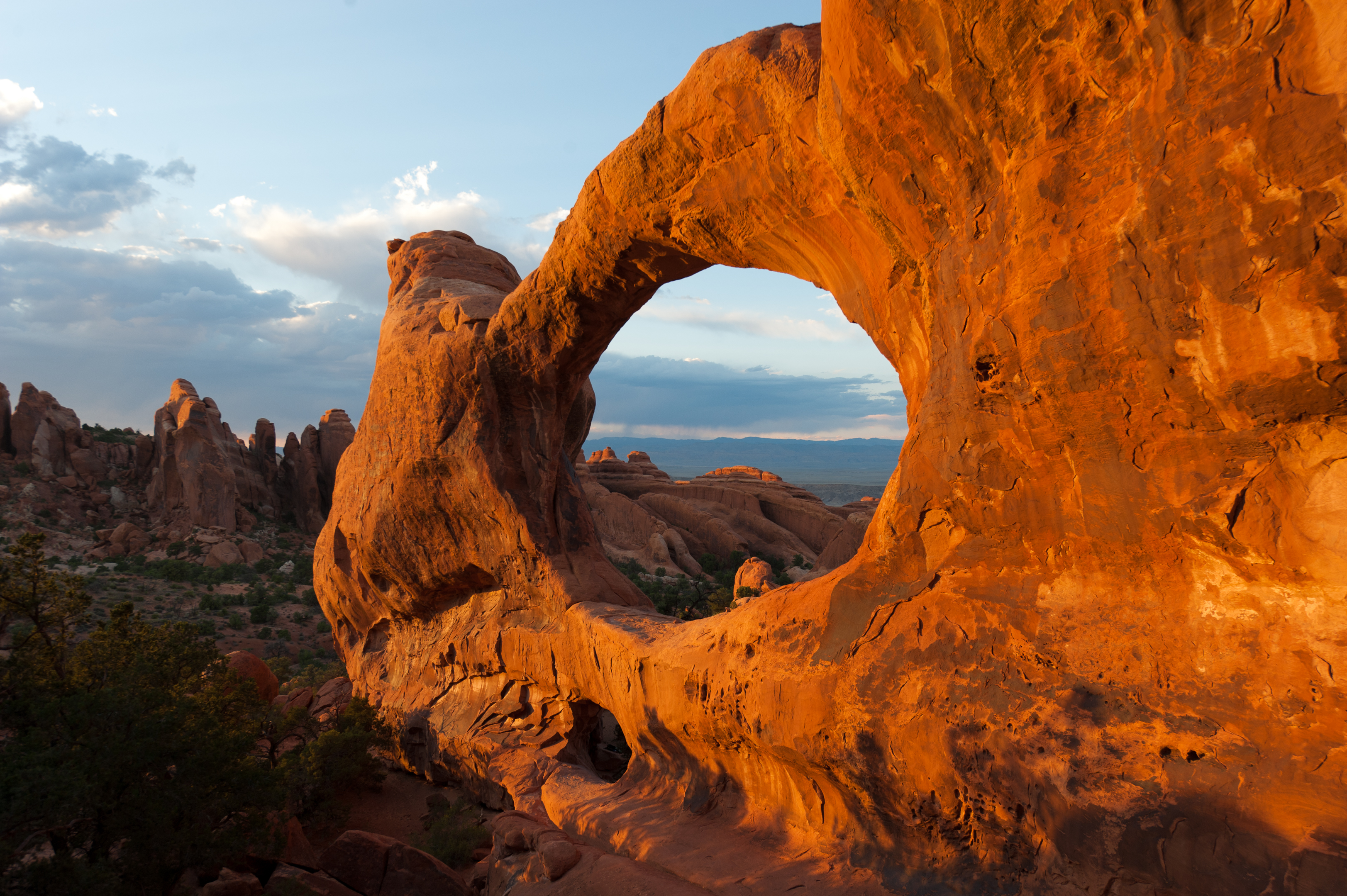
Photo: NPS via NPS.gov (Public Domain)
Month by Month
Spring (March-May)
March is transitional. Daytime highs average 50-65°F, but snow is still possible, especially early in the month. Trail conditions are variable - packed snow on north-facing slopes in the morning, mud by afternoon. Crowds are light early, pick up significantly by spring break periods. The park is open 24 hours, but the entrance station may have lighter staffing. Wildlife: mule deer are active in the lower elevations; ravens and scrub jays start nesting.
April marks the beginning of the reliable window. Highs climb to 60-75°F, lows sit in the 30s to low 40s. The ground dries out quickly. Trail conditions are excellent on most routes, though the more popular trails like Delicate Arch and Devils Garden can see parking fill by 9 AM by late April. This is the best month for combining comfortable hiking with manageable crowds - provided you start early.
May brings consistent 70-85°F daytime highs. The sun angle gets higher, and shade becomes a premium. Morning starts are essential. By mid-May, the weekend crowds are heavy. The park service recommends entering before 8 AM or after 3 PM to avoid traffic. This is one of the two prime months for the best season to visit Arches National Park for hiking.
Summer (June-August)
June is the hottest month. Highs regularly exceed 100°F. Lows drop to 50-60°F, offering a brief reprieve at dawn. Trail surfaces radiate heat - red rock absorbs it and holds it. Hiking after 10 AM becomes strenuous even for fit visitors. The park sees its highest visitation in June, with long lines at the entrance station by 8 AM. If you're considering hiking at Arches National Park in June, plan to hit the trail by 6 AM and be done by noon.
July brings monsoon season. Afternoon thunderstorms roll in predictably, usually after 2 PM. Lightning risk is real - exposed ridgelines and slickrock slabs become dangerous. Flash floods in narrow canyons are a hazard, though Arches has fewer slot canyons than nearby parks. The upside: dramatic cloudscapes and spectacular sunset colors. Temperatures still hit 100°F, but the humidity from storms can make it feel even more oppressive. The park is busiest in July. Expect packed parking lots by 8 AM, and the main road can back up.
August is a continuation of July, with slightly less heat but still triple-digit highs. Monsoon activity continues through early September. The park remains extremely crowded. By late August, the summer crowds thin slightly as school starts, but weekends are still heavy.
Fall (September-November)
September is the transition month. Early September still sees 90°F highs, but by mid-month the temperatures drop to 70-85°F. Monsoon rains taper off. The light changes - lower sun angle means better photography conditions, and the red rock glows more intensely. This is the second peak of the best season to visit Arches National Park. Crowds are still substantial through the third week, then drop off noticeably.
October delivers near-perfect conditions. Highs average 60-75°F, lows in the 30s to 40s. The sky is clear and deep. Trail conditions are ideal. Crowds are moderate except during fall break periods. Wildlife activity picks up as mule deer begin their rut. Fall color is subtle in the park itself - cottonwoods along the Colorado River corridor turn gold - but the canyon country as a whole has muted autumn tones. This is arguably the best month for hiking in Arches National Park without the crowds of spring.
November is quiet. Highs drop to 45-55°F, lows can dip below freezing. Snow is possible but usually melts quickly. Most visitors have gone. The park feels empty. Trail conditions are fine on dry days, but icy patches develop on north-facing sections. The visitor center operates on shorter hours. This is a good month for solitude, but be prepared for cold.
Winter (December-February)
December sees highs of 35-45°F, lows of 10-20°F. Snowfall is possible but generally light - the high desert doesn't accumulate much. The park is open 24 hours, and the reduced crowds mean you can have famous viewpoints to yourself. The main road is plowed, but trailheads with snow-covered parking lots may be tricky. Hiking on slickrock with snow requires microspikes.
January is the coldest month. Highs average 30-45°F, lows in the single digits to teens. The air is dry. Clear days are common, and the low sun angle creates long shadows that emphasize the landscape's textures. Wildlife is less active. Most visitors stick to scenic drives and short walks. If you're interested in best hikes in arches national park during winter, stick to south-facing trails like the Windows section, which get direct sun.
February remains cold, with highs creeping up to 40-50°F by month's end. Snowfall is still possible. Crowds are minimal. By late February, the days are noticeably longer, and early spring birds begin to appear.
Photo: NPS via NPS.gov (Public Domain)
Best Times for Specific Activities
Hiking
For hiking arches national park, the sweet spot is April-May and late September-October. Summer hiking is possible only with an early start (before 7 AM) and ample water - expect to carry a gallon per person for any trail over two miles. Winter hiking is fine on clear days, but shorter daylight hours limit options.
Stargazing
Arches is an International Dark Sky Park, and the night sky is phenomenal. The best stargazing coincides with the new moon and clear skies. Late spring (April-May) and fall (September-October) offer comfortable nighttime temperatures. Summer nights are warm but short. Winter nights are long but cold - you'll want warm clothes and a chair that clears the snow.
Wildlife Viewing
Mule deer are most visible at dawn and dusk year-round, but the rut in late October makes for more active daytime sightings. Desert bighorn sheep are occasionally spotted on the backcountry trails, with best odds in spring and fall when they come down for water. Bird activity peaks during migration: April-May for spring migrants, September-October for fall. Look for peregrine falcons on the cliffs near the Fiery Furnace.
Fall Color
Arches doesn't have big aspen stands like the mountains to the west. The fall color is subtle - cottonwoods, rabbitbrush, and four-wing saltbush turn gold and yellow. Best time: mid-October to early November. The best spots are along the Colorado River corridor outside the park and in the lower drainages within the park.
Photo: NPS via NPS.gov (Public Domain)
What to Pack by Season
Spring and Fall: Layers are mandatory. You'll start a hike in a fleece or light jacket, strip down to a t-shirt within an hour, then add the jacket back for the descent into shade. Sun protection - hat, sunglasses, high-SPF sunscreen - is non-negotiable even when the air feels cool. The UV at this altitude is intense. A windbreaker is useful; spring can bring gusty afternoon winds. Footwear with good grip is essential on slickrock; approach shoes or hiking boots with sticky rubber work best.
Summer: The most important item is water - carry at least one gallon per person per day for any hiking in arches. A wide-brim hat, long-sleeve lightweight shirt, and sunscreen are not optional. Electrolyte packets help. A headlamp is smart if you start before dawn. Avoid cotton; it stays wet and chafes. A small towel or bandana for wiping sweat is appreciated.
Winter: Insulation is key. Wool base layers, a fleece mid-layer, and a windproof outer shell. A warm hat and gloves. Microspikes or similar traction devices for icy patches on trails. Hand warmers for long photography sessions at sunrise. The cold is dry, so a moisturizing lip balm is a small comfort. Daylight is limited (sunset around 5 PM in December), so plan hikes accordingly.
Photo: NPS via NPS.gov (Public Domain)
What the Forecast Doesn't Tell You
The wind matters as much as temperature. Spring afternoons in Arches can see sustained winds of 20-30 mph, with gusts that sandblast exposed skin. A calm forecast on an app can be misleading - check the wind advisory, especially March-May.
Trail surface temperature is significantly hotter than air temperature. On a 95°F day, the sandstone surface can hit 140°F by mid-afternoon. Dogs should never be on trails in summer, and your own feet will feel the heat through thin soles.
Thunderstorms build fast and drop temperatures 20 degrees in minutes. You can't rely on a morning forecast that says "0% chance of rain" - the monsoon pattern produces localized storms that don't show up on regional models. Be off exposed ridges by noon during July and August.
The park is at altitude, but not alpine. Many visitors assume the Colorado Plateau is high enough to stay cool. It does cool down at night, but daytime temperatures are lower than the low desert only by about 10-15°F. The dryness compensates - your body loses moisture faster than you realize.
Snow melts quickly on south-facing slopes but lingers on north-facing. A trail like the Devils Garden loop has shaded sections that stay icy for days after a snowfall. The park's more popular trails like Delicate Arch are south-facing and clear faster. Check recent trail reports.
The coldest part of the day isn't sunrise - it's the hour before. Radiational cooling on clear winter nights can drop temperatures lower than the forecasted low. If the forecast says 15°F at 7 AM, it may be 10°F at 5 AM.
Crowd patterns follow the weather, not the season. The park is most crowded on weekends with 70-80°F forecasts, regardless of month. A 90°F weekday in June may be less crowded than a 75°F Saturday in April. Check the weather for the specific day you plan to visit, not just the month.
Practical Takeaways
The best season to visit Arches National Park for most visitors is April-May or late September-October. Daytime highs stay between 60°F and 80°F, trail conditions are good, and you have a reasonable window for hiking without extreme heat or cold.
If summer is your only option, start every hike by 7 AM at the latest. The temperature climbs fast, and the sun is brutal on exposed trails past 10 AM. Carry at least one gallon of water per person for any hiking trails in the park.
Winter offers solitude and dramatic low-angle light but requires proper gear and flexible plans. If you come in January, you can have the entire Windows section to yourself on a weekday.
Always check the park's website for current conditions before heading out. The NPS alert system posts road closures, construction, and parking lot status. As of 2026, the park continues to experience long wait times at the entrance station during peak months - plan accordingly.
The weather can shift faster than you expect. Even in spring or fall, pack a jacket, sun protection, and extra water. A 40-degree swing in a single day is normal, not unusual.
For hiking at arches national park, plan around the sun, not the schedule. Start early in warmer months, start later in winter when the sun has warmed the rock a bit. The best hiking in arches national park experiences come from matching your timing to the day's conditions.
The best season to visit arches national park for photography is October, when the low sun angle and clear air produce saturated colors. For night photography, aim for new moon nights in April or September.
For more detail on specific routes, see the hiking trails guide. If you're planning an overnight trip, the camping options page covers the park's two campgrounds and nearby alternatives.