Zion National Park Weather: Best Seasons & What to Expect (2026 Guide)
10 min read
Weather Guide
Zion National Park weather can swing over 30°F in a day. Learn seasonal highs, monsoon flash-flood risks, and the best months to visit in this (2026) guide.
The thing that catches most first-time visitors off guard is the temperature swing. Zion National Park weather can shift by over 30°F between day and night - you'll start a morning hike in a fleece and end it wishing you'd brought a sun hat and a second water bottle. That single fact determines more about your visit than any other variable.
Advertisement
The park's weather is dictated by elevation and geography. The canyon floor sits around 4,000 feet, while the surrounding plateaus climb past 8,000 feet. That 4,000-foot vertical difference means you can experience two distinct climate zones in a single day. The canyon traps heat in summer and holds cold air in winter. Meanwhile, the high country catches snow and wind the valley never sees.
Summer heat is the dominant story. From June through September, daytime temperatures regularly exceed 100°F/38°C on the canyon floor. Combine that with the reflected heat off the sandstone walls, and you're looking at conditions that can turn a pleasant walk into a dangerous outing within an hour.
Then there are the monsoons. From mid-July into September, moisture pushes up from the Gulf of California and the tropics, producing afternoon thunderstorms that can drop heavy rain in minutes. These storms create the parks flash flood risk - the one weather danger that kills more people in Zion than any other.
Winters are mild by mountain standards, but the canyon sees cold snaps and occasional snow that closes roads and coats the higher trails.
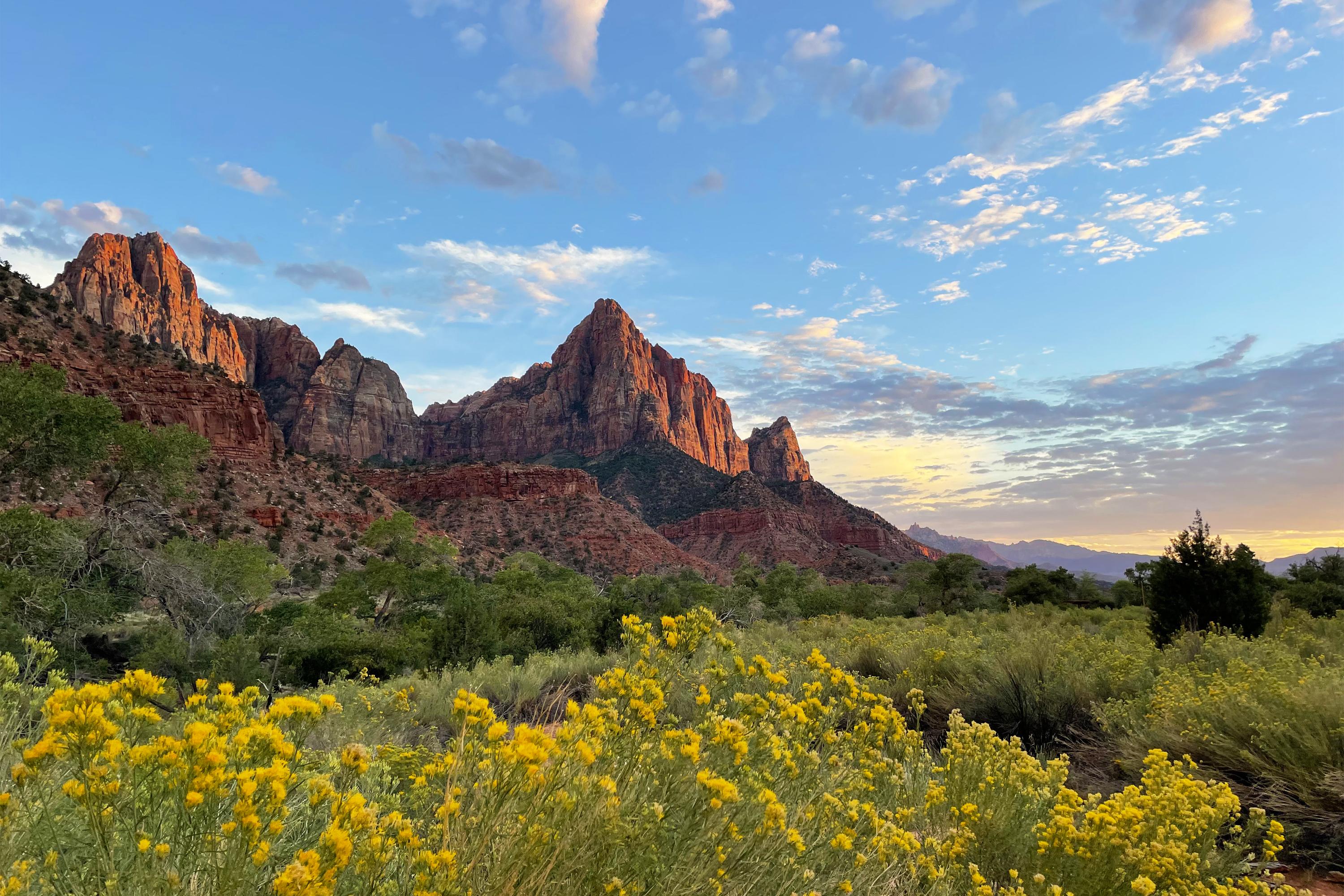
Photo: NPS via NPS.gov (Public Domain)
Month by Month
March through May - Spring
Temperatures on the canyon floor climb from the 50s°F in March into the 70s°F by May. Nights stay cold - expect lows in the 30s°F early in the season. The high country trails remain snowbound through April, sometimes into May.
Precipitation comes as rain in the valley and snow at elevation. The park gets runoff from the melting snowpack, which means the Virgin River runs high and cold. The Narrows hike may be closed or require serious cold-water gear during this window.
Crowds build steadily. March is quiet. By May, the shuttle system is running, and parking at the visitor center fills before 9 AM.
Wildlife activity picks up. Mule deer fawns appear in late spring. Wild turkeys become more visible along the canyon floor.
This is the most forgiving window for hiking the popular trails. Temperatures are manageable, and you don't yet need to plan around afternoon thunderstorms. Early morning is your best bet for solitude and good light.
June through August - Summer
This is the peak of Zion national park weather intensity. June brings the heat - daytime highs routinely hit 100°F on the canyon floor. July and August add monsoon humidity and the daily threat of thunderstorms.
The monsoon pattern runs from mid-July through September. A typical day: clear morning, building clouds by noon, thunderstorms by 2 or 3 PM, then clearing by evening. These storms produce lightning, gusty winds, and brief but intense rain. Flash flooding is a real danger in slot canyons and along the Virgin River. Rangers will tell you to check the flash flood forecast before starting any canyon hike.
The park is packed. The shuttle queues can hit 45-minute waits at midday. Parking in Springdale becomes a hunt. The popular trails - Angels Landing, Observation Point, the Narrows - see heavy traffic from sunrise to sunset.
But summer also gives you the longest daylight hours, the fullest shuttle schedule, and access to the high country trails on the Kolob Terrace and the East Rim, where temperatures run 10-15°F cooler than the canyon floor.
September through October - Fall
September still carries summer heat and monsoon storms. The first week of October usually brings a noticeable shift - daytime highs drop into the 70s°F and 80s°F, and the humidity vanishes.
This is the most comfortable window for hiking. The air is dry, the sun is still strong but not punishing, and the afternoon thunderstorm threat fades by mid-October.
Fall color peaks in late October on the canyon floor - cottonwoods and box elders turn gold along the Virgin River. The high country colors come earlier, in early to mid-October.
Crowds thin out after Labor Day, then pick up again for October weekends. If you want good conditions without peak-season crowds, the second and third weeks of October are hard to beat.
November through February - Winter
Winter brings cold mornings and mild afternoons. Daytime highs on the canyon floor run from the 40s°F to the 50s°F. Nights drop into the 20s°F and occasionally the teens.
Snow is possible but usually light on the canyon floor - the valley gets maybe a few inches a year that melt within a day. The high country gets real snow. The Zion-Mount Carmel Highway may close temporarily after storms. The Kolob Terrace Road closes seasonally.
The park is quiet. The shuttle system shuts down after Thanksgiving and resumes in March. You drive your own vehicle up the Zion Canyon Scenic Drive during this period - a rare opportunity to see the canyon without the bus system.
Winter hiking requires traction devices. The popular trails - Angels Landing, Observation Point, Weeping Rock - can have ice patches. The trail surfaces alternate between dry dirt, frozen mud, and slick rock.
The biggest advantage of winter: solitude. You'll have viewpoints to yourself. The light is lower and warmer. The canyon walls catch the low sun and glow a deeper red than any other season.
Photo: NPS via NPS.gov (Public Domain)
Best Times for Specific Activities
Hiking the Popular Trails
The sweet spot for hiking the main canyons trails - the Angels Landing route, the Narrows, Observation Point, and the canyon overlook trail Zion - runs from late March through May and then again from late September through October. Temperatures stay in the 60s°F to 80s°F range, and you avoid the worst of the summer heat and the monsoon risk.
In summer, start before dawn. The trailhead crowds begin forming by 6 AM, and the direct sun hits the canyon walls by 8 AM. If you're not on the trail by 7 AM in July, you're making the hike harder than it needs to be.
For the Narrows specifically, late spring through early fall is the only realistic window unless you have serious cold-water gear. The river temperature in winter runs in the 30s°F.
Stargazing
The night sky program runs from spring through fall. Summer offers the warmest nights and the longest dark windows. Winter skies are clearer and darker but cold - expect temperatures below freezing.
The park is an International Dark Sky Park. The best viewing is from the Zion Canyon Scenic Drive after the shuttles stop running, or from the Kolob Terrace Road area, which sits higher and farther from town lights.
Wildlife Viewing
Spring and fall are best. Mule deer are most active at dawn and dusk along the canyon floor. Wild turkeys gather in open fields near the visitor center. Bird activity peaks during migration - April through May and September through October.
Raptors - red-tailed hawks, golden eagles, peregrine falcons - are visible year-round but most active during thermal updrafts in spring and fall.
Bighorn sheep are present but not guaranteed. The best odds are along the East Rim and the less-traveled trails above the canyon floor.
Fall Color Timing
The high country (8,000+ feet) peaks in early October. The canyon floor peaks in late October. The cottonwood corridor along the Virgin River is the prime spot, particularly from the Temple of Sinawava area and the stretch between Canyon Junction and the visitor center.
Wildflowers
Late March through May. The lower elevations bloom first - you'll see globemallow, Indian paintbrush, and prickly pear flowers along the canyon floor. The high country bloom follows in June and early July.
Photo: NPS via NPS.gov (Public Domain)
What to Pack by Season
Spring and Fall
Layers are non-negotiable. The difference between a 35°F morning and a 75°F afternoon requires a system you can strip down and pack away. A synthetic or wool base layer, a mid-layer fleece or puffy, and a windproof shell will cover almost every condition.
Bring a rain jacket even if the forecast shows clear skies. Spring and fall storms can materialize fast.
Summer
The park service recommendation: one liter of water per hour of hiking in the heat. That's not a suggestion. The combination of 100°F temperatures, low humidity, and direct sun exposure on sandstone (which reflects heat back at you) creates dehydration risk faster than most people expect.
You need:
A wide-brimmed hat
Sunscreen that you actually reapply
Sunglasses with good coverage
More water than you think you need
Electrolyte supplements for full-day hikes
For hiking in canyons or the Narrows, quick-dry clothing and water socks or canyoneering boots. Cotton stays wet and causes chafing.
Winter
Traction devices - microspikes or similar - for the popular trails. The canyon floor may be clear, but shaded sections of the Angels Landing trail and the East Rim trails ice over.
Insulated boots for early morning starts. Standard hiking shoes won't cut it on 20°F mornings.
For anyone heading to the high country, snowshoes or skis depending on snow depth. Check conditions at the visitor center before driving up.
Year-Round
Sun protection every month. The UV exposure at altitude and off the reflective sandstone is higher than the temperature suggests.
A headlamp. Even on day hikes, the canyon shadows can fool you about remaining daylight - and you do not want to navigate the West Rim Trail in the dark.
Cash for the shuttle if you park in Springdale. Some lots require payment.
Photo: NPS via NPS.gov (Public Domain)
What the Forecast Doesn't Tell You
The official temperature is measured on the canyon floor. Every 1,000 feet of elevation drops the temperature roughly 5°F. That means the high country trails can be 15-20°F cooler than the reading at the visitor center. Check two forecasts - one for Springdale (4,000 feet) and one for the high country (8,000 feet) - before planning your day.
Flash flood risk has nothing to do with whether it's raining where you stand. A thunderstorm 15 miles upstream can send a wall of water through a canyon that's completely dry at your location. The Narrows and all slot canyons carry risk even when local skies are blue. Check the National Weather Service flash flood guidance for Zion before entering any narrow canyon.
The canyon creates its own weather patterns. The high sandstone walls block direct sun in the early morning and late afternoon, creating pockets of cold air that persist longer than the regional forecast suggests. The shuttle stop at the Temple of Sinawava is consistently cooler than the visitor center area.
Summer heat in Zion is not like summer heat in the desert flats. The canyon concentrates and reflects heat. The sandstone surface temperature can exceed 130°F in July - you can literally fry an egg on it. The reflected heat off the walls means you're getting radiated from all directions, not just from above.
Monsoon season thunderstorms are predictable by time of day - but only the timing. The clouds build by late morning, peak by 2-3 PM, and clear by evening. The storm itself can drop half an inch of rain in 20 minutes and produce lightning that closes trails. Plan hikes that get you out of exposed areas - ridgelines, canyon rims, slot canyons - by noon.
Winter snow closes the Zion-Mount Carmel Highway periodically, even if Springdale is clear. The road crests at 6,800 feet and can accumulate significant snow while the canyon floor stays dry. Check road conditions before driving to the East Entrance - the distance between Canyon Junction and the East Entrance is 14 miles, and you don't want to get stuck in the tunnel queue behind a slide-off.
The wind in the canyon is stronger than you expect, especially in spring. Gusts funnel through the narrow sections and can make exposed sections of the Angels Landing trail genuinely dangerous. The park closes that trail periodically for wind. If you're hiking it, check wind conditions at the visitor center first.
Practical Takeaways
The May and October windows are the park's best-kept secret. Both months give you comfortable hiking temperatures, manageable crowds, and minimal weather risk. October specifically offers fall color, dry air, and no monsoon threat.
If you visit in summer, start hiking by 6 AM. The difference between a 7 AM start and a 9 AM start on the same trail is the difference between a pleasant hike and a heat-exhaustion risk. The canyon floor bakes, and the sun hits the trail surfaces directly after 9 AM.
Layers are not optional for any season. The 30°F diurnal temperature swing means you will need both a morning jacket and an afternoon t-shirt, sometimes within two hours.
For any hiking in the Narrows or a slot canyon, check the flash flood forecast the morning of your hike. The park posts it at the visitor center and online. Ignoring it is the most common single cause of backcountry rescues here.
The Kolob Canyons section of the park runs cooler and sees fewer people. If summer heat is your concern and you want to hike, head to the Kolob Terrace Road trails - they're 10-15°F cooler and offer a different canyon perspective.
Winter visitors get the canyon to themselves and can drive the scenic drive. The trade-off is cold mornings, limited services, and potential road closures. Worth it if solitude matters more than warm weather.
Cell service drops out at the canyon rim and through most of the backcountry. Download weather forecasts, trail descriptions, and the zion national park map before you lose signal. The visitor center Wi-Fi can help, but it's not a guaranteed download speed. Keep an eye out for the weather kiosks at the visitor center and shuttle stops - they show current conditions and flash flood risk.