The Cottonwood Campground fills to capacity every afternoon from mid-May through mid-September. Not some days. Every single day. If you roll into the South Unit of Theodore Roosevelt National Park at 4 PM without a reservation in late June, expect to see a "Campground Full" sign. This is the only campground in the South Unit, and everyone wants the same thing.
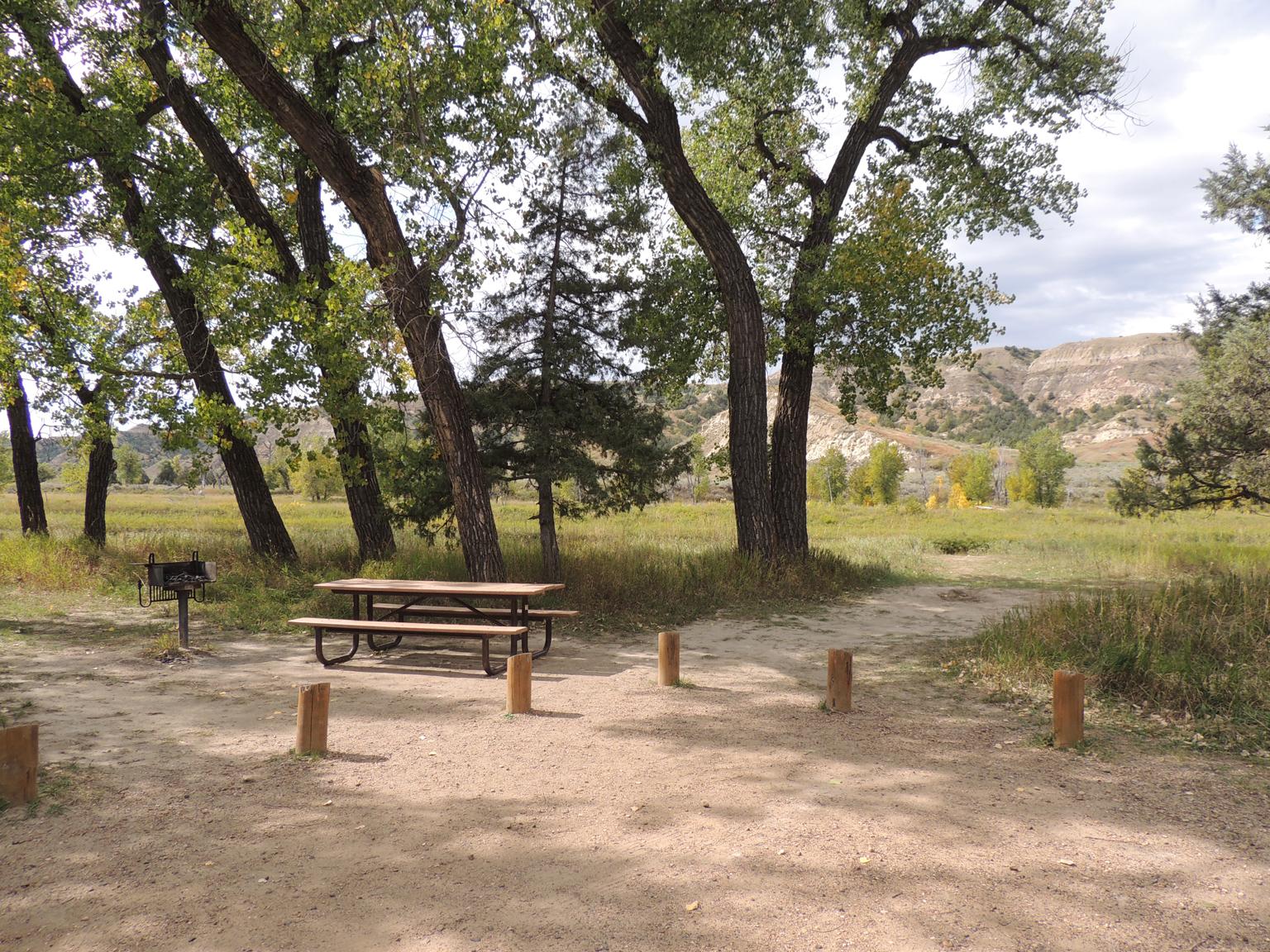
NPS via NPS.gov (Public Domain)
Campsites at Cottonwood Campground (2026 Guide)
6 min read
Campsite Guide
Located about 5 miles from Medora, ND, on the scenic drive, Cottonwood Campground is the sole camping option inside the park's southern section.
Your plans
For more, see complete visitor guide and Campsites at Juniper Campground (2026 Guide) (2026 guide).
Located about 5 miles from Medora, ND, on the scenic drive, Cottonwood Campground is the sole camping option inside the park's southern section. It handles 76 sites total, with about half available by reservation at recreation.gov and the rest held for first-come, first-served arrivals. The setup rewards planning but doesn't punish spontaneity entirely - provided you arrive early. For a more thorough look at the park's logistics, the complete visitor guide covers the full picture.
Booking and Site Selection
Half the sites at this campground can be reserved in advance through recreation.gov. The other 38 or so sites are first come, first served. Here is how the two systems actually play out on the ground.
Reserved Sites
Reserving a spot guarantees you a site regardless of arrival time. This matters during peak season (mid-May through mid-September) when the campground hits capacity daily. Reservations open on a rolling window - check recreation.gov for the current booking horizon. Summer rates are $20 per night for a standard site, or $10 if you hold a valid Senior or Access Pass. Note that the Interagency Annual Pass and the TRNP Annual Pass do not qualify for the discounted rate. That distinction catches many first-time visitors off guard.
First-Come, First-Served Sites
The remaining unreserved sites operate on a simple system: arrive, pick an open site, pay at the self-registration kiosk. The key detail the park website does not emphasize enough - you need to arrive before noon to have reliable options during summer. By 2 PM, unreserved sites are typically gone. By 4 PM, the entire campground is full.
The self-registration kiosk is straightforward. Stop there first when you enter the campground. It has envelopes, fee instructions, and a map showing which sites are occupied.
Site Types and Layout
Of the 76 sites, 12 are designated tent-only. The remaining 64 accommodate both tents and RVs. None have hookups - no electric, no water, no sewer. This is dry camping regardless of what you drive.
Most tent-only sites are tucked slightly farther from the main loop road, which cuts down on vehicle noise. RVs tend to cluster on the outer loop where the pull-through spaces are wider. If you are in a tent and value quiet, walk the loop before picking a spot. The difference between a site near the restrooms (convenient, foot traffic) and one at the far end (quiet, longer walk) is worth considering.

Fees and Payment
As of May 1, 2026, Cottonwood Campground operates entirely cashless. Credit cards, debit cards, and digital payments only. Cash and checks are no longer accepted. This applies to entrance fees, campground fees, and Interagency Pass purchases.
Standard Rates (as of 2026)
| Site Type | Summer (May-Sept) | Winter (Oct-April) |
|---|---|---|
| Standard site | $20/night | $10/night |
| Standard site with Senior/Access Pass | $10/night | $5/night |
| Group site (7-20 people) | $60/night | $60/night |
Group sites require a reservation through recreation.gov. Passholder discounts do not apply to group site rates.
The winter rate is a genuine bargain. From October through April, you pay $10 for a standard site. If you hold a Senior or Access Pass, that drops to $5. The campground stays open year-round, and winter visitors get the place nearly to themselves. Snow on the badlands changes the entire character of the park.

When to Go and What to Know
Peak Season Reality
Mid-May through mid-September is the gauntlet. The campground fills daily. Temperatures regularly hit the high 80s and low 90s Fahrenheit in July and August. Afternoon thunderstorms are common - the kind that roll in fast, dump rain for 30 minutes, and move on. Pack a rain fly you trust.
Early morning is your best bet for wildlife viewing. Bison move through the campground loop occasionally. Rangers will tell you to give them at least 75 feet of space, which is closer than it sounds when a 2,000-pound animal walks past your tent.
Shoulder Season Advantage
Late September and early October are the sweet spot. Crowds thin out. Temperatures drop to the 50s and 60s during the day and near freezing at night. The cottonwood trees that give the campground its name turn yellow. Reservations are easier to come by, and the unreserved sites rarely fill before evening.
Cell service drops out at certain points along the scenic drive, though the campground area has intermittent coverage depending on your carrier. Download maps and directions before you arrive. The address for mobile navigation to the South Unit entrance: 201 East River Road N, Medora, ND 58645.
What to Bring
No hookups means you carry everything in and everything out. Bring:
- Enough water for drinking, cooking, and washing. There is a water spigot near the restrooms, but pack at least a gallon per person per day.
- A method for charging devices. No electric at sites.
- Firewood. The park allows dead and down wood collection, but it is scarce. Bringing your own is easier.
- A headlamp. The restrooms are well-lit. The path to them at 2 AM is not.
The Restrooms
Flush toilets and running water are available. They are cleaned daily during peak season. Compared to vault toilets at many national forest campgrounds, this is a luxury. The shower situation is less straightforward - there are no showers at Cottonwood Campground. Plan accordingly. Medora has shower facilities, but they are a 5-mile drive.

Practical Takeaways
- Reserve if you can. During summer, a reservation eliminates the stress of arriving to a full campground. Use recreation.gov and book as early as the window allows.
- If you gamble on first-come, arrive before 11 AM. By noon, the unreserved sites are disappearing. By 2 PM, they are gone.
- Bring a card. Cash is useless here starting May 2026. Credit or debit only.
- Know your pass. Senior and Access Pass holders get discounted rates. Interagency Annual Pass and TRNP Annual Pass holders do not. Check which pass you hold before counting on a discount.
- Group site requires planning. The single group site holds 7-20 people and costs $60 per night. Reservations only. No walk-ups.
- Winter camping is worth considering. $5 per night with a Senior Pass. Cold, quiet, and empty. The badlands under snow are a completely different place.
- Check the alerts before you go. The Petrified Forest trailhead access now uses a different route via I-94 Exit 10. The park website has the current directions.
For comparisons with other camping options in the area, the page covering all campgrounds breaks down what else is available.

Final Thoughts
Cottonwood Campground is not fancy. It is a dry campground with flush toilets and no showers, set in a landscape that looks like nothing else in the lower 48. The trade-off is straightforward: you trade amenities for access. You wake up in the badlands, a quarter-mile from trails that go through petrified forests and past bison herds. The cottonwoods overhead provide the only shade on the loop, and in late October, the fallen leaves cover the ground in a layer thick enough to muffle footsteps.
The common mistake - and almost everyone makes it - is underestimating how fast the sites go. Visitors pull into Medora at 3 PM, drive the 5.5 miles to the campground, and find a full lot. That 45-minute round trip costs them time they could have spent on the trails.
Plan ahead. Book a site if you are coming between May and September. If you are flexible, come in October. Bring cash for nothing, a credit card for fees, and enough water for the hike you will do after you set up camp. The park will take care of the rest.
Sources
- Official source: NPS — Theodore Roosevelt National Park nps.gov/thro/index.htm
- Official source: National Park Service nps.gov/thro/planyourvisit/cottonwood-campground.htm
Photo Gallery
More to Explore
Park Guide
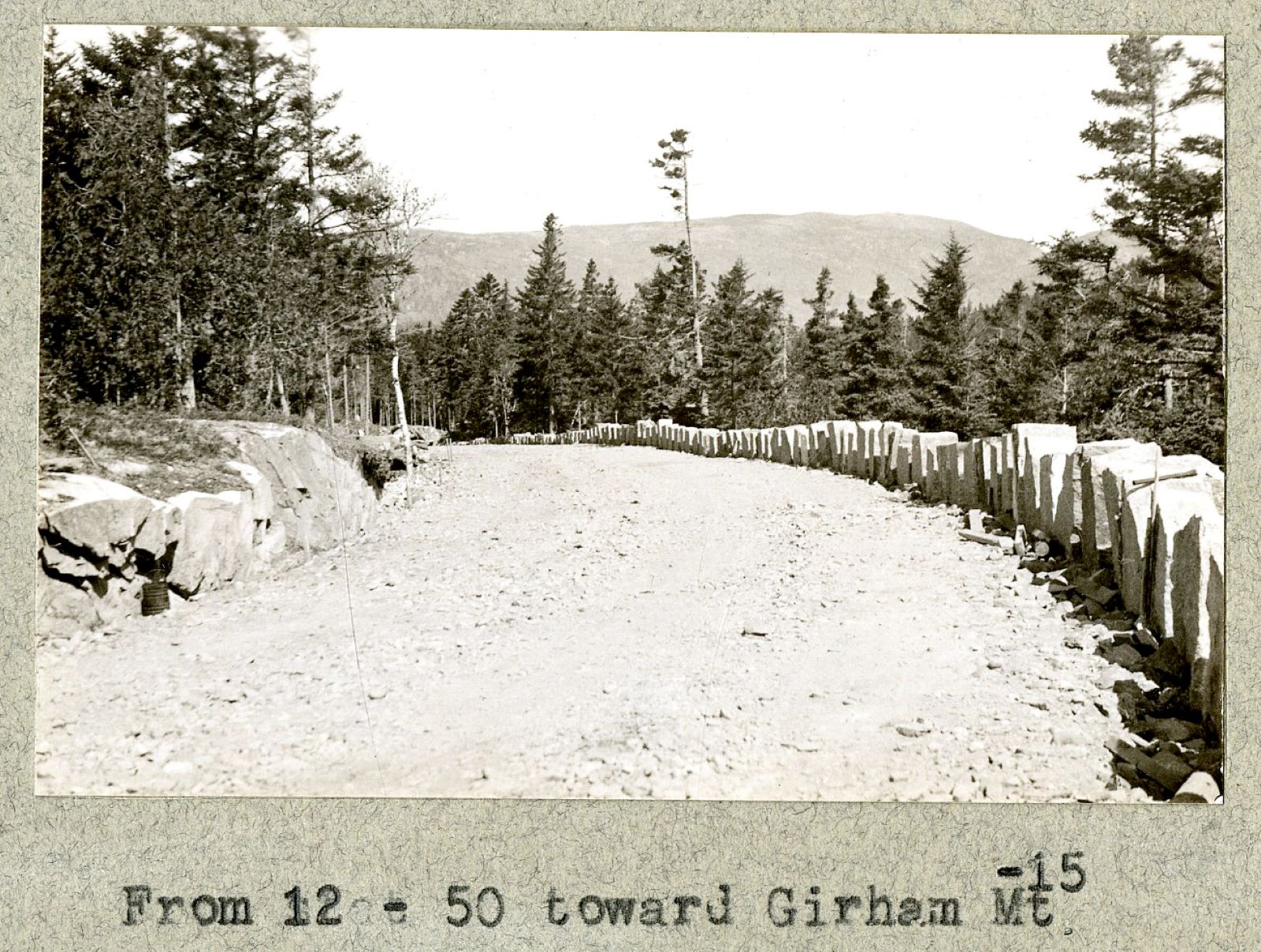
Acadia National Park: Carriage Roads, Cadillac Mountain & 2026 Guide
Discover carriage roads, Cadillac Mountain, and rugged Maine coast. Complete 2026 guide to Acadia National Park — trails, fees, lodging, permits, and what rangers recommend.
Hiking Guide
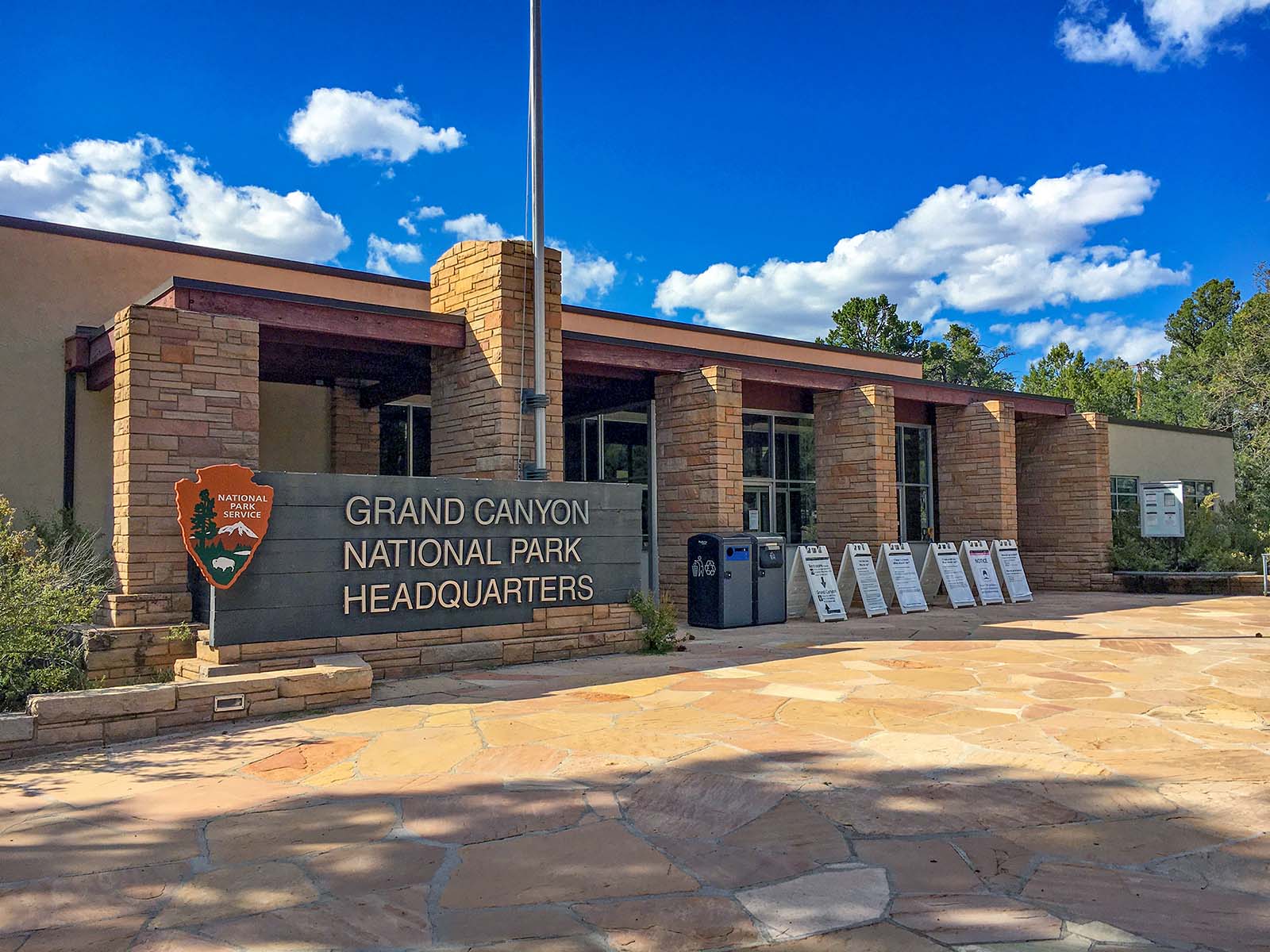
Grand Canyon Hiking Trails: Day Hikes, Water Sources & Rim to Rim
Compare Grand Canyon hiking trails: Bright Angel, South Kaibab, Hermit, Grandview, and rim to rim, with distances, elevation, water stops, and trailhead access for each.
Best Of
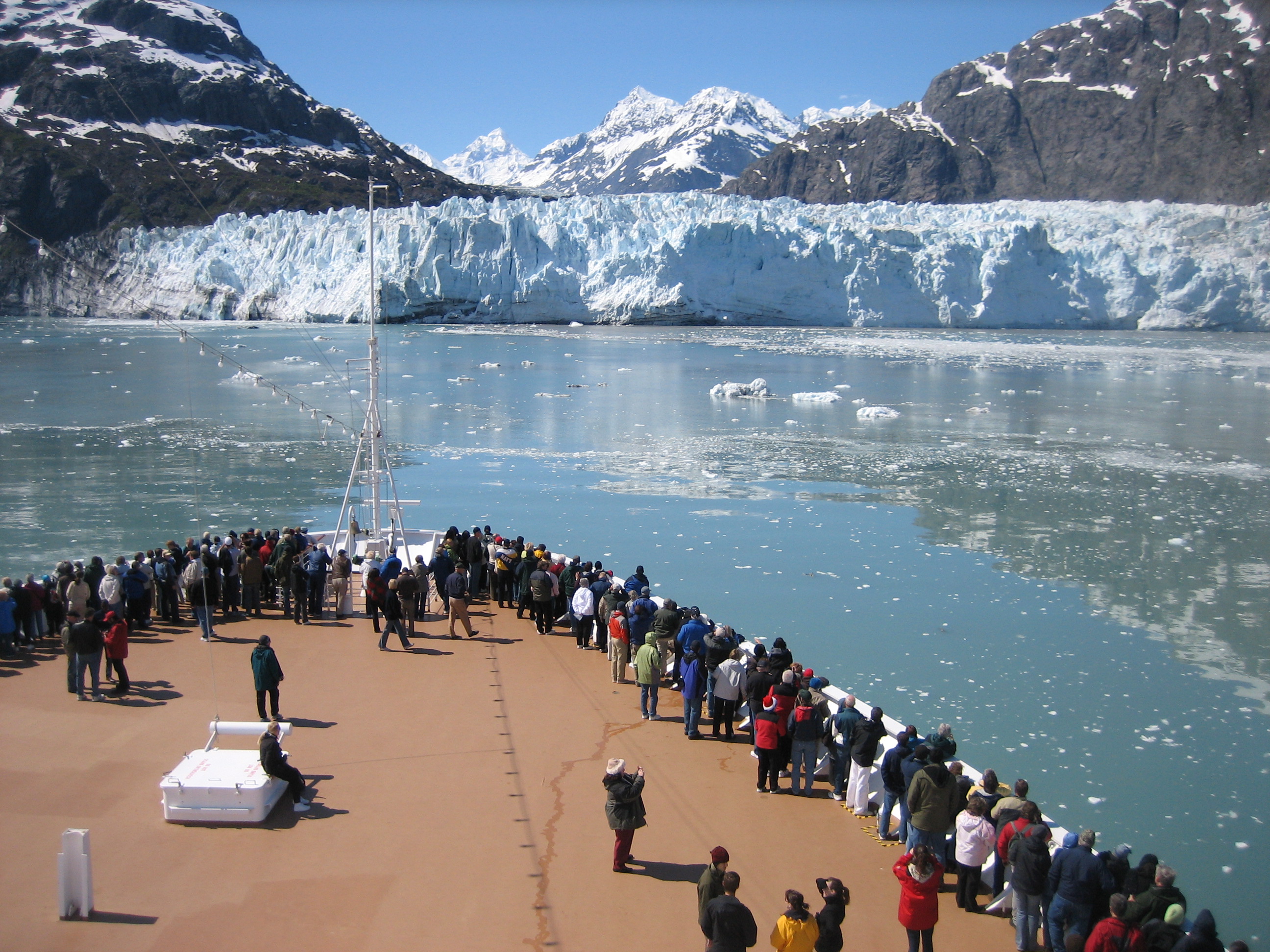
Best of Glacier Bay National Park
The best of Glacier Bay is reached by boat: ranger-led day tours up the bay to the tidewater glaciers. What's worth it, how to book, and when to go (2026).
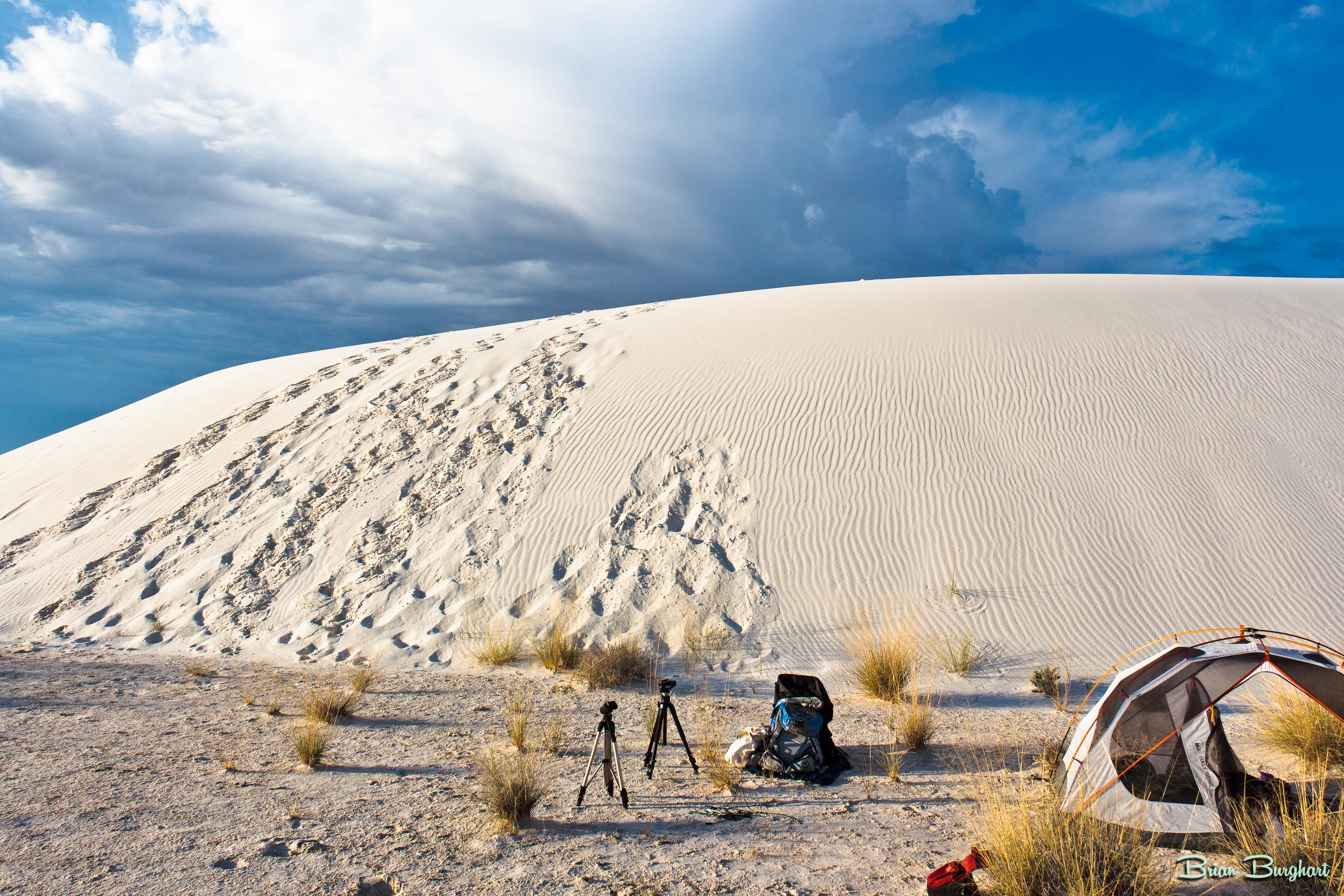
Campsite Guide
White Sands Backcountry Camping: Closed for 2026 — What to Know
As of 2026, backcountry camping at White Sands National Park is closed for site rehabilitation. What that means, and where to camp nearby instead.
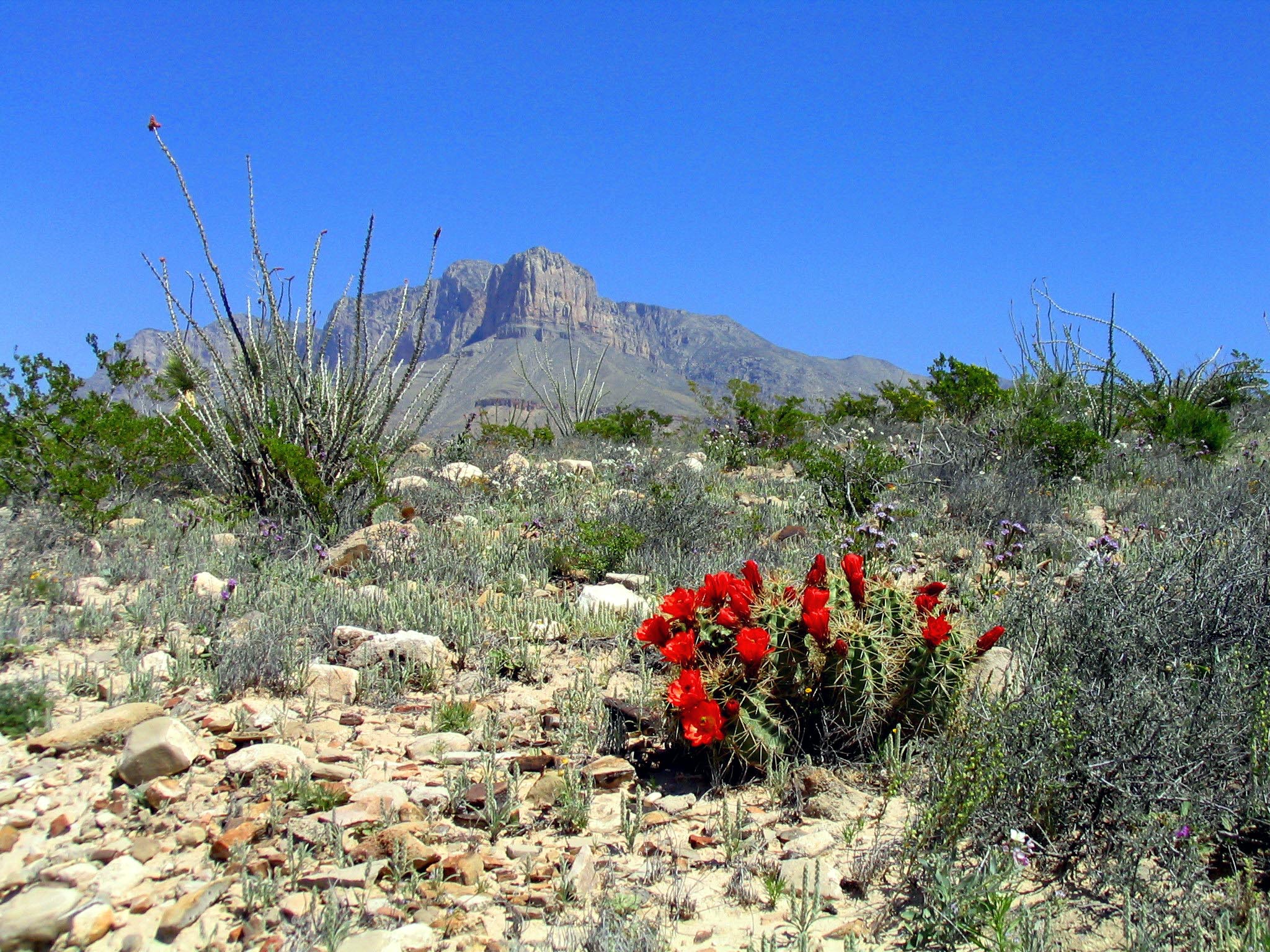
Weather Guide
Guadalupe Mountains National Park Weather: Weather
Guadalupe Mountains National Park: weather guide guide updated 2026. Practical visitor information, reservations, and seasonal tips worth bookmarking before
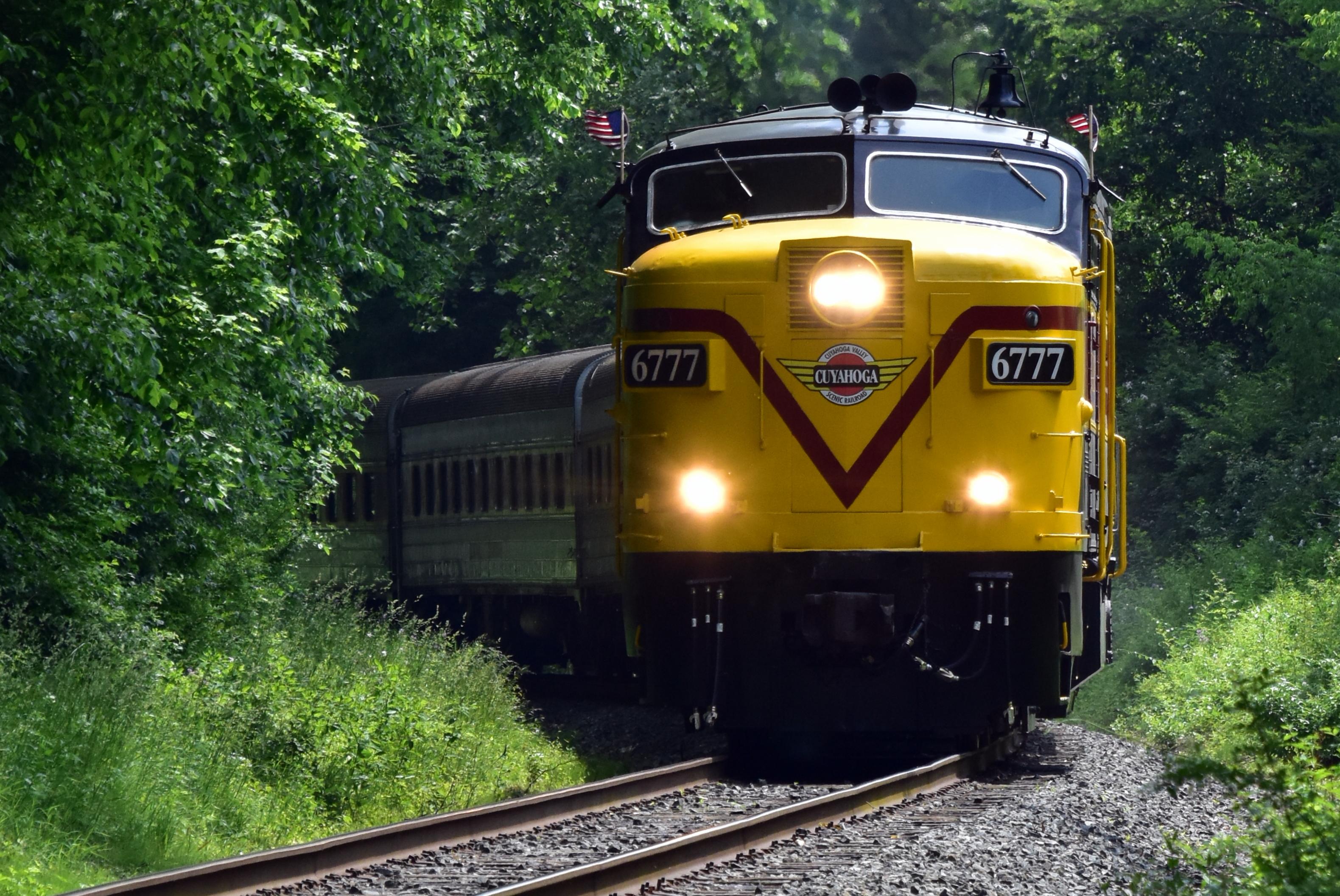
Best Of
Best of Cuyahoga Valley National Park: Best Things to Do
Seeing a Cleveland Orchestra concert with the woods as your backdrop is a uniquely Cuyahoga Valley experience.
Sign in to join the conversation.
Sources & Attribution
Location data courtesy of the National Park Service (U.S. Department of the Interior). NPS data is public domain. Official NPS page.
Images: NPS; NPS; NPS; NPS; NPS.
Map data © OpenStreetMap contributors.
Park operations alerts: NPS.gov · Weather and weather hazards: National Weather Service · Live conditions.
Information may change. Always verify fees, hours, and conditions directly with the official source before visiting.
Did this guide help? Share it with a friend.