This article contains affiliate links — we may earn a small commission at no extra cost to you.
Advertisement
The Booking Reality
Cottonwood Campground opens reservations exactly six months ahead of each arrival date, and those 22 sites vanish within minutes of the 8:00 AM MT release window. Chisos Basin Campground follows the same six-month rolling window and sees similar demand - expect to book the moment your dates become available or lose them. Rio Grande Village Campground, with 93 sites, gives you a bit more breathing room, but weekends from November through March still fill within the first day of the booking window.
Advertisement
Walk-in sites do not exist at Big Bend. Every single site across all four campgrounds requires a reservation. The old days of rolling in at dusk and finding a spot are gone. If you show up without a booking, your only option is backcountry camping with a permit from the visitor center.
Spring (March) is the park's busiest season. Spring break in March is the single most competitive window - Texas schools release students for a week, and families flood the park. If you plan a March trip, set calendar reminders for exactly six months before your arrival date.
Campground at a Glance
Campground
Sites
Site Types
Reservation
Season
Fee/Night
Elevation
Hookups
Nearest Services
Chisos Basin
56
Tent, small RV (max 24 ft)
Required
Year-round
$16
5,400 ft
None
Panther Junction (6 miles)
Rio Grande Village
93
Tent, RV (up to 40 ft)
Required
Year-round
$16
1,850 ft
Electric, water
On-site camp store
Rio Grande Village RV
25
RV only
Required
Year-round
$36
1,850 ft
Full hookups
On-site camp store
Cottonwood
22
Tent, small RV (max 24 ft)
Required
Year-round
$16
2,150 ft
None
Castolon (1 mile)
Photo: NPS via NPS.gov (Public Domain)
Chisos Basin Campground: Complete Guide
Setting and Atmosphere
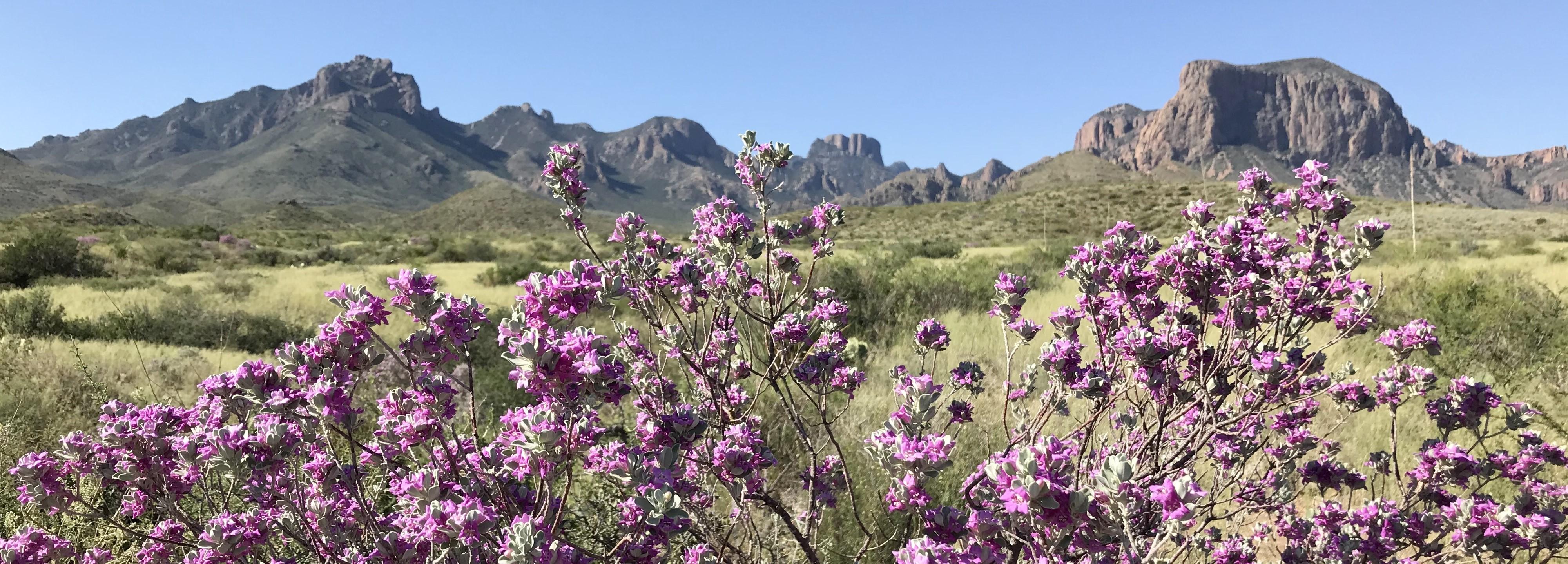
Chisos Basin sits inside a mountain bowl at 5,400 feet, surrounded by the jagged peaks of the Chisos Mountains. The temperature here runs 10 to 15 degrees cooler than the desert floor - a meaningful difference when summer heat pushes past 100°F down at Rio Grande Village. You camp among pinyon pine and juniper, not cactus. The ground is rocky, the air is thin, and the views of Casa Grande peak dominate the southern skyline.
What you hear at night: wind through pine needles, the distant call of a great horned owl, and the murmur of conversation from neighboring sites. What you do not hear: road noise, generators running after quiet hours, or anything resembling civilization. The basin feels remote because it is.
Loop by Loop Breakdown
The campground has one main loop with two spurs. Sites 1 through 8 sit closest to the entrance and the restrooms - convenient but with less privacy. Sites 25 through 38 line the eastern edge and back up against the rock wall of the basin, offering the best separation from neighbors. Sites 40 through 56 are the walk-in tent sites, and these are what experienced visitors target.
Walk-in tent sites (40-56): You park in a designated lot and carry your gear 50 to 200 feet to the site. These sites are more spread out, quieter, and generally larger. The trade-off is carrying your cooler and camp chairs. Worth it.
RV and trailer sites (1-39): The park states a maximum vehicle length of 24 feet. They mean it. The road into Chisos Basin has tight switchbacks and steep grades. A 25-foot trailer will struggle. A 30-foot motorhome will not make it. If you arrive in anything larger, you will be turned around at the entrance road.
Specific Site Recommendations
Best for solitude: Sites 46 through 52 (walk-in). These sit farthest from the restrooms and trailhead, with the most space between neighbors.
Best for families: Sites 12 through 18. Close to the restrooms, relatively flat, and near the small amphitheater where ranger programs happen.
Best views: Sites 33 through 38. Casa Grande is visible directly overhead from these spots.
Sites to avoid: Sites 1 through 4. Right at the entrance, closest to the road, least privacy.
Facilities Detail
Two restroom buildings with flush toilets and sinks. No showers. Potable water is available at two spigots - one near site 8, one near site 32. A dump station is located at the entrance to the campground, but it's a single station and lines form on checkout mornings (wait until after 10 AM to avoid the rush).
What the Booking Site Doesn't Show
Cell service drops out at the park entrance and does not return until you leave. There is no signal at Chisos Basin. Plan accordingly.
Generator hours are enforced: 8 AM to 8 PM. Rangers patrol regularly during peak season and will cite violations. If you want quiet, the walk-in sites are generator-free zones by default.
The road into the basin is paved but narrow. Meeting another vehicle on a switchback requires both drivers to slow down and coordinate. Drive slowly and use pullouts.
Rio Grande Village Campground: Complete Guide
Setting and Atmosphere
Rio Grande Village sits at 1,850 feet along the river floodplain, and the difference from Chisos Basin is immediate. It is hotter, drier, and more exposed. The campground is set in a grove of cottonwood and acacia trees that provide some shade, but don't expect forest cover. This is desert camping with the benefit of a river nearby.
The sound here is different. Birds are constant - the Rio Grande corridor is a major migratory route, and you will hear more species in one morning than most people see in a week. The river itself is audible from some sites, a low murmur that carries surprisingly far in the dry air.
Loop by Loop Breakdown
The campground has two loops, A and B, plus a group camping area.
Loop A (sites 1-50): Larger sites, better spacing, more trees. This is the preferred loop for most campers. Sites along the outer edge back up to open desert, giving a sense of space that Loop B lacks.
Loop B (sites 51-93): Tighter spacing, less vegetation, more exposed to sun and wind. The trade-off is proximity to the camp store, showers, and laundry. If you want convenience over privacy, Loop B delivers.
Specific Site Recommendations
Best for RVs: Sites 1 through 15 in Loop A. These are pull-through sites with enough room for larger rigs. Level ground, easy access.
Best for tents: Sites 35 through 45 in Loop A. These have the thickest tree cover and the softest ground. Bring extra stakes - the ground can be hard-packed.
Best for privacy: Sites 46 through 50 in Loop A. The outermost sites with desert views and minimal neighbors on one side.
Sites to avoid: Sites 80 through 93 in Loop B. Closest to the road, most exposed, least shade.
Facilities Detail
Flush toilets and sinks in both loops. Hot showers are available at the camp store for a fee (bring quarters). Laundry facilities are also at the store. Potable water spigots are scattered throughout both loops. A dump station is located near the campground entrance.
The camp store stocks basic supplies, ice, firewood, and snacks. It is not a grocery store. If you need real food, bring it with you.
What the Booking Site Doesn't Show
The campground fills with spring break crowds in March. The noise level during peak season can rival a suburban neighborhood. If you want quiet, book November through January or September through October.
The river is a 10-minute walk from most sites. The trail to the riverbank is marked and easy. Early morning is your best bet for birdwatching along the water.
The temperature difference from Chisos Basin is dramatic. A 70°F day at Chisos means 85°F at Rio Grande Village. In summer, the difference can exceed 20 degrees.
Photo: NPS via NPS.gov (Public Domain)
Rio Grande Village RV: Complete Guide
Setting and Atmosphere
This is the park's only full-hookup campground, and it caters specifically to RVs. The lot is paved - a welcome change from the gravel and dirt of the other campgrounds - with grassy, tree-lined edges. Sites are arranged in a rectangular grid. This is not a scenic campground. It is a functional one.
What it lacks in atmosphere it makes up for in convenience. Full hookups (electric, water, sewer) mean you can run air conditioning, which matters in summer. The camp store is adjacent. Showers and laundry are a short walk.
Specific Site Recommendations
Sites in this campground are more uniform than the others. The best spots are along the edges where trees provide some shade. Interior sites are fully exposed.
Best for shade: Sites 5 through 10 along the northern edge.
Best for easy access: Sites 1 through 4, closest to the entrance and camp store.
Sites to avoid: Center sites with no tree cover - these bake in the afternoon sun.
Facilities Detail
Full hookups at every site: 30/50 amp electric, water, sewer. The restroom building has flush toilets and sinks. Showers are at the camp store. Potable water is available at each site via the water hookup.
What the Booking Site Doesn't Show
This campground is operated by Aramark, not the NPS. The reservation system is the same (Recreation.gov), but the fee is higher - $36 per night compared to $16 at the other campgrounds. You are paying for the hookups.
The paved lot can get hot enough to soften asphalt in summer. If you visit June through August, bring a ground mat for outdoor use.
Cottonwood Campground: Complete Guide
Setting and Atmosphere
Cottonwood is the smallest developed campground in the park at 22 sites, and it feels like a secret. Located in the western corner of Big Bend near the old Castolon settlement, this campground sits among large cottonwood trees that provide genuine shade - a rare commodity in the Chihuahuan Desert. The Rio Grande is less than a mile away, and the Santa Elena Canyon is a short drive.
The atmosphere is quiet. Really quiet. With only 22 sites, the campground never feels crowded. The cottonwoods muffle sound. The darkness at night is total - this is one of the darkest places in the lower 48 states for stargazing.
Specific Site Recommendations
The campground is a single loop. Sites 1 through 8 are closest to the entrance and have the largest spacing between neighbors. Sites 15 through 22 are tighter but closer to the restroom.
Best for privacy: Sites 3 through 7. Wide spacing, mature trees, good separation.
Best for stargazing: Sites 1 and 2. Open sky to the west with minimal tree obstruction.
Sites to avoid: Site 22. Right next to the restroom and the most exposed.
Facilities Detail
Vault toilets only. No flush toilets, no showers, no potable water. You must bring all water with you. There is no dump station. This is the most primitive of the developed campgrounds.
What the Booking Site Doesn't Show
The road between Castolon and Santa Elena Canyon may have mud and shallow water on the roadway after rains. Check conditions before driving this route.
Cell service drops out at this campground entirely. There is no signal, no data, nothing. Download maps and information before arriving.
The campground is small and fills quickly during peak season. With only 22 sites, it is often the first campground to sell out entirely.
Photo: NPS via NPS.gov (Public Domain)
Reservation Strategy
Booking Window Timing
All campgrounds use Recreation.gov with a six-month rolling reservation window. Sites become available at 8:00 AM Mountain Time. For a March 1 arrival, book on September 1. For a November 15 arrival, book on May 15.
The system opens exactly six months ahead, not six months and a day. Set an alarm for 7:55 AM MT and be logged in before 8:00.
Cancellation Monitoring
Cancellations happen, especially 48 to 72 hours before arrival when the cancellation penalty drops. Check Recreation.gov repeatedly in the week before your desired dates. This is how savvy visitors snag Chisos Basin sites during peak season.
The cancellation policy: cancel more than 48 hours before arrival and lose only the $10 reservation fee. Cancel within 48 hours and lose the first night's fee as well.
Group Site Booking
Group sites are available at Rio Grande Village and Chisos Basin. These require a separate reservation process through the park. Contact the park directly for group site availability and pricing. Rangers will tell you that group sites should be booked at least 12 months in advance for peak season.
What to Know Before You Arrive
Bear Storage
Black bears are present in the Chisos Mountains. All food, coolers, and scented items must be stored in a hard-sided vehicle or a bear-proof locker when not in use. The campground has metal bear boxes at many sites. If your site lacks one, store everything in your vehicle. Coolers left outside overnight will be investigated.
Fire Restrictions
Fire restrictions change based on conditions. During dry periods, campfires may be prohibited entirely. Check the park's fire restrictions page before your trip. When fires are allowed, you must use the metal fire rings provided. Gathering firewood is prohibited - buy it at the camp store or bring your own.
Quiet Hours
Quiet hours are from 10:00 PM to 6:00 AM. Enforcement varies by campground. At Chisos Basin, rangers patrol regularly and will ask groups to quiet down. At Rio Grande Village, enforcement is less strict but complaints from neighbors are taken seriously.
Water Situation
Potable water is available at Chisos Basin and Rio Grande Village. It is not available at Cottonwood. Bring at least one gallon per person per day. More if you plan to hike. The desert will dehydrate you faster than you expect.
Generator Hours
Generators are allowed from 8:00 AM to 8:00 PM. No exceptions. If you need power for medical equipment, contact the park in advance for accommodations.
Checkout Time
Checkout is 11:00 AM. Late checkout is not available. The site must be empty and clean by 11:00 or you may be charged for an additional night.
Photo: NPS via NPS.gov (Public Domain)
Practical Takeaways
Book exactly six months ahead at 8:00 AM MT. Chisos Basin and Cottonwood sell out within 15 minutes during peak season. Rio Grande Village gives you more time but not much.
RV length limits are enforced. Chisos Basin maxes out at 24 feet. Rio Grande Village accommodates up to 40 feet. Do not try to fit a large rig into Chisos Basin - the road will not cooperate.
Bring all water to Cottonwood. No potable water is available. Plan for one gallon per person per day minimum.
Cell service drops out at the park entrance. Download maps, reservations, and communication before arriving. There is no signal at any campground.
March is the busiest month. Texas spring break fills every campground. If you want solitude, visit November through February or September through October.
The temperature difference between campgrounds is significant. Chisos Basin runs 10-15 degrees cooler than Rio Grande Village. Choose your campground based on the season and your tolerance for heat.
No walk-in sites exist. Every developed site requires a reservation. Show up without one and your only option is backcountry camping with a permit.
Backcountry camping is an alternative. If developed campgrounds are full, backcountry permits are available at the visitor center. This requires self-sufficiency and a vehicle capable of rough roads.
Pets are severely restricted. Pets are not allowed on trails, in the backcountry, or on the river. They may only be in developed areas and must be leashed. Do not bring a pet expecting to hike with it.
The park is open 24 hours. You can enter and exit at any time. This matters if you arrive late or plan early morning departures for the best camping big bend national park has to offer.
For a deeper look at planning your trip, check the complete visitor guide. If you need a roof over your head instead of a tent, the lodging and accommodations guide covers the park's lodge and nearby options.