The sound is the first thing you notice - a low, constant rush of water moving over stone. It's the sound of the Snake River, a force that has carved this valley and sustained life here for millennia. A River's Story is not a single landmark you hike to, but an interpretive exhibit that frames the entire park experience. It's where you stop to understand the water you've been photographing from every turnout. The exhibit, located along the park's main highway, uses tactile elements and historical insights to explain how this single river system shapes everything from the high peaks to the sagebrush flats. You'll leave looking at the landscape differently.
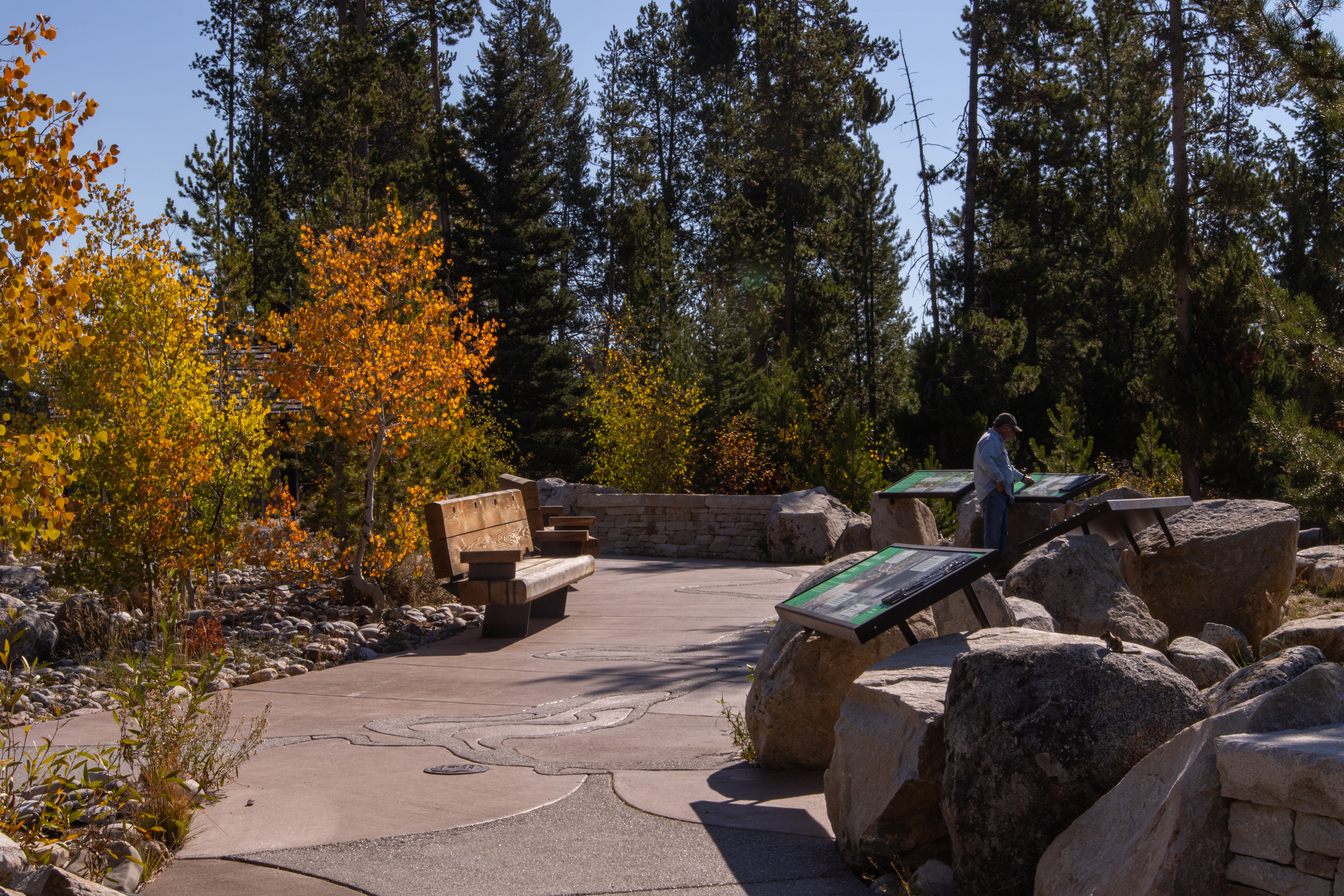
NPS via NPS.gov (Public Domain)
A River's Story: Snake River Exhibit, Grand Teton
10 min read
Places & Points of Interest
Plan your 2026 visit to A River's Story. Complete guide to trails, fees, lodging, best time to visit, and insider tips.
Your plans
Overview
Grand Teton National Park encompasses 310,000 acres of the Teton Range and Jackson Hole valley. The park's narrative is fundamentally shaped by the Snake River and its tributaries. These waters originate as snowmelt on the high peaks, collect in crystalline lakes like Jenny and Jackson, then carve through the valley floor, forming the wetlands and oxbows that sustain remarkable wildlife density. This isn't just a mountain park—it's an entire watershed, from alpine tundra to riverbank willow thickets. The vertical rise from valley floor to Grand Teton's summit spans nearly 7,000 feet over just a few miles—a reality hikers quickly learn on any elevation-gaining trail. This dramatic topography generates weather patterns, directs animal migrations, and frames every vista.
Quick Information
- Entrance Fee: $35 per vehicle, valid for 7 days. Motorcycles are $30, individuals on foot/bike are $20. An annual Grand Teton pass is $70. America the Beautiful passes are accepted.
- Hours: The park is open 24/7 year-round. Visitor center hours vary seasonally, typically 8 AM to 5 PM in summer, with reduced hours or closures from late fall through spring.
- Best Time to Visit: Late June through September. Wildflowers peak in July, temperatures are mild, and all roads and facilities are open. September offers fewer crowds and golden aspens.
- Location: Northwest Wyoming. The town of Jackson is 12 miles south of the Moose Entrance. Major airports are Jackson Hole (JAC) and Idaho Falls (IDA).
- Accessibility: The A River's Story exhibit is wheelchair accessible, with benches and tactile elements. Many park facilities, including several campgrounds and visitor centers, offer accessible options.
- Cell Service: Spotty and unreliable parkwide. Strongest near developed areas like Moose, Colter Bay, and Jackson Lake Lodge. Assume no service on trails or secondary roads.
- Restrooms: Flush toilets at major visitor centers, campgrounds, and picnic areas. Vault toilets at most trailheads and roadside pullouts.
- Parking: Trailhead lots fill early, often by 8 AM in peak season. The Jenny Lake area is the most congested. Use the park's shuttle system where available.

Getting There
Approaching from the south, you'll pass through Jackson on US-26/89/191 before reaching the Moose Entrance about 12 miles north. From the north, access is via the John D. Rockefeller, Jr. Memorial Parkway connecting Grand Teton to Yellowstone—about 22 miles from Yellowstone's South Entrance to Jackson Lake Junction. Jackson Hole Airport (JAC) sits within park boundaries, making it the only commercial airport inside a U.S. national park. Exit the terminal northward to enter the park. The A River's Story exhibit is positioned along the main park road between Craig Thomas Discovery Center and Jackson Lake Junction, with a small pullout for parking.
Plan for construction in 2026. Parkwide projects are scheduled and may cause delays. Rangers anticipate Colter Bay Village will be a reliable hub with fewer disruptions, so base your stay there if you want to avoid potential roadwork.
What to Expect
Expect mountains that look impossibly close. The lack of foothills means the Tetons erupt directly from the valley floor, a visual effect that never gets old. The air smells of pine resin and, occasionally, the sulfurous hint from nearby thermal areas. Mornings are cold, even in July - temps in the 40s are common. Afternoons warm into the 70s and 80s, but thunderstorms build over the peaks almost daily by early afternoon. The trail surface underfoot changes from forest duff to dusty sagebrush plain to slickrock granite.
First-time visitors consistently underestimate two things: the scale and the wildlife proximity. A hike that looks short on a map can involve significant elevation gain. And animals like moose and bison are not confined to distant meadows; they frequent roadside willows and sometimes amble across hiking trails. The wind is also a factor, especially on Jackson Lake - it can whip up whitecaps in minutes.

Top Attractions & Points of Interest
A River's Story Exhibit
This is the interpretive hub for understanding the park's hydrology. It explains the journey of the Snake River from its headwaters near Yellowstone to its confluence with the Columbia. The tactile exhibits are designed for all visitors, and the benches provide a quiet place to listen to the river below. It's a five-minute stop that provides context for everything else you'll see.
Oxbow Bend
Located just east of the Jackson Lake Junction, this river meander is the park's most famous reflection spot. At sunrise, Mount Moran is perfectly mirrored in the still water. It's a prime location for wildlife viewing; look for moose in the willows, river otters in the water, and bald eagles in the cottonwoods. The turnout gets crowded. Arrive at least 30 minutes before sunrise to secure a tripod spot.
Jenny Lake
The crystalline heart of the park. The lake is glacially fed, deep, and cold. Most visitors head to the west shore boat dock to access trails into Cascade Canyon. The smarter move is to hike the 7.5-mile loop around the lake's perimeter for quieter views. The east shore is rocky and exposed; the west shore is forested and cool. The hiking trails here range from paved paths to strenuous climbs.
Mormon Row
A collection of early 20th-century homesteads with the Tetons as a backdrop. The most photographed barn in America - the Moulton Barn - is here. Go at dawn for the best light and to avoid the tour vans. The area is a working historic district, not a museum. Watch for ground squirrels and pronghorn in the fields.
Signal Mountain Summit
Drive the 5-mile winding road to the 7,727-foot summit for a 360-degree view. You can see the entire Snake River valley, the meandering oxbows, and the town of Jackson. It puts the "hole" in Jackson Hole into perspective. The road is narrow with tight switchbacks; trailers and RVs over 25 feet are prohibited.
Chapel of the Transfiguration
A tiny log chapel built in 1925 in Moose. The altar window frames a perfect view of the Grand Teton. It's still an active Episcopal chapel, so be respectful if services are in session. A quiet, reflective spot that often gets overlooked by visitors rushing to trailheads.
Jackson Lake Lodge
More than just a place to stay, the lodge's 60-foot-high windows in the main lobby offer a monumental, framed view of the Tetons across Willow Flats. The lodging and accommodations here are iconic. Even if you're not a guest, stop for a coffee and enjoy the vista from one of the deep leather chairs.
Activities
Hiking
Trails cater to every level. For an easy, iconic walk, the Lakeshore Trail at Colter Bay offers flat, accessible Jackson Lake views. The Taggart Lake loop is a moderate 3.5-mile introduction to glacial scenery. For a full-day challenge, the Paintbrush Canyon - Cascade Canyon Loop is a 20-mile epic with high alpine passes. Rangers will tell you that bear spray is non-negotiable on any trail beyond the immediate lake shores.
Wildlife Viewing
The park is a corridor for the Greater Yellowstone Ecosystem. Dawn and dusk are prime times. Blacktail Ponds Overlook and Oxbow Bend are reliable for moose and waterfowl. The Moose-Wilson Road (when open) is a slow, winding drive through dense forest and marsh excellent for spotting black bear and moose. For a dedicated wildlife viewing excursion, consider a guided tour.
Water Activities
Canoeing and kayaking on String Lake and Leigh Lake are popular because motors are prohibited. Jackson Lake allows motorboats and has a marina at Colter Bay. Floating the Snake River is a classic experience; several outfitters in Moose or Jackson offer scenic float tours and guided experiences. The water is cold year-round - a wetsuit is advised for any extended immersion.
Photography
The classic shots are sunrise at Oxbow Bend and the barns on Mormon Row. Midday light is harsh. Late afternoon storms often clear to create dramatic side-lighting on the peaks. For a less common perspective, hike a short way up the Death Canyon trail in late afternoon; the light cuts across the canyon walls.
Scenic Driving
The 42-mile Teton Park Road is the main artery, with countless turnouts. The Moose-Wilson Road is a narrower, unpaved alternative route (check for seasonal closures). Signal Mountain Summit Road provides the aerial view. Fill your gas tank in Jackson or at the Colter Bay convenience store; there are no other services.

Seasonal Guide
June: Snow lingers on high trails. Wildflowers begin in the valley. Mosquitoes hatch in force by late month. Crowds start building.
July & August: Peak season. All facilities open. Afternoon thunderstorms are a daily event. High trails like Paintbrush Divide may finally be snow-free. Reservations for camping options and lodging are essential.
September: The best time to visit. Crowds thin, bugs disappear, and aspens turn gold. Nights dip below freezing. Some services begin to close after Labor Day.
October - May: Winter. Teton Park Road closes to vehicles between the Taggart Lake Trailhead and Signal Mountain (early Nov to May). The park becomes a destination for cross-country skiing, snowshoeing, and wildlife watching against a snowy backdrop. Only the Craig Thomas Discovery Center in Moose is regularly open.
Practical Information
Fees: As of 2026, the $35 vehicle pass is your best value. Holders of the America the Beautiful pass ($80 annually) get free entry.
Permits: Required for all overnight backcountry camping. Obtain at the Craig Thomas Discovery Center or the Colter Bay Visitor Center. Competition for popular zone sites is fierce; apply early.
Campgrounds: The six major campgrounds operate first-come, first-served or by reservation via Recreation.gov. Gros Ventre is the largest (279 sites) and often fills last. Jenny Lake (61 sites) is the most sought-after for its location and is reservable. Colter Bay has over 300 sites plus an RV park with full hookups.
Lodging: In-park options range from historic cabins at Colter Bay to the upscale Jackson Lake Lodge. Rooms book a year in advance for summer.
Dining: Options are limited and expensive inside the park. The Pioneer Grill at Jackson Lake Lodge is a reliable diner-style counter. Stock up on groceries in Jackson.

Safety & Preparation
Altitude: Valley floor is around 6,800 feet. Hydrate aggressively, more than you think you need. Headaches and fatigue are common for the first 24-48 hours.
Weather: It can snow any month of the year. Afternoon lightning storms are a serious hazard above treeline. Get an early start to be off high points by 1 PM.
Wildlife: This is bear country - both black and grizzly. Carry bear spray where it's immediately accessible (not buried in your pack), know how to use it, and hike in groups making noise. Never approach wildlife. Park regulations require staying at least 100 yards from bears and wolves, and 25 yards from all other animals.
River Safety: The Snake River is cold and swift. Banks are slippery. Wear a life jacket if you're on the water. Do not attempt to cross swift-flowing streams on trails without checking conditions.
Emergency: Dial 911. There is a clinic in the town of Jackson. Identify your location by trailhead or mile marker if you have cell service.
Insider Tips
- Skip the Jenny Lake Boat Shuttle line by hiking the 2.5 miles one-way along the south shore to the Cascade Canyon trailhead. It's flat, scenic, and often faster than waiting for the boat.
- The best moose viewing is often along the Moose-Wilson Road in the willows just south of the Granite Canyon Trailhead parking area, especially at dawn.
- Park once at Colter Bay. Use the free park shuttle that connects Colter Bay, String Lake, and Jenny Lake. It saves the headache of finding new parking at each crowded trailhead.
- The "secret" picnic spot is the Arizona Island Picnic Area. It's just a few tables in a meadow, but it's rarely busy and has a quiet, mature forest setting.
- For sunrise at Oxbow Bend, the left (east) side of the turnout has less foreground clutter for photographers than the right side.
- Cell service drops out at the Moose Junction. If you need to make a call or check a reservation, do it before you head north from there.
- The gift shops sell water for $4 a bottle. Bring your own reusable bottle and fill up at any visitor center. The water from park taps is excellent.
Links may earn us a commission at no extra cost to you. We only recommend gear we believe in. For this park, that's a canister of bear spray (rent or buy in Jackson), a broken-in pair of hiking boots with good ankle support for the rocky trails, and a quality rain jacket that can handle a sudden afternoon downpour.
For more information, see our complete Grand Teton National Park Guide.
Sources
- Official source: NPS — Grand Teton National Park nps.gov/grte/index.htm
- Official source: National Park Service nps.gov/places/a-river-s-story.htm
Photo Gallery
More to Explore
Park Guide
Acadia National Park: Carriage Roads, Cadillac Mountain & 2026 Guide
Discover carriage roads, Cadillac Mountain, and rugged Maine coast. Complete 2026 guide to Acadia National Park — trails, fees, lodging, permits, and what rangers recommend.
Hiking Guide
Grand Canyon Hiking Trails: Day Hikes, Water Sources & Rim to Rim
Compare Grand Canyon hiking trails: Bright Angel, South Kaibab, Hermit, Grandview, and rim to rim, with distances, elevation, water stops, and trailhead access for each.
Best Of
Best of Glacier Bay National Park
The best of Glacier Bay is reached by boat: ranger-led day tours up the bay to the tidewater glaciers. What's worth it, how to book, and when to go (2026).
Campsite Guide
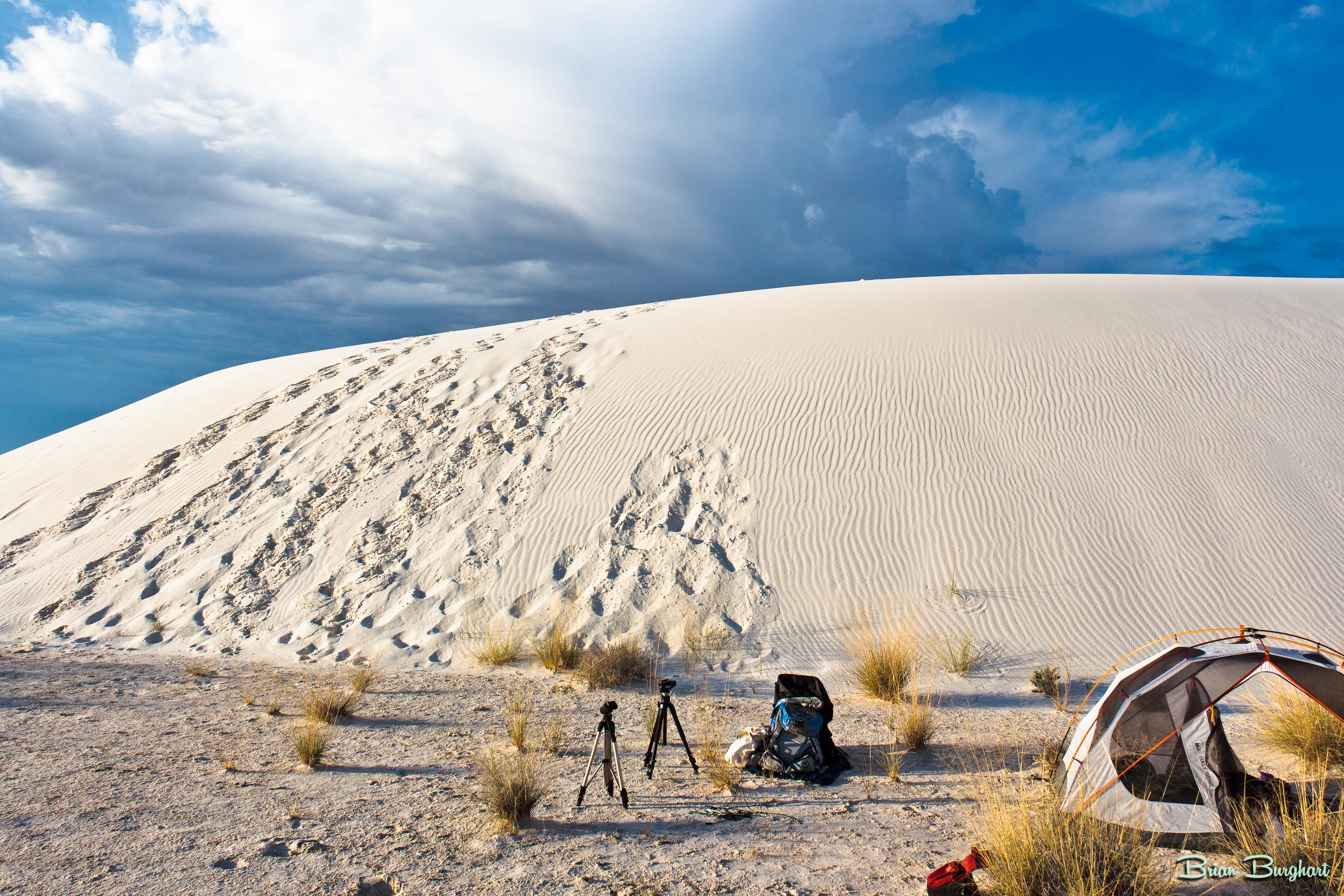
White Sands Backcountry Camping: Closed for 2026 — What to Know
As of 2026, backcountry camping at White Sands National Park is closed for site rehabilitation. What that means, and where to camp nearby instead.
Weather Guide
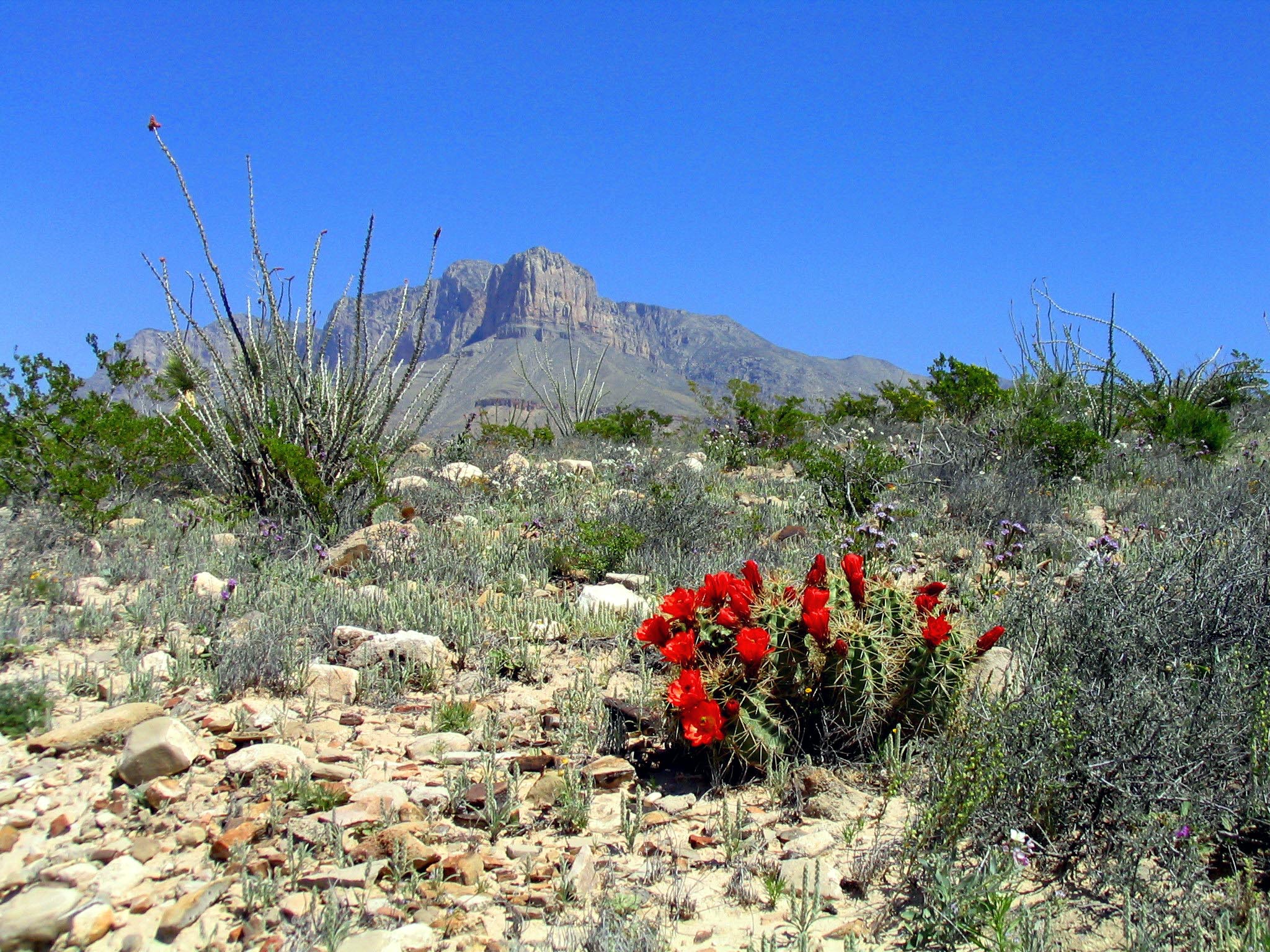
Guadalupe Mountains National Park Weather: Weather
Guadalupe Mountains National Park: weather guide guide updated 2026. Practical visitor information, reservations, and seasonal tips worth bookmarking before
Best Of
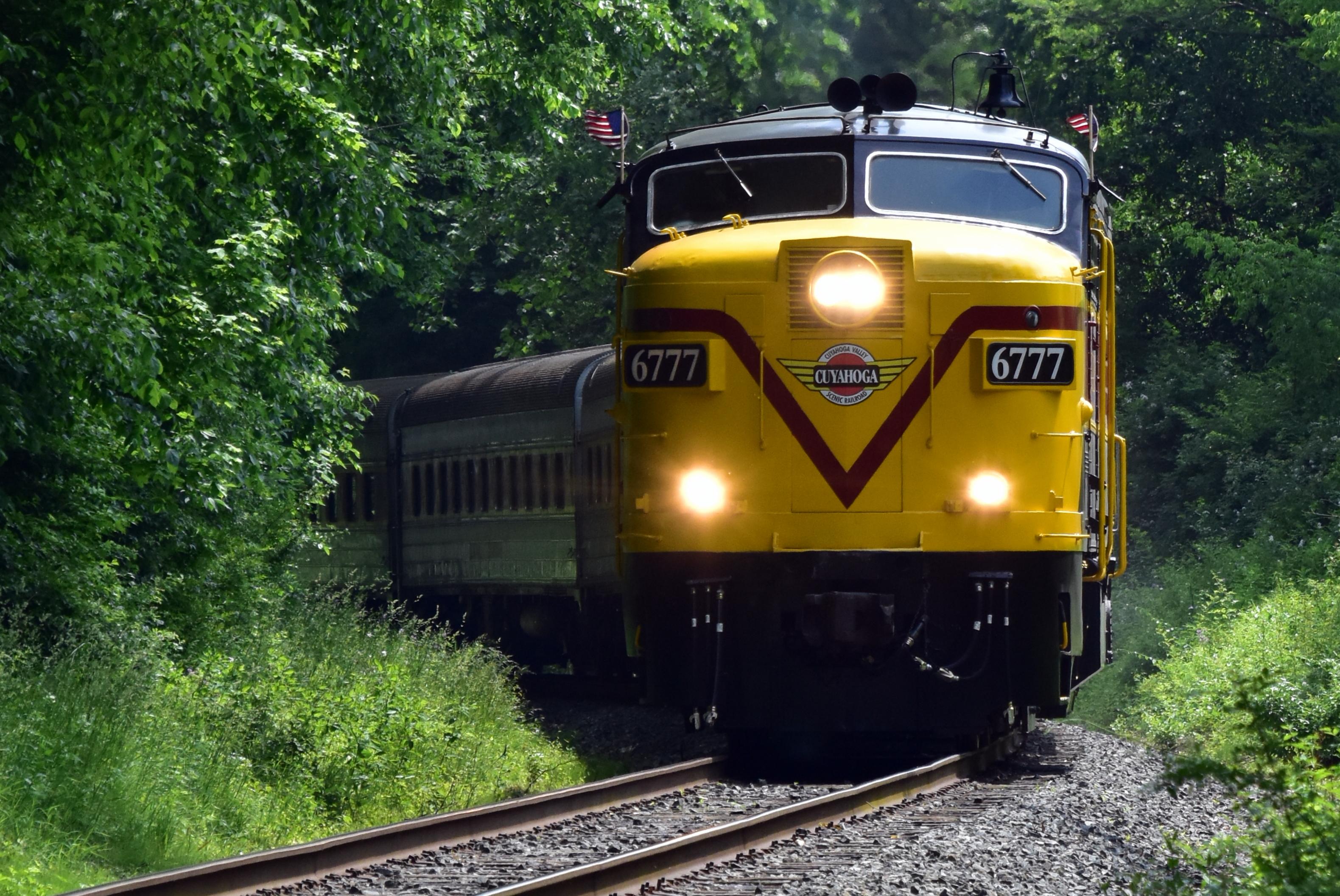
Best of Cuyahoga Valley National Park: Best Things to Do
Seeing a Cleveland Orchestra concert with the woods as your backdrop is a uniquely Cuyahoga Valley experience.
Sign in to join the conversation.
Sources & Attribution
Location data courtesy of the National Park Service (U.S. Department of the Interior). NPS data is public domain. Official NPS page.
Images: NPS; NPS; NPS; NPS; NPS.
Map data © OpenStreetMap contributors.
Park operations alerts: NPS.gov · Weather and weather hazards: National Weather Service · Live conditions.
Information may change. Always verify fees, hours, and conditions directly with the official source before visiting.
Did this guide help? Share it with a friend.