Location and Setting
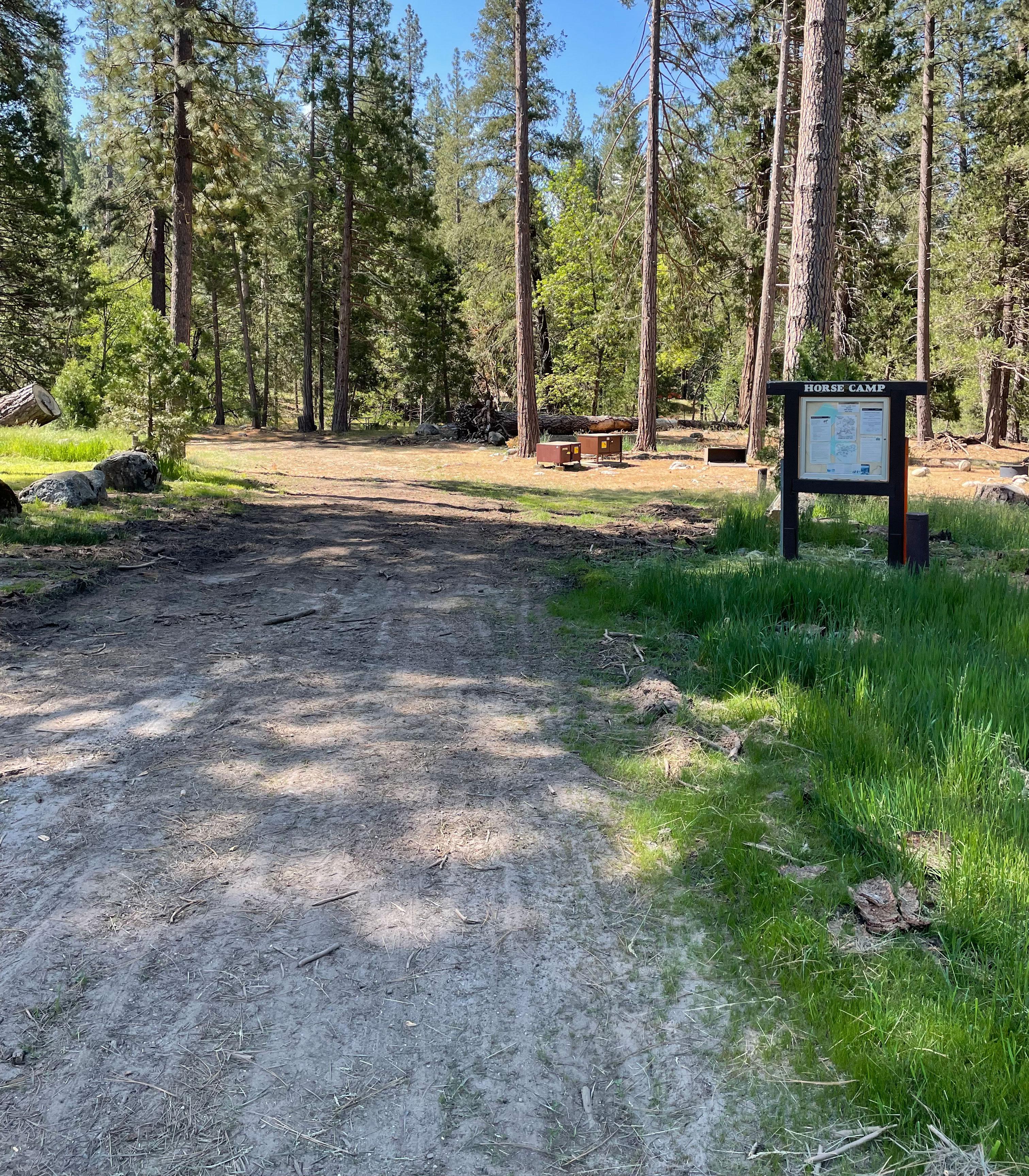
The Wawona Horse Camp is not your typical family campground. It sits off Chilnualna Road in the Wawona district, a quieter corner of the park that sees less through-traffic than the Valley. From the South Entrance, you drive 6 miles north on the Wawona Road (Highway 41), turn right on Chilnualna Road, and follow the signs. The camp is right next to the Yosemite History Center - that collection of historic buildings with the covered bridge and horse-drawn wagons that gives you a sense of what travel here looked like in the 1800s.
The elevation sits at 4,000 feet, which means summer nights cool off reliably. By late June, daytime temperatures in Wawona typically run 80-90°F, dropping to the 50s after dark. The river runs close enough that you will hear it at night, and the cottonwoods and pines provide real shade - not the thin filter you get in some high-elevation camps.
Rangers will tell you that this area has a different character than the Valley. Quieter. Less pressure. The sort of place where you can hear your own thoughts and your horse's breathing without competing with tour buses.
The Two Sites: What You Are Actually Getting
Most visitors underestimate how small this camp is. Two sites. That is it. You are not rolling into a 200-site operation with a camp store and flush toilets. The Wawona Horse Camp is purpose-built for people traveling with stock, and it shows in the layout - room for your trailer, corral space, and direct access to trails that connect to the wider Wawona trail network.
Each site costs $50.00 per night as of 2026. That fee covers one camping unit and the associated stock facilities. The camp is open from early to mid-April through early to mid-October, then closed for the winter. No winter camping here - the roads and facilities are not maintained for it.
What the park website does not mention clearly: these two sites fill fast, and they fill early. The reservation system opens on the 15th of each month at 7 am Pacific time, releasing blocks of one month at a time, up to five months in advance. If you want a July weekend, you need to be online on February 15th at 7 am sharp, not February 16th at noon. By lunchtime, the good dates are gone.
Making the Reservation Work
The booking process follows the standard recreation.gov model, but the stakes feel higher with only two sites. Here is what experienced visitors know:
- Set a calendar reminder for the 15th of the month, five months before your trip. No exceptions.
- Have your group members' names and stock information ready before you log in. The system times out if you hunt for details mid-booking.
- Book the full length of stay you want upfront. Adding nights later is nearly impossible because someone else will grab the open slot.
- Cancel by the cutoff if your plans change. The cancellation policy follows standard recreation.gov rules, and someone on the waitlist will thank you.
Cell service drops out in parts of Wawona, but the campground itself has enough signal to make a call. Do not count on streaming or data-heavy work. The point here is to disconnect.
What You Can Reach on Horseback
The Wawona Horse Camp's real value is access. From this basecamp you can ride directly onto trails that connect to the southern Yosemite wilderness without loading your animals onto a trailer and driving to a trailhead.
The Mariposa Grove of Giant Sequoias is a short ride away - one of the few places in the park where you can experience the big trees from the saddle. The grove has its own trail system, including the Big Trees Loop with wayside exhibits covering everything from how sequoias reproduce to traditional ecological knowledge shared by the park's associated tribes.
The Chilnualna Falls Trailhead is also nearby. That trail climbs steeply through several switchbacks to a series of cascades. It is a solid half-day ride, and the views of Wawona Dome from the upper sections justify the elevation gain. Park extra water for this stretch - the trail gets full sun by mid-morning and the grade works your animals hard.
For shorter options, the Wawona Meadow loop and the trails around the Yosemite History Center offer easy warm-up rides. The history center itself is worth a walk-through visit. You can see the blacksmith shop, the artist cabin (Chris Jorgensen's studio), the Anderson Cabin, and the Chinese Laundry - a collection that represents different eras of Wawona's past.
Practical Considerations for Stock Users
Bring your own feed. The camp does not supply hay or grain. Yosemite National Park requires that any hay brought into the park be certified weed-free, so plan accordingly. There is no on-site corral rental or tack storage - you bring your own panels or use the provided hitch rails.
Water is available from the river, but you should treat it or bring your own for drinking. The South Fork Merced River runs clear most of the year, but it still carries the usual backcountry risks. Camp hosts have reported that the water level drops noticeably by late August in dry years.
The parking situation here is straightforward - you park next to your site. No shuttle, no hauling gear a quarter-mile. The trailer turnaround is adequate but tight if you are pulling a gooseneck. Arrive in daylight your first time. The road in is narrow and winding, and backing a trailer in the dark is an unnecessary headache.
What to Skip and What Not to Skip
Skip: The drive into Yosemite Valley for a day trip during peak season (June through August). Traffic on the Wawona Road backs up at the entrance station, and parking in the Valley is a competition you do not need. Your time is better spent riding the southern trails.
Do not skip: An afternoon at the Yosemite History Center. It is a five-minute walk from the camp. The buildings are originals, relocated here from various parts of the park. Rangers give talks during summer months, and the blacksmith shop occasionally has demonstrations. It is the kind of place that rewards slow wandering.
Also worth your time: The drive up to Glacier Point, if you can leave the stock for a few hours. From Wawona, it is about an hour by car. The view from Glacier Point looks straight down into the Valley - Half Dome, Nevada Fall, Vernal Fall, all laid out below. Pack a lunch and go late afternoon when the light turns the granite warm gold.
Practical Takeaways
Book early, bring your own feed, and treat your water. Everything else is negotiable.
- Reservations open on the 15th of each month at 7 am Pacific, five months in advance. Mark it.
- Cost: $50.00 per night for one camping unit and stock facilities.
- Season: Early to mid-April through early to mid-October. Closed in winter.
- Stock requirements: Certified weed-free hay only. Bring your own feed and panels.
- Nearby attractions: Mariposa Grove, Yosemite History Center, Chilnualna Falls Trail, Wawona Meadow.
- Services in Wawona: Visitor center, hotel, market. Enough to restock supplies but not a full grocery run.
- Phone contact: 209/375-9535 for current conditions.
- Check all campgrounds in Yosemite for comparison before you decide.
Final Thoughts
Wawona Horse Camp is not for everyone. Two sites, limited season, no frills. But for the person who travels with stock and values quiet access to the southern end of the park, it is about as good as it gets. The Mariposa Grove is close. The history center is next door. The trails leave from your campsite. You trade the spectacle of Yosemite Valley for something slower and more grounded.
The common mistake - and almost everyone makes it - is assuming you can show up and find a site. You cannot. The reservation system requires planning, punctuality, and a willingness to book months ahead. Do that, and you will have a basecamp that most park visitors never even know exists.