Slough Creek Campground sits at 6,250 feet where the Lamar Valley opens into some of the best wildlife habitat in Yellowstone. The campground has 16 sites at the end of a two-mile dirt road east of Tower-Roosevelt Junction, and it has been drawing people who want quiet and animals rather than hookups and convenience stores since long before reservation systems existed. This campground is not for everyone. But for the people it is for - the ones who come for wolves and cutthroat trout and a night sky that sounds like the Rockies - there is no better basecamp in the northern range. Read our complete visitor guide for the full picture before you book.
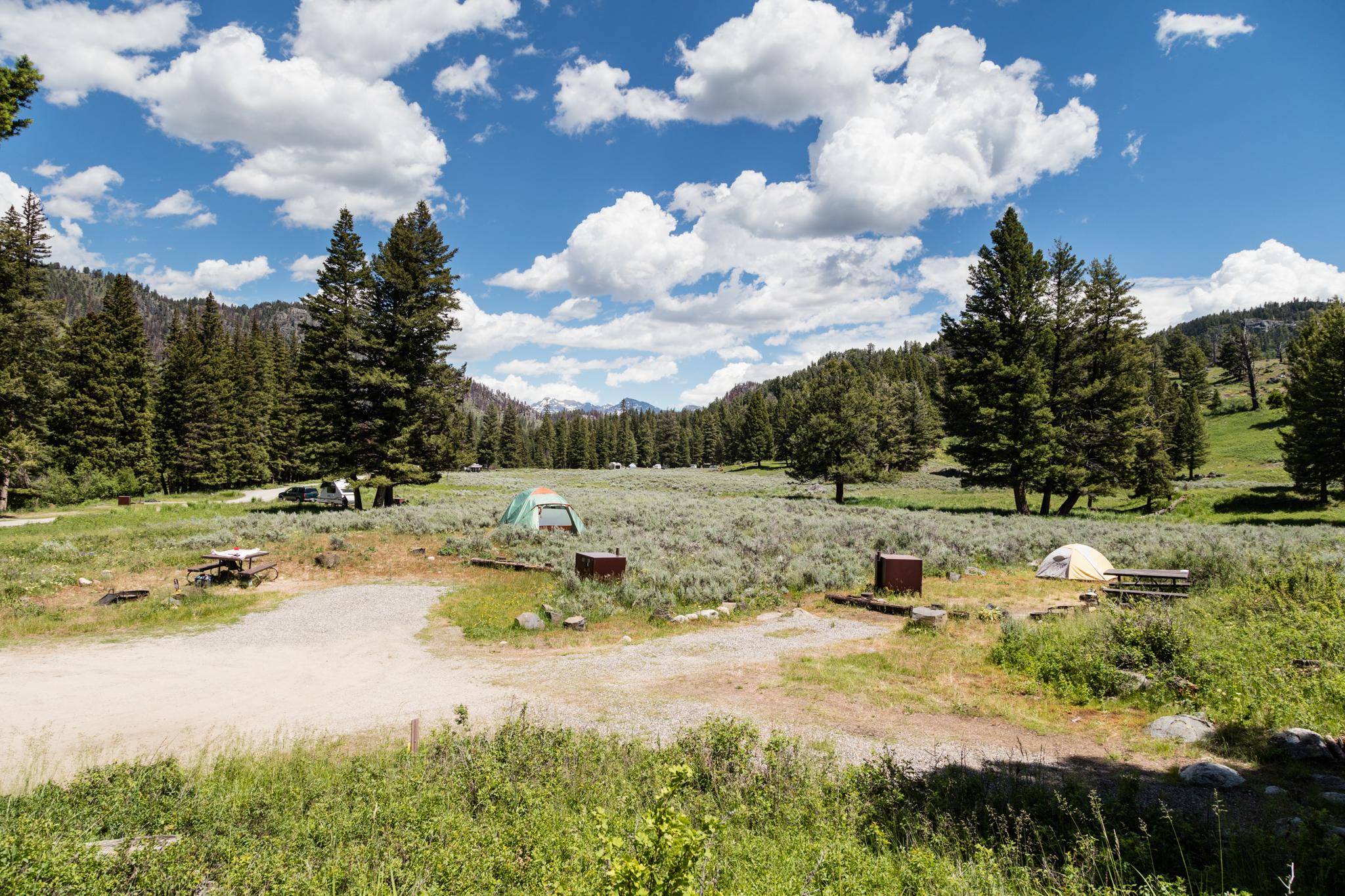
NPS via NPS.gov (Public Domain)
Campsites at Slough Creek Campground (2026 Guide)
7 min read
Campsite Guide
Sites 1 through 8 are in the first loop, sites 9 through 16 in the second. The second loop is slightly quieter and has better sightlines into the meadow.
Your plans
Getting There and What to Expect
The turnoff for slough creek campground is 5.5 miles east of Tower-Roosevelt Junction on the Northeast Entrance Road. The pavement ends and a two-mile dirt road begins. It is gravel and washboard in places, and after spring thaw or a heavy rain it develops ruts that will test a low-clearance sedan. Rangers will tell you this campground is best suited for tents and small RVs for a reason - the road narrows here, and turning a 35-foot motorhome around at the end is not something you want to attempt at dusk.
Parking at each site is tight. Most spots will fit one vehicle and a tent pad. Larger RVs and trailers over 20 feet struggle with both the road and the turning radius inside the campground. If you are pulling anything longer than that, consider reserving a site at one of the all campgrounds options with better access.
The campground itself is straightforward. No hookups. No dump station. No generator-free zone posted, though the character of the place tends to self-select for quiet. Vault toilets are the only facility. Water is available from a hand pump, but you should treat or filter it before drinking. Pack extra water for this stretch if you want to avoid the pump entirely.
Reservations and Fees
All 16 sites at slough creek campground are reservable on Recreation.gov. The nightly fee is $20.00 as of 2026. Interagency Access and Senior Pass holders receive a 50% discount - that brings it to $10.00 a night, which is hard to beat for this location.
Reservations open on a rolling window, and the sites fill quickly for July and August. If you show up without a reservation during summer, expect to find a full lot. The campground operates on a first-come, first-served basis only during the shoulder season windows when the reservation system is not active.
Checkout time is 10 AM. The campground is typically open only during summer and early fall. As of 2026 data, it closes for the season from mid-October through mid-June, so plan accordingly.

When to Go
The operating window for slough creek campground runs approximately from mid-June through mid-October, though exact dates vary by snowmelt and road conditions. July and August bring the most reliable weather - daytime temperatures in the 70s, nighttime lows that can drop into the 30s even in August.
Early morning is your best bet for wildlife viewing. The month of June gives you the longest daylight hours and the best shot at seeing wolf pups and bison calves, but also the most mosquitoes. September brings cooler nights, fewer crowds, and the start of the elk rut. The bugling carries across the valley in a way that makes the two-mile drive worth every washboard bump.
Wildlife and Night Sky
This campground sits near some of the best wildlife watching opportunities in the park. The Lamar Valley is a short drive east, and the Slough Creek drainage itself hosts consistently high concentrations of wolves, grizzlies, elk, and bison. The trail register is full of comments about wolves crossing the meadow at dawn.
Keep an eye out for elk calves hidden near buildings or under vehicles in the Mammoth area - the NPS has an active alert about this during calving season. You must remain at least 25 yards from all wildlife. If an elk charges, retreat. That is not optional.
Nighttime at slough creek campground offers an unimpeded view of the stars. There is no ambient light from developments. On a moonless night the Milky Way casts enough light to walk without a headlamp once your eyes adjust. You will hear wolves howl here - possibly distant, possibly close enough that you stop mid-sentence to listen. That is the main reason people return.
Cell service drops out at the turnoff from the paved road. Do not count on making calls from your site. The nearest reliable signal is back at Tower-Roosevelt Junction.

Trails from Campground
The Slough Creek Trail begins nearby. This is a 4.2-mile ski trail in winter and a popular hiking route in summer that follows the creek through meadow and forest. Fishing for Yellowstone cutthroat trout in Slough Creek itself is a primary draw for many campers. The creek holds a healthy population, and the meadow sections offer good access for wading.
For a longer day, the Specimen Ridge Day Hike Trail (2-4 hours) follows an abandoned service road to ridgeline views of the Slough Creek Valley and the Absaroka Range. The elevation gain is worth it - from the ridge you can see the entire drainage laid out below.
Mount Washburn trails are accessible from the Dunraven Pass area about 10 miles south. The Chittenden Road route (3-5 hours) is the shortest way up and gives you a steady grade on a wide roadbed. Look for bighorn sheep near the summit.
What the Website Does Not Mention
The dirt road to the campground floods in sections during heavy spring runoff. Not deeply - six to eight inches in the low spots - but enough that you will appreciate having waterproof boots in the car. The park service does not always post real-time conditions for this road on the website, so call the Tower-Roosevelt ranger station before you head out if rain is in the forecast.
The campground has no bear-proof food storage lockers at every site as of 2026. You will need to bring your own bear canister or store food in your vehicle properly. Rangers at the visitor center emphasize that food storage violations here carry fines, and more importantly, a fed bear is a dead bear.
The 16 sites are not numbered intuitively. Sites 1 through 8 are in the first loop, sites 9 through 16 in the second. The second loop is slightly quieter and has better sightlines into the meadow. Arrive early enough to see both before you choose.

Current Conditions and Alerts
As of 2026, the NPS has posted several active notices that affect visitors to this area:
- Elk with calves: Extremely dangerous around Mammoth Hot Springs, but relevant throughout the northern range. Calves may be hidden close to buildings, under vehicles, and around blind corners. Maintain 25 yards minimum distance.
- Trail and backcountry closures: Some trails, backcountry campsites, and fishing areas in the western part of the park near Biscuit Basin are closed following a bear-caused human injury investigation. This does not directly affect Slough Creek, but check current conditions before heading west.
- Traffic delays: The Gardner River High Bridge is operating under single-lane traffic with up to 15-minute delays, 24 hours a day, seven days a week through late October 2026. Oversized vehicles over 8 feet 6 inches wide or 75 feet long cannot cross the bridge during this period.
- No vehicle reservation needed: You still need an entrance pass to enter Yellowstone, but vehicle reservations are not required. Purchase passes at any entrance station or online before arriving.
Practical Takeaways
- Book early: All 16 sites are reservable on Recreation.gov. July and August weekend slots sell out within hours of opening. Set a calendar reminder.
- Bring a bear canister: Food storage lockers are not provided at every site. Store all food, trash, and scented items in hard-sided vehicles or approved bear-resistant containers.
- Pack for cold: Nighttime lows can drop to freezing even in August. Bring a sleeping bag rated for 20°F or lower. The hand pump water access means you will want a water filter or treatment tablets.
- Know your vehicle: The two-mile dirt road is doable in a sedan when dry, but becomes slick after rain. Small RVs and trailers under 20 feet are fine. Larger rigs should go elsewhere.
- Leave no trace: This is prime grizzly habitat. Pack out all trash. Do not leave food unattended. Follow all food storage regulations.
- Arrive before dark: The road is unlit and the site markers are small. Finding your spot after sunset is unnecessarily difficult. Aim to arrive by 4 PM.

Final Thoughts
Slough Creek Campground is not the easiest place to camp in Yellowstone. The road is rough, the sites are basic, and you will drive 20 minutes for a gallon of milk. But the people who camp here are not looking for easy. They are looking for the moment when the light goes flat and gray just before sunset and a wolf howl rolls down from the ridge and every person in camp stops what they are doing to listen. That moment happens here more reliably than anywhere else in the park. Book your site, bring warm layers, and leave the generator at home.
For more information, see our complete Yellowstone National Park Guide.
Sources
- Official source: NPS — Yellowstone National Park nps.gov/yell/index.htm
- Official source: National Park Service nps.gov/yell/planyourvisit/sloughcreekcg.htm
Photo Gallery
More to Explore
Park Guide
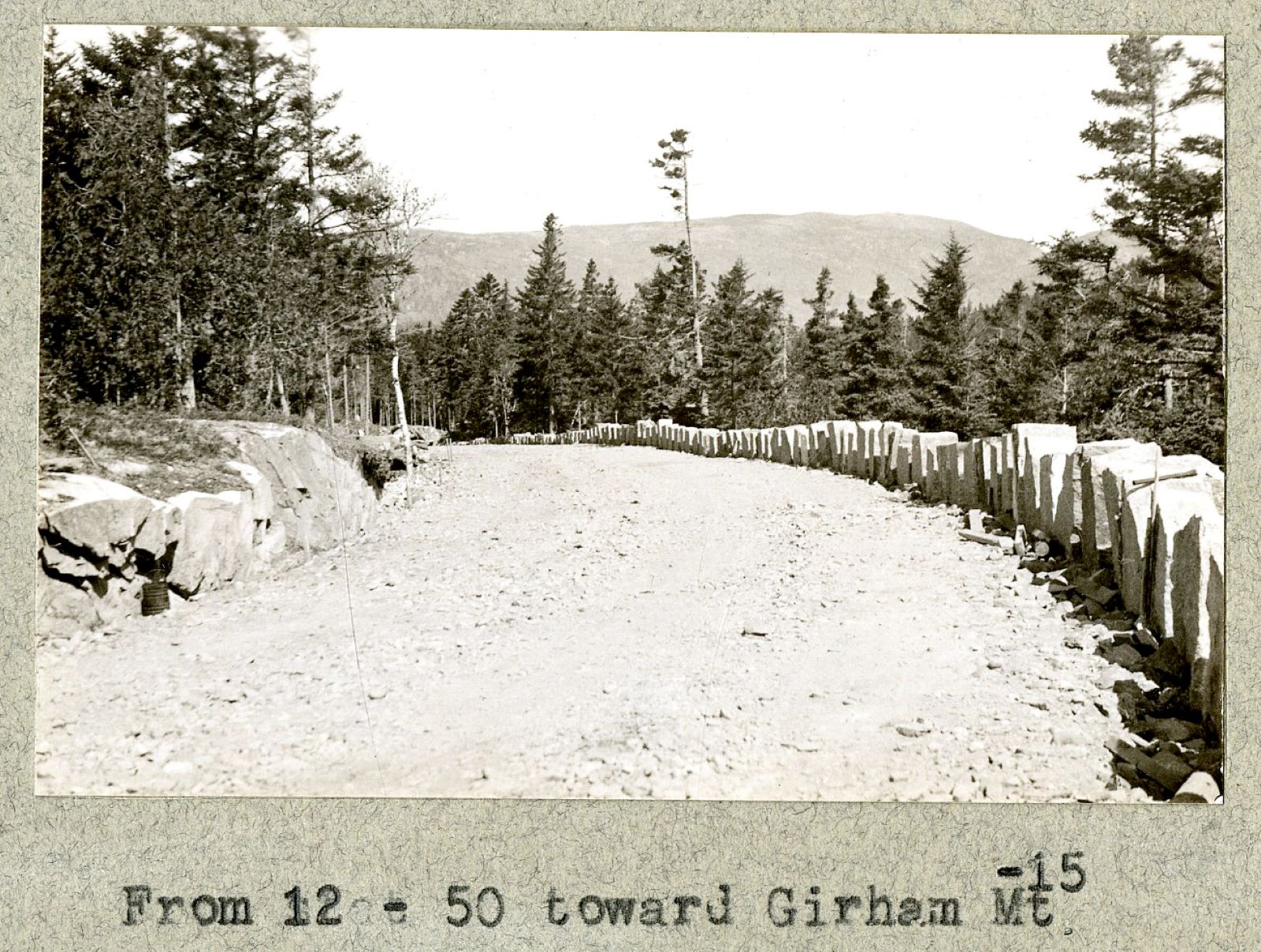
Acadia National Park: Carriage Roads, Cadillac Mountain & 2026 Guide
Discover carriage roads, Cadillac Mountain, and rugged Maine coast. Complete 2026 guide to Acadia National Park — trails, fees, lodging, permits, and what rangers recommend.
Hiking Guide
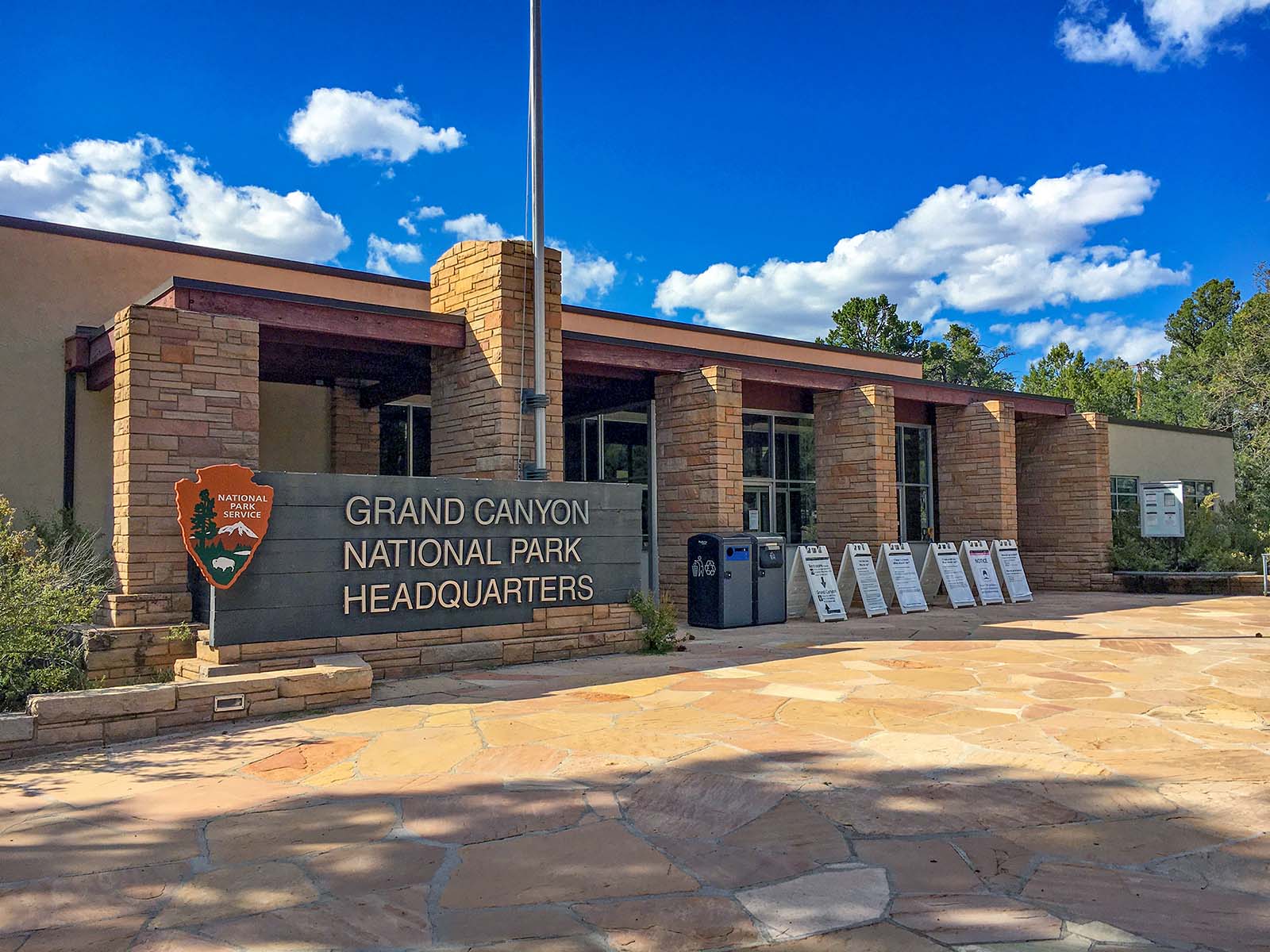
Grand Canyon Hiking Trails: Day Hikes, Water Sources & Rim to Rim
Compare Grand Canyon hiking trails: Bright Angel, South Kaibab, Hermit, Grandview, and rim to rim, with distances, elevation, water stops, and trailhead access for each.
Best Of
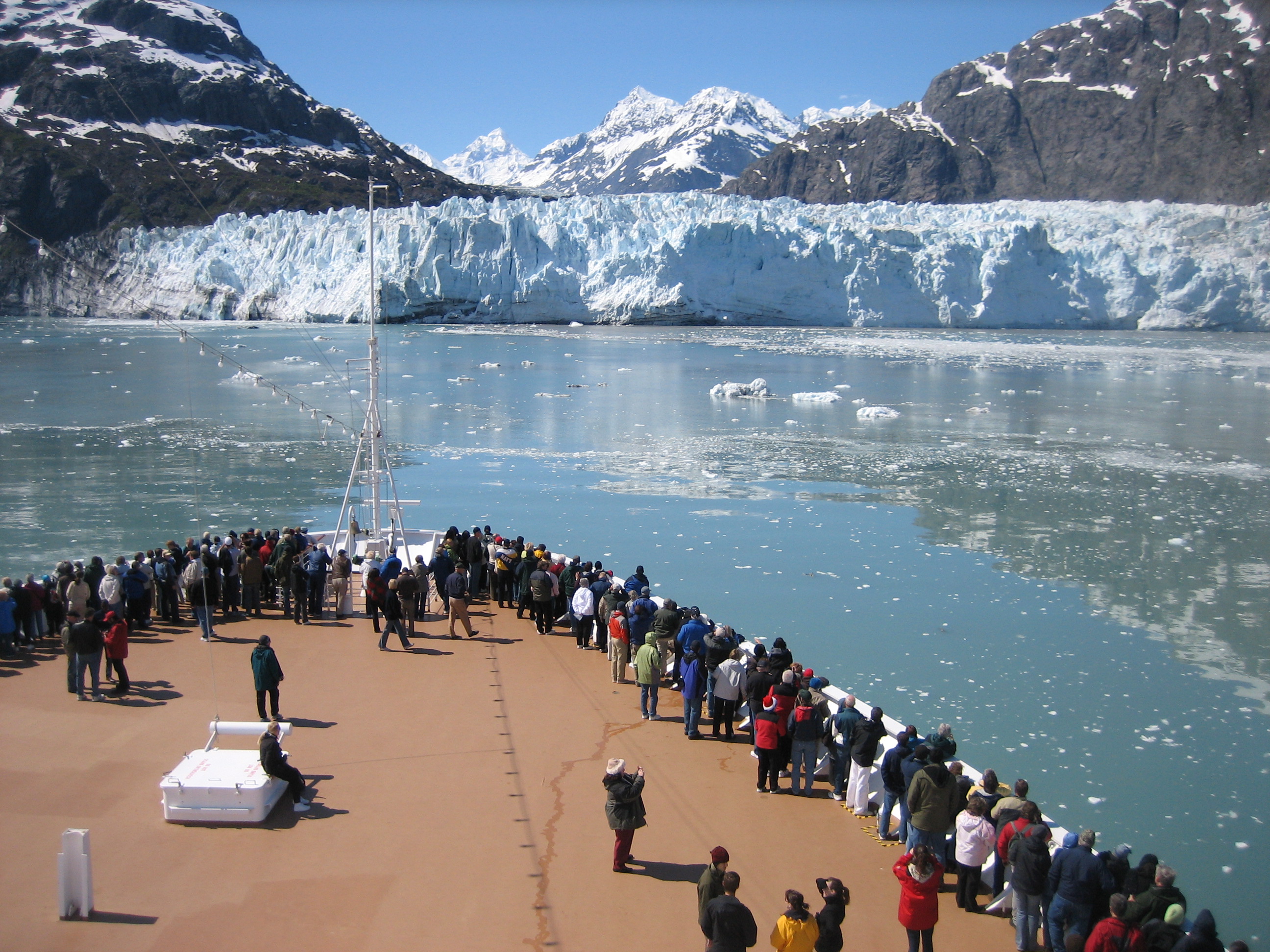
Best of Glacier Bay National Park
The best of Glacier Bay is reached by boat: ranger-led day tours up the bay to the tidewater glaciers. What's worth it, how to book, and when to go (2026).
Campsite Guide
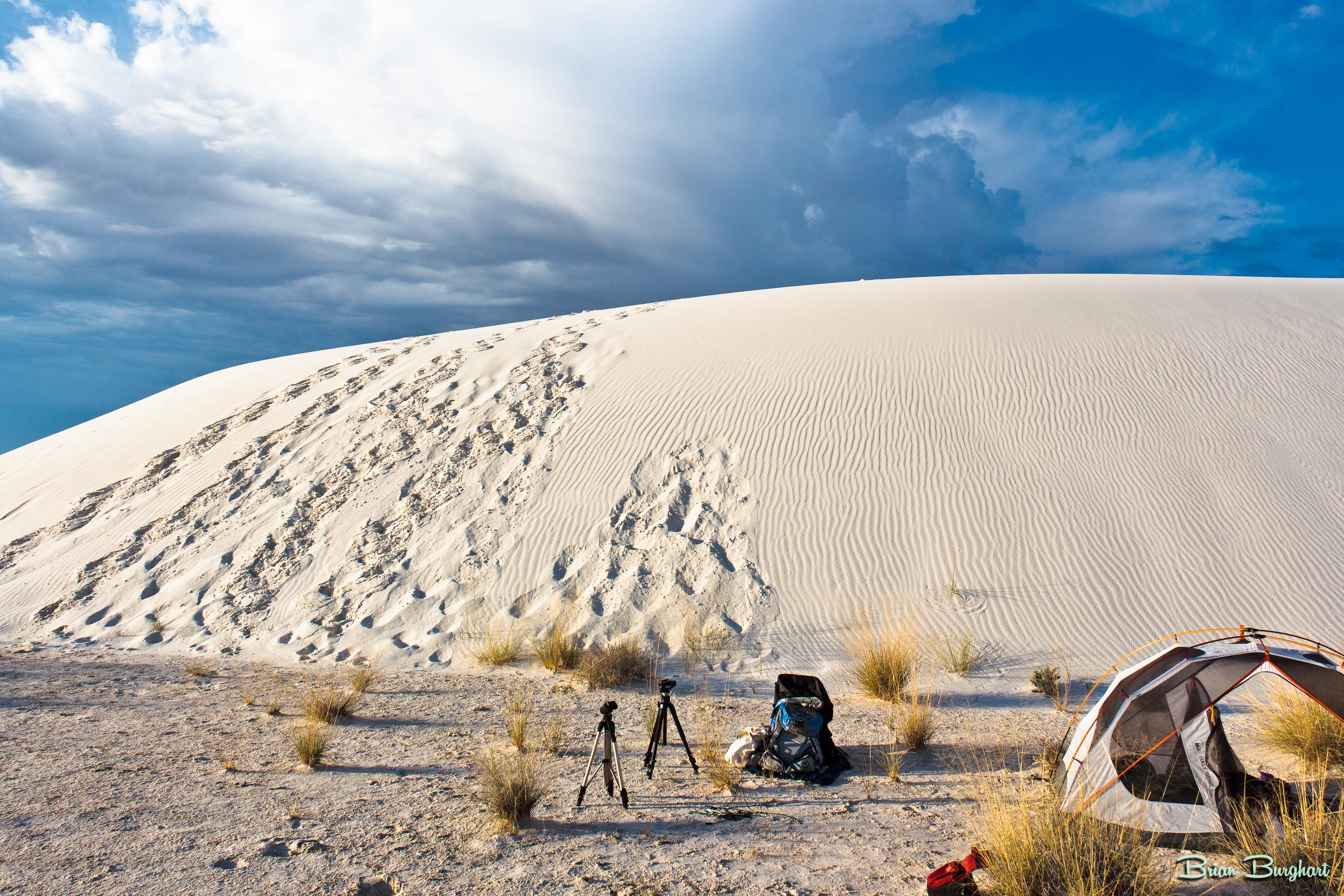
White Sands Backcountry Camping: Closed for 2026 — What to Know
As of 2026, backcountry camping at White Sands National Park is closed for site rehabilitation. What that means, and where to camp nearby instead.
Weather Guide
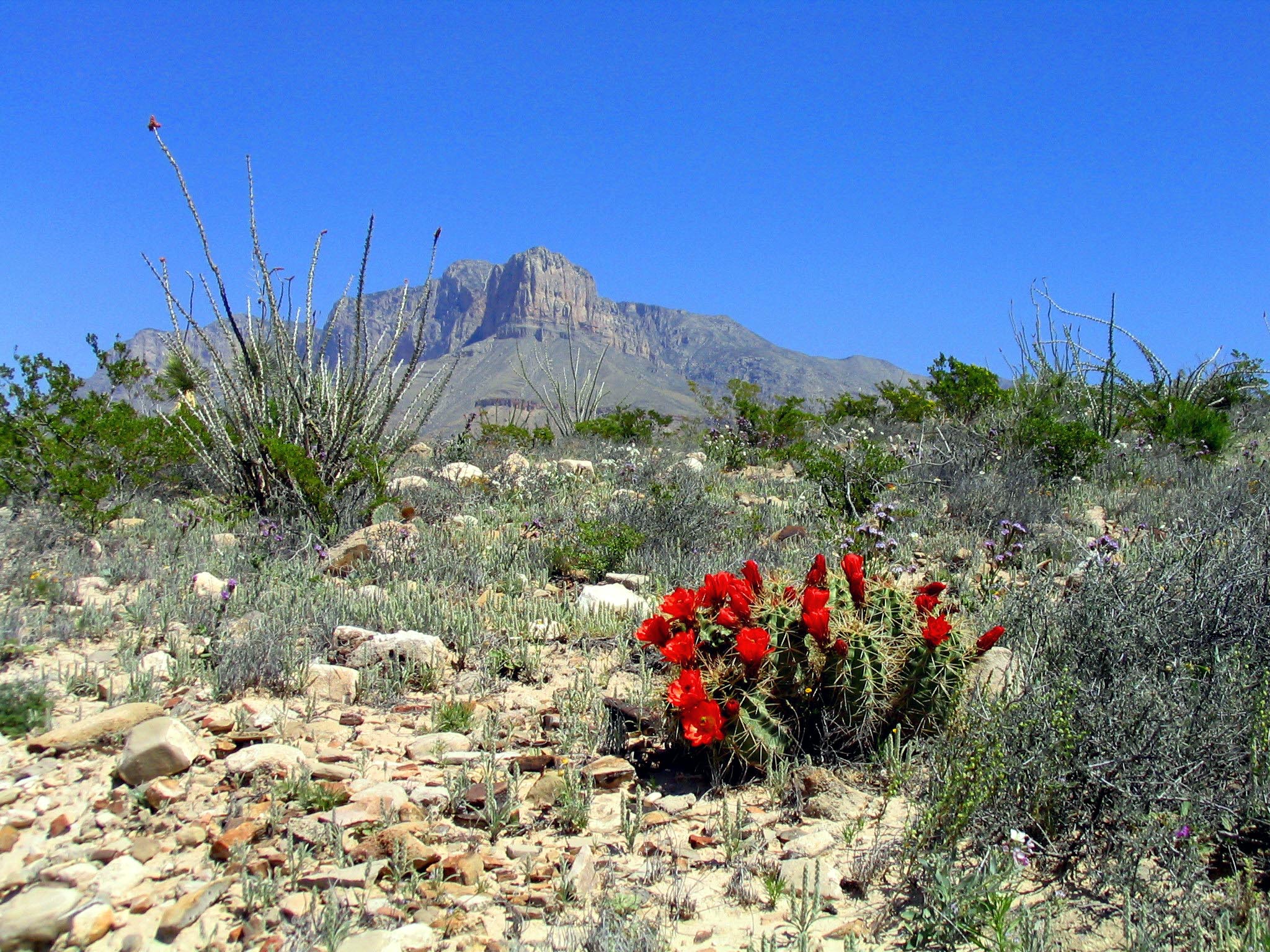
Guadalupe Mountains National Park Weather: Weather
Guadalupe Mountains National Park: weather guide guide updated 2026. Practical visitor information, reservations, and seasonal tips worth bookmarking before
Best Of
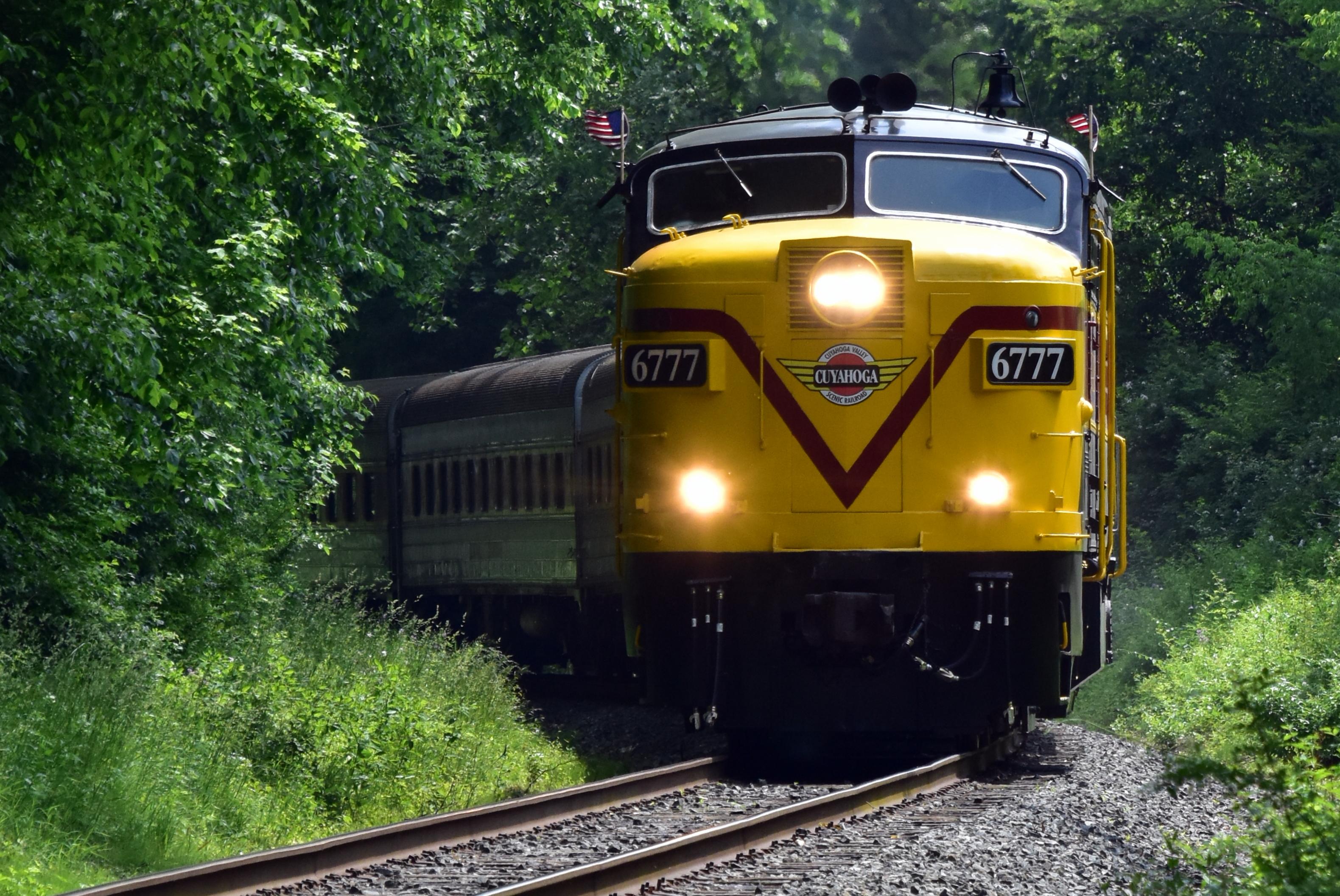
Best of Cuyahoga Valley National Park: Best Things to Do
Seeing a Cleveland Orchestra concert with the woods as your backdrop is a uniquely Cuyahoga Valley experience.
Sign in to join the conversation.
Sources & Attribution
Location data courtesy of the National Park Service (U.S. Department of the Interior). NPS data is public domain. Official NPS page.
Images: NPS; NPS; NPS; NPS; NPS.
Map data © OpenStreetMap contributors.
Park operations alerts: NPS.gov · Weather and weather hazards: National Weather Service · Live conditions.
Information may change. Always verify fees, hours, and conditions directly with the official source before visiting.
Did this guide help? Share it with a friend.